Hanoi culture and history stretch back over a thousand years, making Vietnam’s capital one of the most historically rich cities in all of Southeast Asia. Founded as Thang Long — the “City of the Soaring Dragon” — in 1010 AD, Hanoi has witnessed the rise and fall of dynasties, endured colonial occupation, survived devastating wars, and emerged as a vibrant modern metropolis that wears its heritage proudly on every street corner. Whether you are exploring the ancient halls of the Temple of Literature, watching a centuries-old water puppet performance, or wandering the atmospheric lanes of the Old Quarter, understanding Hanoi culture and history transforms a simple sightseeing trip into a deeply meaningful journey.
This complete heritage guide covers everything a traveler needs to know — from Hanoi’s founding legends and dynastic past to its French colonial architecture, wartime resilience, and thriving contemporary art scene. We include practical visiting tips for every major cultural site, festival calendars, museum guides, and etiquette advice so you can experience the authentic soul of this extraordinary city. For a broader overview of planning your trip, see our Hanoi Travel Guide.
What You’ll Find in This Guide
- A Brief History of Hanoi — 1,000+ years in context
- Temple of Literature — Vietnam’s first university
- Imperial Citadel of Thang Long — UNESCO World Heritage Site
- Ho Chi Minh Mausoleum Complex
- One Pillar Pagoda & Major Pagodas
- Hoan Kiem Lake & Ngoc Son Temple
- French Colonial Heritage
- Museums Guide — History, Women’s, Ethnology & Fine Arts
- Water Puppet Theatre
- Traditional Festivals
- Vietnamese Customs & Etiquette
- Contemporary Art Scene
- Craft Villages Near Hanoi
- Frequently Asked Questions
A Brief History of Hanoi: From Thang Long to the Modern Capital
Understanding the layers of Hanoi culture and history begins with the city’s dramatic origin story. In 1010 AD, King Ly Thai To relocated the capital from Hoa Lu to Dai La, famously renaming it Thang Long after reportedly seeing a golden dragon ascending from the Red River. This event marked the beginning of Hanoi’s unbroken role as the political and cultural heart of Vietnam — a role it has maintained for over a millennium.
The Dynastic Centuries (1010–1802)
The Ly Dynasty (1009–1225) established Thang Long as a center of Buddhist learning, building the Temple of Literature in 1070 and the Imperial Citadel that still stands today. The subsequent Tran Dynasty (1225–1400) repelled three Mongol invasions and strengthened Vietnamese national identity. The Le Dynasty (1428–1789), founded after Le Loi drove out Chinese Ming occupiers, presided over a golden age of literature, governance, and territorial expansion. The stelae at the Temple of Literature, honoring doctoral graduates, date largely from this era. By the time the Nguyen Dynasty moved the capital south to Hue in 1802, Thang Long had accumulated nearly 800 years of imperial heritage.
French Colonial Period (1887–1954)
France’s colonization reshaped Hanoi’s physical landscape dramatically. The French demolished sections of the citadel, laid out grand boulevards, and erected European-style buildings including the Opera House (1911), St. Joseph’s Cathedral (1886), and the Metropole Hotel (1901). They renamed the city Hanoi — meaning “city between rivers” — in 1831, a name that stuck. While colonialism brought exploitation, it also left an architectural legacy that gives modern Hanoi its distinctive blend of Eastern and Western aesthetics. The tree-lined avenues, yellow stucco villas, and wrought-iron balconies of the French Quarter remain among the city’s most photographed features.
The Vietnam War Era (1954–1975)
After Ho Chi Minh declared independence in 1945 and the French were defeated at Dien Bien Phu in 1954, Hanoi became the capital of North Vietnam. During the American War (as it is known locally), the city endured heavy bombing campaigns, including the devastating Christmas Bombings of 1972. Residents sheltered in individual street-side bunkers, many of which can still be seen. The resilience of Hanoians during this period is a defining chapter in the city’s identity, commemorated at sites like Hoa Lo Prison and the B-52 Victory Museum.
Doi Moi and Modern Hanoi (1986–Present)
The Doi Moi economic reforms of 1986 opened Vietnam to foreign investment and transformed Hanoi from a quiet, austere city into the buzzing metropolis visitors encounter today. The population has surged past eight million, skyscrapers rise alongside ancient pagodas, and a growing creative class is fueling galleries, design studios, and a world-class food scene. Yet Hanoi retains its cultural essence — early morning tai chi at Hoan Kiem Lake, incense spiraling from neighborhood temples, and the rhythmic clatter of the Old Quarter’s artisan streets connect the present to the deep past.
Temple of Literature (Van Mieu – Quoc Tu Giam)
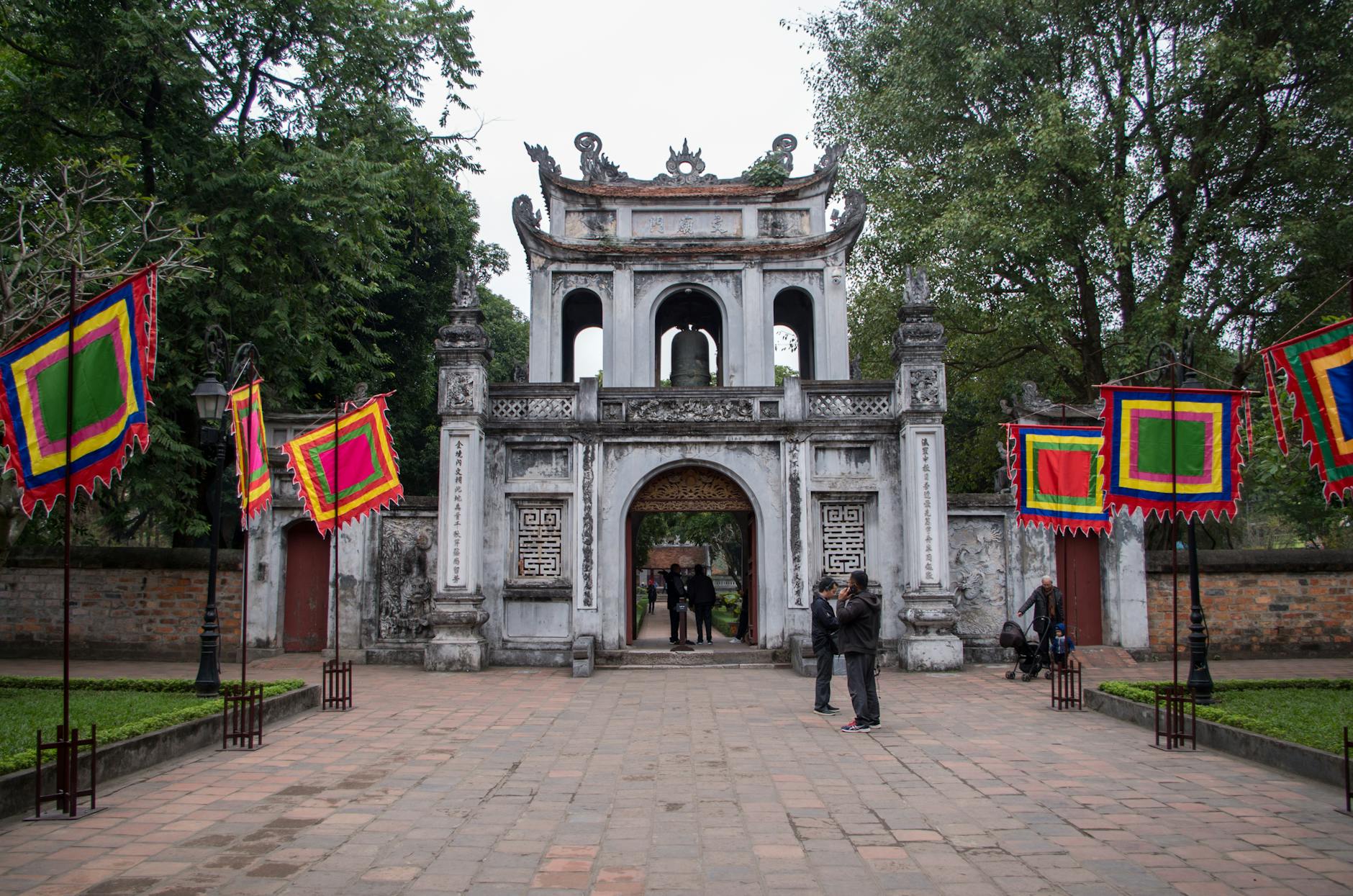
No exploration of Hanoi culture and history is complete without visiting the Temple of Literature (Van Mieu – Quoc Tu Giam), Vietnam’s first national university and one of the country’s most significant cultural monuments. Built in 1070 under Emperor Ly Thanh Tong, the temple was originally dedicated to Confucius, sages, and scholars. Six years later, in 1076, the Quoc Tu Giam (Imperial Academy) was established within its grounds to educate Vietnam’s brightest minds — sons of royalty and, later, talented commoners.
Architecture and Layout
The complex spans five walled courtyards, each entered through a ceremonial gate. The first two courtyards are tranquil gardens with ancient banyan trees. The third courtyard contains the famous Thien Quang Tinh (Well of Heavenly Clarity), flanked by 82 stone stelae mounted on tortoise pedestals. Each stele records the names, birthplaces, and achievements of doctoral graduates from examinations held between 1442 and 1779 — they were recognized by UNESCO as a Memory of the World in 2010.
The fourth courtyard houses the main ceremonial hall with altars to Confucius and his four closest disciples. The fifth courtyard, reconstructed in 2000, contains the Thai Hoc house and a drum tower, representing the restored Imperial Academy building. Traditional Vietnamese architectural elements — curved roofs with dragon motifs, lotus-shaped stonework, and lacquered timber columns — are displayed throughout.
Visiting Tips for the Temple of Literature
Hours: 8:00 AM – 5:00 PM daily (extended to 6:00 PM April–October). Admission: 30,000 VND (~$1.20 USD). Best time to visit: Arrive at opening to beat tour groups, or come in the late afternoon for golden-hour photography. Vietnamese students often visit before exams to rub the tortoise heads for good luck — a tradition you may witness, especially in May and June. Allow 60–90 minutes for a thorough visit. The temple is located on Quoc Tu Giam Street, about 2 km west of Hoan Kiem Lake.
Imperial Citadel of Thang Long — UNESCO World Heritage Site
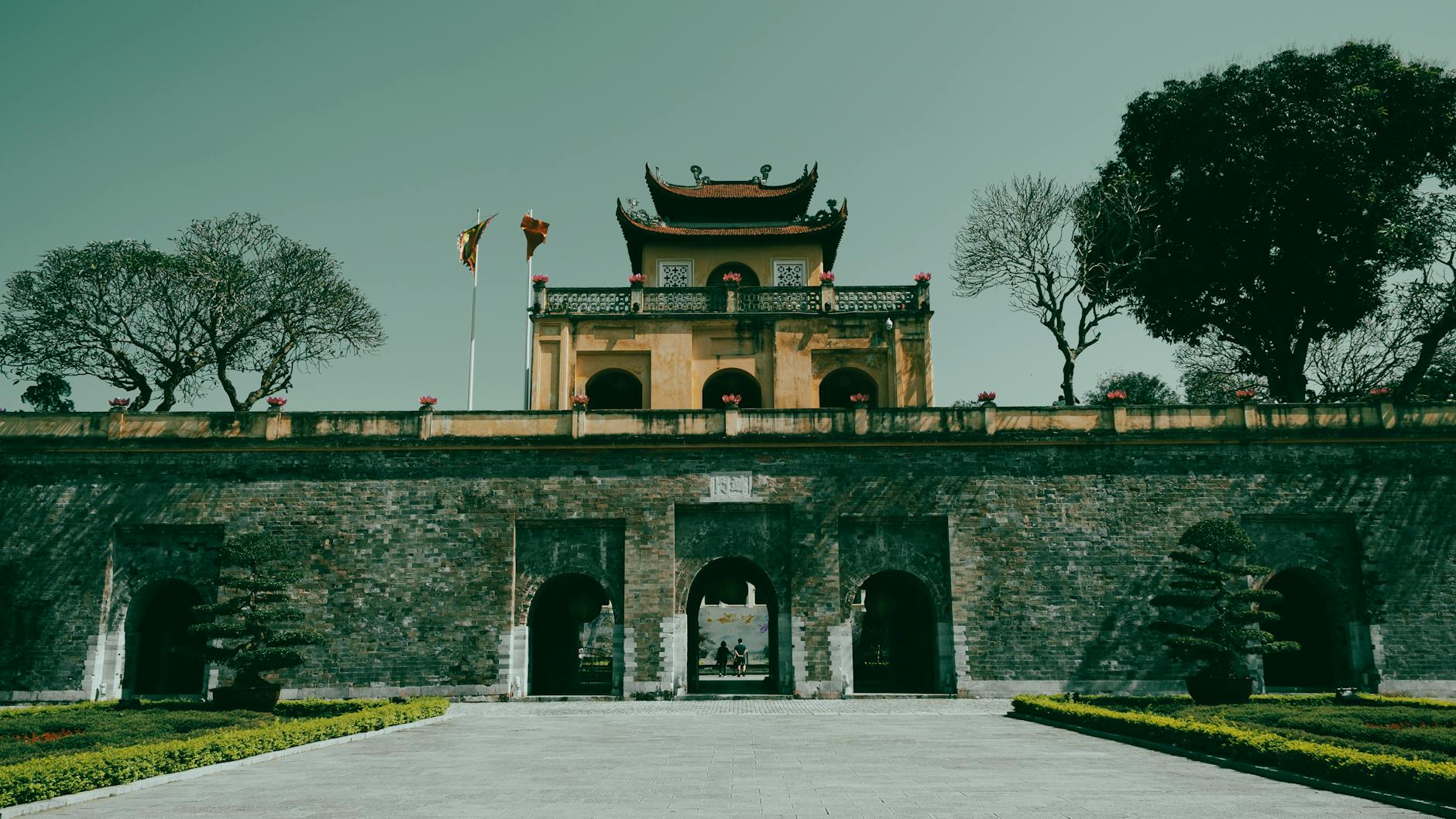
The Imperial Citadel of Thang Long, inscribed as a UNESCO World Heritage Site in 2010, is the single most important archaeological complex for understanding Hanoi culture and history. Situated in the heart of modern Hanoi on Hoang Dieu Street, the citadel served as the political center of Vietnam for 13 consecutive centuries — a virtually unparalleled record of continuous governance in Southeast Asia.
What Makes the Citadel Extraordinary
Archaeological excavations beginning in 2002 have unearthed over 200,000 artifacts spanning from the 6th century through the 20th century. Visitors can see layered foundations from the Dai La, Ly, Tran, Le, and Nguyen periods — each dynasty building upon the last. Key highlights include the Doan Mon (Main Gate), the Flag Tower of Hanoi (Cot Co, built 1812), the D67 underground bunker where North Vietnamese generals planned military strategy during the American War, and the Kinh Thien Palace archaeological site where ancient dragon staircases and ceramic fragments are displayed in situ.
The excavation pits are covered by modern roofing, allowing visitors to peer down into the stratified layers of Hanoi’s past. Ceramics, coins, building materials, and ornamental dragons from different eras paint a vivid picture of how the city evolved. The on-site museum provides excellent English-language displays contextualizing each period.
Visiting Tips for the Imperial Citadel
Hours: 8:00 AM – 5:00 PM (closed Mondays). Admission: 30,000 VND. Duration: Allow 2–3 hours for a comprehensive visit. The citadel is spread across a large area, so comfortable walking shoes are essential. Audio guides are available and recommended. Combine your visit with the nearby Ho Chi Minh Mausoleum Complex, located just a few hundred meters to the northwest.
Ho Chi Minh Mausoleum Complex
The Ho Chi Minh Mausoleum stands as both a political monument and a window into modern Vietnamese identity. Completed in 1975, the austere granite structure on Ba Dinh Square houses the embalmed body of Ho Chi Minh, the revolutionary leader who declared Vietnam’s independence on this very square on September 2, 1945. For Vietnamese citizens, a visit here is a pilgrimage; for international travelers, it provides essential context for understanding 20th-century Hanoi culture and history.
Visiting Rules and Etiquette
The mausoleum demands respectful behavior. Visitors must dress modestly — no shorts above the knee, sleeveless tops, or revealing clothing. Bags, cameras, and phones must be deposited at the security checkpoint. No photography is permitted inside. Visitors walk in a single-file line past the glass sarcophagus and must not stop, talk loudly, or put their hands in their pockets. The entire interior visit lasts roughly 15 minutes.
Hours: Tuesday–Thursday 7:30–10:30 AM; Saturday–Sunday 7:30–11:00 AM. Closed Mondays and Fridays. Closed annually from October to November for maintenance. Admission: Free. Tip: Arrive before 8:00 AM to avoid long queues, especially on weekends. The line can stretch for hundreds of meters.
Surrounding Sites
The mausoleum complex extends well beyond the main building. The Presidential Palace — a former French Governor-General’s residence — and Ho Chi Minh’s humble stilted house are on the grounds, illustrating the leader’s famously modest lifestyle. The nearby Ho Chi Minh Museum chronicles his life and the Vietnamese independence movement with multimedia exhibits. The One Pillar Pagoda is also within walking distance, making it easy to spend a full morning exploring this historically significant area.
One Pillar Pagoda & Major Pagodas of Hanoi
One Pillar Pagoda (Chua Mot Cot)
Originally built in 1049 by Emperor Ly Thai Tong, the One Pillar Pagoda is one of Vietnam’s most iconic structures. Legend says the emperor dreamed that the Bodhisattva of Compassion, seated on a lotus flower, offered him a baby son. In gratitude, he built this small wooden pagoda atop a single stone pillar rising from a lotus pond, designed to resemble a lotus blossom emerging from the water. The current structure is a 1954 reconstruction — French forces destroyed the original during their withdrawal — but it faithfully reproduces the design and remains a powerful symbol of Vietnamese Buddhism and Hanoi heritage.
Tran Quoc Pagoda
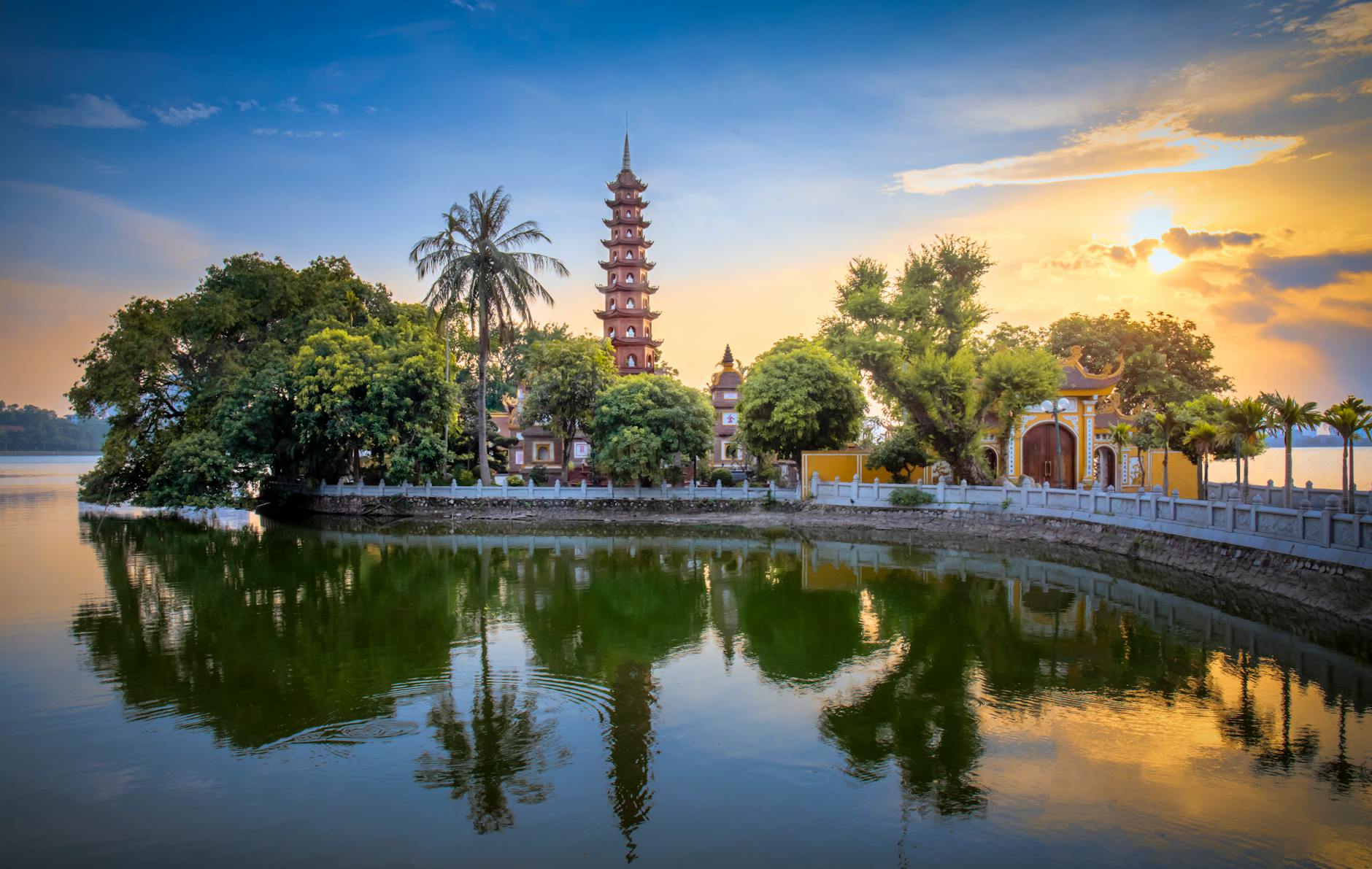
Perched on a small island in West Lake (Ho Tay), Tran Quoc Pagoda is the oldest Buddhist temple in Hanoi, dating to the 6th century (544 AD). Its eleven-story red-brick stupa is a much-photographed landmark, especially at sunset. The pagoda grounds contain a bodhi tree grown from a cutting of the original tree in Bodh Gaya, India, gifted during a 1959 state visit. Inside, ancient steles and statues of the Buddha trace the temple’s long history. Visit in the late afternoon for the most atmospheric experience, but dress modestly — this is an active place of worship.
Perfume Pagoda (Chua Huong)
While technically located 60 km southwest of Hanoi, the Perfume Pagoda complex is a popular day trip from Hanoi and an essential part of understanding Vietnamese Buddhist culture. The journey involves a scenic boat ride along the Yen Stream, followed by a hike or cable car ride to the Huong Tich Cave, where the main pagoda is set inside a dramatic limestone grotto. The annual Perfume Pagoda Festival (February–April) attracts hundreds of thousands of pilgrims and is one of Vietnam’s most important religious events.
Hoan Kiem Lake & Ngoc Son Temple
Hoan Kiem Lake — the “Lake of the Returned Sword” — is the spiritual and geographical heart of Hanoi. Its significance to Hanoi culture and history goes far deeper than its role as a scenic landmark. According to legend, in the 15th century, Emperor Le Loi received a magical sword from the Golden Turtle God (Kim Qui), which he used to drive out the Chinese Ming occupiers. After victory, while boating on the lake, a giant turtle surfaced and reclaimed the sword, returning it to its divine owner. The legend gave the lake its name and cemented the turtle as a symbol of Vietnamese independence.
On the lake’s northern island sits Ngoc Son Temple (“Temple of the Jade Mountain”), reached via the elegant red-painted The Huc Bridge (“Bridge of the Morning Sunlight”). The temple honors the 13th-century military hero Tran Hung Dao, the scholar Van Xuong, and the physician La To. Inside, you can see the preserved remains of a giant Hoan Kiem softshell turtle (Rafetus leloii) — the species is critically endangered, with possibly none remaining in the lake today.
Visiting tips: The lake area is free to access at all times; Ngoc Son Temple charges 30,000 VND admission (8:00 AM – 6:00 PM). Early mornings reveal locals practicing tai chi and badminton along the shore. On weekend evenings (Friday–Sunday), the surrounding streets become a pedestrian zone with live music, street performers, and a carnival atmosphere that showcases the vibrancy of modern Hanoi life.
French Colonial Heritage in Hanoi
Hanoi Opera House (Nha Hat Lon)
Modeled after the Palais Garnier in Paris, the Hanoi Opera House was completed in 1911 and remains the city’s most prestigious performance venue. Its Neo-Baroque facade — with Corinthian columns, ornate balustrades, and a sweeping staircase — anchors the eastern end of Trang Tien Street. The interior, with its gilded moldings and red velvet seats, can be seen during evening performances of traditional Vietnamese music, ballet, and international concerts. The opera house also played a pivotal role in history: it was from its balcony that the Viet Minh addressed crowds after seizing power in August 1945.
St. Joseph’s Cathedral
Built in 1886, St. Joseph’s Cathedral is a striking Neo-Gothic structure that would not look out of place in a French provincial town. Its twin bell towers, stained-glass windows, and stone facade have become one of Hanoi’s most recognizable images. The surrounding Nha Tho (Church) Street is now a popular café-lined area where Hanoians gather for egg coffee and conversation. Mass is held regularly, and visitors are welcome outside service times. The cathedral is located just west of Hoan Kiem Lake, making it easy to incorporate into an Old Quarter walking tour.
Hoa Lo Prison (“Hanoi Hilton”)
Originally built by French colonists in 1896 to hold Vietnamese political prisoners, Hoa Lo Prison later gained international notoriety during the American War when it housed captured US pilots, who nicknamed it the “Hanoi Hilton.” Today, the remaining section operates as a museum. Exhibits cover both the French colonial era — with recreated cells, shackles, and a guillotine — and the American War period. The prison is a sobering but essential stop for understanding the struggles that shaped modern Vietnam. Located on Hoa Lo Street, a short walk south of Hoan Kiem Lake. Admission is 30,000 VND; allow 45–60 minutes.
Hanoi Museums Guide: Where History Comes Alive
Hanoi is home to some of the finest museums in Southeast Asia, offering deep dives into every facet of Vietnamese civilization. Here are the must-visit institutions for anyone interested in Hanoi culture and history.
Vietnam National Museum of History
Housed in a beautiful French colonial building on Trang Tien Street, the National Museum of History holds over 200,000 artifacts spanning from prehistoric times to the modern era. Highlights include Dong Son bronze drums (2,500+ years old), Cham Hindu sculpture, Ly and Tran dynasty ceramics, and royal regalia from the Nguyen court. The chronological layout makes it easy to trace Vietnam’s journey from its earliest cultures through Chinese domination, independence, and unification. Hours: 8:00 AM – 12:00 PM, 1:30 – 5:00 PM; closed Mondays. Admission: 40,000 VND.
Vietnamese Women’s Museum
Consistently rated one of Vietnam’s best museums on TripAdvisor, the Vietnamese Women’s Museum on Ly Thuong Kiet Street celebrates the role of women in Vietnamese society through beautifully curated exhibits on marriage customs, childbirth traditions, fashion, street vendors, wartime heroism, and the lives of ethnic minority women. Interactive multimedia displays and excellent English explanations make this accessible and engaging. Hours: 8:00 AM – 5:00 PM daily. Admission: 30,000 VND. Allow 90 minutes.
Vietnam Museum of Ethnology
Located in the Cau Giay district (about 8 km from the center), the Museum of Ethnology is widely considered Hanoi’s best museum. It showcases the cultures of Vietnam’s 54 ethnic groups through indoor galleries of textiles, tools, and ceremonial objects, plus an expansive outdoor area featuring full-scale reconstructed houses — from Tay stilt houses to Bahnar communal longhouses. Weekend water puppet shows and craft demonstrations add to the experience. Hours: 8:30 AM – 5:30 PM; closed Mondays. Admission: 40,000 VND. Budget 2–3 hours and take a Grab taxi.
Vietnam Fine Arts Museum
The Fine Arts Museum on Nguyen Thai Hoc Street (a short walk from the Temple of Literature) houses a remarkable collection of Vietnamese art from prehistoric times to the present day. Standout pieces include ancient Cham stone carvings, wooden Buddhist statuary, Dong Ho folk prints, lacquerware, silk paintings from the French-era Ecole des Beaux-Arts, and propaganda art from the revolutionary period. The building itself — a French colonial-era former boarding school — is worth admiring. Admission: 40,000 VND.
Water Puppet Theatre (Mua Roi Nuoc)
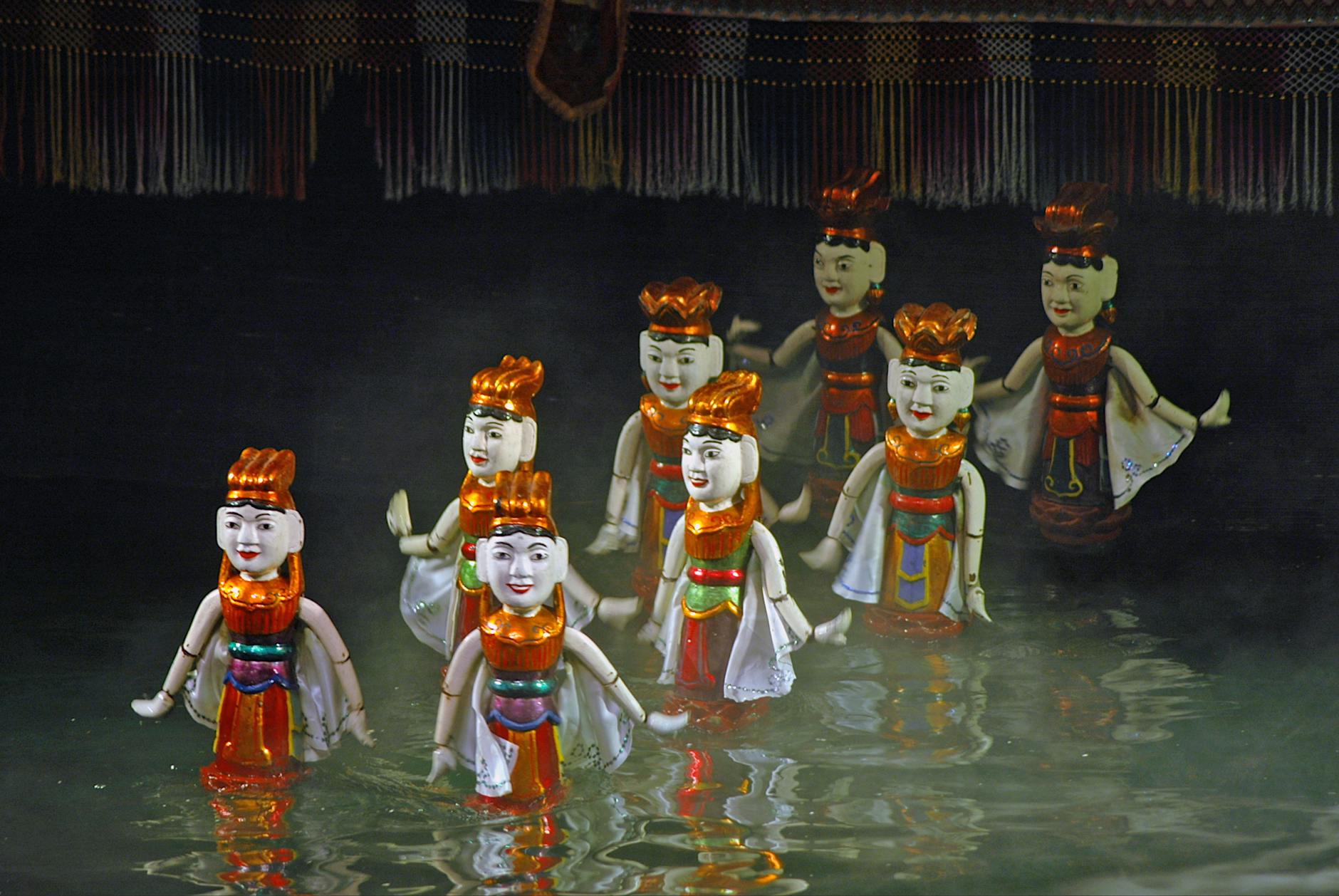
Water puppetry (mua roi nuoc) is one of Vietnam’s most distinctive cultural traditions and a highlight of any visit to Hanoi. Originating in the flooded rice paddies of the Red River Delta around the 11th century, this art form features lacquered wooden puppets that appear to dance on the surface of a waist-deep pool, manipulated by hidden puppeteers using long bamboo rods and strings beneath the water. A live traditional orchestra — featuring the dan bau (monochord), drums, horns, and a singer — accompanies performances with folk melodies.
Scenes depict Vietnamese rural life, folk tales, legends (including the story of the Returned Sword and the Golden Turtle), and historical events. The performances are colorful, humorous, and thoroughly entertaining even without understanding Vietnamese.
Where to Watch Water Puppets in Hanoi
The most famous venue is the Thang Long Water Puppet Theatre at 57B Dinh Tien Hoang Street, right beside Hoan Kiem Lake. Shows run multiple times daily (typically 3:00 PM, 4:10 PM, 5:20 PM, 6:30 PM, and 7:40 PM) and last approximately 50 minutes. Tickets cost around 100,000 VND ($4 USD) and often sell out, so booking a day ahead — either at the box office or through your hotel — is strongly recommended. Other venues include the Vietnam Museum of Ethnology (weekend shows) and the Bong Sen Water Puppet Theatre on Dien Bien Phu Street, which tends to be less crowded.
Traditional Festivals in Hanoi
Festivals are a living expression of Hanoi culture and history, blending Buddhist, Confucian, Taoist, and folk traditions. Timing your visit to coincide with a major festival offers an unforgettable cultural immersion.
Tet Nguyen Dan (Lunar New Year)
Tet is the most important holiday in Vietnam — a family-centered celebration marking the lunar new year (typically late January to mid-February). Hanoi transforms weeks before Tet: flower markets bloom along the banks of the Red River and around Quang Ba, peach blossom branches (hoa dao) appear in homes and shops, and families prepare traditional dishes like banh chung (sticky rice cake). During Tet itself, many businesses close for 3–7 days and the city empties as residents return to ancestral villages. Visiting during this period gives a unique glimpse into Vietnamese family values, but plan for closures and limited dining options. The festive atmosphere leading up to Tet (1–2 weeks before) is arguably the best time to experience it as a tourist.
Mid-Autumn Festival (Tet Trung Thu)
Held on the 15th day of the 8th lunar month (usually September), the Mid-Autumn Festival is a joyous children’s celebration. Hang Ma Street in the Old Quarter becomes a dazzling corridor of lanterns, masks, mooncakes, and toys. Lion dances wind through the narrow streets, and families gather around Hoan Kiem Lake for an evening of festivity. If you are visiting Hanoi with children, this is an enchanting time to come. Check out our guide to things to do in Hanoi for more family-friendly activities.
Hung Kings Temple Festival (Gio To Hung Vuong)
Held on the 10th day of the 3rd lunar month (April), this national holiday commemorates the legendary Hung Kings who are credited with founding the Vietnamese nation. The main celebrations take place at the Hung Kings Temple complex in Phu Tho Province (about 85 km from Hanoi), but Hanoi observes the day with ceremonies, processions, and a public holiday. It is a meaningful occasion for understanding Vietnamese origin mythology and national pride.
Other Notable Festivals
The Perfume Pagoda Festival (February–April) draws Buddhist pilgrims from across Vietnam. The Dong Da Festival (5th day of Lunar New Year) commemorates Emperor Quang Trung’s 1789 victory over Chinese Qing forces with a dramatic reenactment. Vu Lan (Ghost Festival, 7th lunar month) sees temples packed with worshippers honoring deceased ancestors. Throughout the year, neighborhood temple festivals punctuate daily life, offering spontaneous encounters with living tradition.
Vietnamese Customs & Etiquette for Visitors
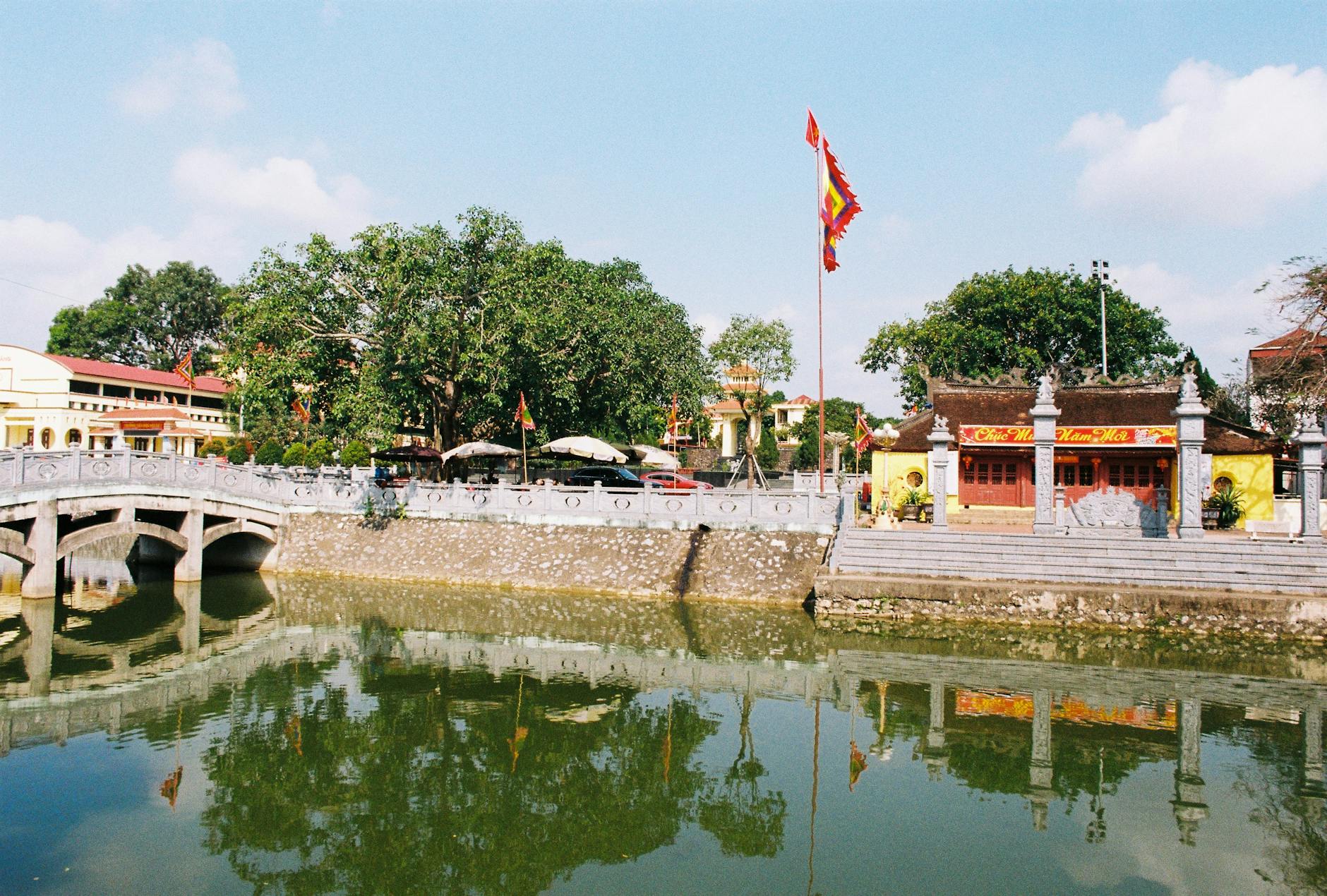
Respecting local customs enhances your experience and shows appreciation for Hanoi culture and history. Vietnamese people are warm and forgiving of minor cultural missteps, but observing these guidelines demonstrates genuine respect.
Temple and Pagoda Etiquette
Remove shoes before entering temple buildings. Dress modestly — cover shoulders and knees. Do not touch statues, altars, or offerings. Ask permission before photographing worshippers. When incense is offered, hold it with both hands. Step over, not on, raised thresholds, which are believed to trap evil spirits. At Buddhist temples, walk clockwise around the main altar.
Social Customs
Greet people with a slight bow or nod. Use both hands when giving or receiving anything — business cards, gifts, money, or your passport. Avoid public displays of affection. When dining, wait for the eldest person to begin eating. Use chopsticks properly: never stick them upright in rice (this resembles funeral incense) or point with them. Tipping is not traditional but is increasingly appreciated in tourist-facing establishments. A modest tip of 10–15% at restaurants and 50,000–100,000 VND for tour guides or drivers is generous by local standards.
Practical Tips
Learn a few Vietnamese phrases: “Xin chao” (hello), “Cam on” (thank you), and “Xin loi” (sorry/excuse me) go a long way. Bargaining is expected at markets but should be done with a smile and good humor — never aggressively. Vietnamese coffee culture is central to daily life; sitting at a tiny sidewalk stool with a ca phe sua da (iced coffee with condensed milk) is a quintessential Hanoi experience. For more on Hanoi’s incredible food scene, see our Hanoi Food Guide.
Contemporary Art Scene in Hanoi
Hanoi has quietly emerged as Southeast Asia’s most exciting art city, with a creative energy that builds on the city’s deep cultural roots while embracing bold contemporary expression.
Galleries and Art Spaces
The Vietnam Fine Arts Museum provides historical context, while contemporary spaces push boundaries. Manzi Art Space on Phan Huy Ich Street hosts rotating exhibitions, film screenings, and artist talks in a beautifully converted French villa. The Factory Contemporary Arts Centre (originally in HCMC) has expanded programming to Hanoi. Hanoi Creative City in the Cau Giay district hosts events, workshops, and design markets. The Vietnam University of Fine Arts gallery on Yet Kieu Street showcases emerging talent. Numerous small galleries dot the streets around Hoan Kiem Lake and the French Quarter, especially along Trang Tien and Hang Bai streets.
Street Art and Public Murals
The Phung Hung Mural Street project, completed in 2018 near the Long Bien Bridge area, features vibrant murals depicting old Hanoi scenes painted on the arches of a century-old French-era viaduct. It has become a beloved photo stop and a symbol of how Hanoi is using art to celebrate its heritage. The Hanoi Ceramic Mosaic Mural along the Red River dyke, stretching 3.85 km, was created in 2010 for the city’s millennial anniversary and holds the Guinness World Record as the world’s largest ceramic mosaic.
Traditional Craft Villages Near Hanoi
For centuries, specialized craft villages surrounding Hanoi supplied the capital with ceramics, silk, woodwork, and other goods. Many of these villages continue their ancestral trades today and make rewarding day trips from Hanoi.
Bat Trang Ceramic Village
Located just 15 km southeast of central Hanoi, Bat Trang has produced ceramics for over 700 years. Visitors can tour family workshops, watch artisans shape and paint pottery, and try their hand at the pottery wheel. The village market sells everything from traditional blue-and-white porcelain to modern decorative pieces at excellent prices. Easily reachable by bus 47 from Long Bien bus station or by Grab.
Van Phuc Silk Village
Van Phuc, about 10 km southwest of central Hanoi in the Ha Dong district, has been weaving silk for over 1,000 years. The main street is lined with shops selling silk fabric, ao dai (traditional dresses), scarves, and tailored clothing at prices significantly lower than Hanoi boutiques. Some workshops still use traditional handlooms, and watching the weaving process is a fascinating experience. Combine with a visit to the nearby Hanoi Museum.
Dong Ho Folk Painting Village
The village of Dong Ho in Bac Ninh Province (about 35 km east of Hanoi) is famous for its woodblock folk prints — colorful images depicting prosperity symbols, folk tales, and social satire that were traditionally displayed during Tet. Only a handful of families still practice this endangered art form using natural dyes and handmade paper from the bark of the do tree. A visit here is a moving encounter with a tradition struggling to survive in the modern age.
Related Hanoi travel guides
Keep planning your trip with these in-depth Hanoi guides: things to do in Hanoi, the Old Quarter, Hanoi travel guide, Hanoi food guide.
Frequently Asked Questions About Hanoi Culture & History
What is the best time of year to experience Hanoi’s cultural heritage?
Autumn (September–November) offers the most pleasant weather for exploring outdoor sites, and the Mid-Autumn Festival falls in this period. Spring (March–April) is lovely for temple visits and coincides with the Perfume Pagoda Festival. The weeks before Tet (January–February) are magical for experiencing festive preparations, though Tet week itself sees many closures.
How many days do I need to see Hanoi’s cultural sites?
A minimum of 3 full days is recommended. Day 1: Temple of Literature, Imperial Citadel, Ho Chi Minh Mausoleum Complex. Day 2: Hoan Kiem Lake, Ngoc Son Temple, Old Quarter walking tour, water puppet show. Day 3: Museums (Ethnology or History), French Quarter architecture walk. Add a fourth day for a craft village or Perfume Pagoda trip. For a complete itinerary, see our guide to things to do in Hanoi.
Is Hanoi safe for tourists?
Hanoi is generally very safe for tourists. Violent crime against visitors is extremely rare. The main concerns are petty theft (watch your phone in crowded areas), traffic (crossing streets requires confidence and patience), and occasional tourist scams at popular sites. Exercise normal urban precautions and you will have a trouble-free experience.
Do I need a guide for Hanoi’s cultural sites?
While most sites can be visited independently, a knowledgeable local guide dramatically enhances the experience at historically complex locations like the Imperial Citadel and Temple of Literature. Many budget and mid-range Hanoi travel options include guided cultural tours. Audio guides are available at several museums and the citadel.
What is the significance of the turtle in Vietnamese culture?
The turtle (rua) is one of Vietnam’s four sacred animals (along with the dragon, phoenix, and unicorn). The Hoan Kiem turtle legend symbolizes divine assistance in the fight for independence. Tortoise stelae at the Temple of Literature represent longevity, wisdom, and scholarly achievement. The giant softshell turtle species found in Hoan Kiem Lake was revered as a living connection to this mythology until the last confirmed individual died in 2016.
Can I visit temples and pagodas during religious ceremonies?
Yes, visitors are generally welcome during ceremonies, but you should observe quietly from the periphery, avoid flash photography, and dress modestly. The 1st and 15th days of each lunar month are particularly active at Buddhist temples. Full moon evenings at Tran Quoc Pagoda are especially atmospheric.
Where can I learn more about Vietnamese history in Hanoi?
Beyond the museums listed above, Hanoi’s bookshops — particularly Bookworm on Chau Long Street — carry excellent English-language histories. The Vietnam National Library on Trang Thi Street has a reading room open to visitors. For experiential learning, consider a cooking class that explains the cultural context of Vietnamese cuisine, or a cyclo tour of the Old Quarter with a history-focused guide. Visit Vietnam’s official tourism site for additional cultural event listings and travel planning resources.
Hanoi culture and history reward every level of engagement — from a casual stroll around Hoan Kiem Lake to a deep dive into dynastic archaeology at the Imperial Citadel. This is a city where the past is not preserved behind glass but woven into the fabric of everyday life. The incense smoke drifting from a neighborhood temple, the rhythmic tap of a water puppet, the elegance of a silk ao dai at a Tet celebration — these are not performances staged for tourists but genuine expressions of a civilization that has thrived for over a thousand years. Come with curiosity, respect, and an open heart, and Hanoi will share its extraordinary story with you.
Every guide in this series
This pillar is the overview. Each guide below goes deep on one piece of it:
- Temple of Literature Hanoi: Vietnam’s First University
- Ho Chi Minh Mausoleum: Visiting Guide & History
- Imperial Citadel Thang Long: Fortress & History
- Hanoi Pagodas & Temples Guide: Sacred Sites
- French Colonial Architecture Hanoi: Historic Buildings
- Hanoi War History Museums & Memorable Sites
- Vietnamese Customs & Etiquette: Cultural Guide
- Hanoi Art Scene & Galleries: Contemporary Culture
- Hanoi Craft Villages: Traditional Crafts Near Hanoi
- Hoan Kiem Lake Legend & History: Turtle Story
- Hanoi 1000 Year History: Thang Long to Today