Hanoi, Vietnam’s captivating capital, is a city that seduces travelers with its intoxicating blend of ancient traditions, French colonial elegance, and relentless modern energy. Spread along the banks of the Red River, this thousand-year-old city rewards curious visitors with labyrinthine alleyways hiding century-old temples, aromatic street-food stalls serving the world’s finest pho, and emerald lakes wrapped in legend. Whether you are planning your first visit or returning to discover hidden corners, this comprehensive Hanoi travel guide covers everything you need to turn an ordinary trip into an unforgettable experience.
Why Visit Hanoi?
Hanoi consistently ranks among Southeast Asia’s most compelling destinations for good reason. Unlike the frenetic pace of Ho Chi Minh City to the south, Hanoi moves to a gentler rhythm punctuated by the clink of iced coffee glasses and the soft hum of cyclo wheels on shaded boulevards. The city is home to more than 600 temples and pagodas, a UNESCO-recognized Old Quarter dating back nearly a millennium, and a culinary tradition so rich that food alone justifies the journey.
The cost of travel here remains remarkably low by global standards. Budget travelers can comfortably explore Hanoi on $25–40 per day including accommodation, three full meals, local transport, and entrance fees. Mid-range visitors spending $60–100 a day enjoy boutique hotels, guided tours, and fine-dining experiences that would cost several times as much in European or North American cities. That combination of cultural depth and affordability makes Hanoi one of the highest-value destinations on the planet.
Best Time to Visit Hanoi
Hanoi experiences four distinct seasons, and choosing the right window can significantly shape your experience.
Autumn (September – November): The Golden Season
Autumn is widely regarded as Hanoi’s most magical period. Temperatures settle between 22 °C and 28 °C (72–82 °F), humidity drops to comfortable levels, and the city’s many trees erupt in brilliant shades of amber and gold. The sky takes on a crystalline quality that photographers adore. Autumn also coincides with the Mid-Autumn Festival (Tet Trung Thu), filling the Old Quarter with lanterns, lion dances, and mooncakes.
Spring (February – April): Festivals and Flowers
Spring brings mild temperatures of 18–25 °C (64–77 °F) and a calendar packed with cultural events. Tet (Vietnamese Lunar New Year), usually falling in late January or February, transforms the city with peach blossoms, kumquat trees, and family celebrations. The Perfume Pagoda festival draws pilgrims from across the country, while the Temple of Literature hosts a traditional calligraphy festival through March.
Summer (May – August): Hot and Humid
Summer temperatures climb to 33–38 °C (91–100 °F) with high humidity and sudden afternoon downpours. While the weather is less comfortable, this is low season for tourism, meaning lower prices, fewer crowds, and more authentic interactions. Pack a compact umbrella, stay hydrated, and plan outdoor activities for early morning.
Winter (December – January): Cool and Atmospheric
Winters in Hanoi surprise many visitors. Temperatures can drop to 10–15 °C (50–59 °F), and drizzly grey skies create a moody atmosphere that locals call “mua phun” (drizzle season). Pack layers and a light waterproof jacket. The cooler weather makes this an excellent time for long walks and steaming bowls of pho.
Visa Requirements and Entry
Most international visitors need a visa to enter Vietnam, and the e-Visa system makes the process straightforward.
Vietnam E-Visa
The electronic visa is available to citizens of all countries and territories. You can apply online through the official portal at evisa.gov.vn. Key details include:
- Validity: Up to 90 days, single or multiple entry
- Cost: $25 USD for single entry, $50 USD for multiple entry (non-refundable)
- Processing time: 3–5 business days (no processing on weekends or Vietnamese holidays)
- Passport requirement: Must be valid for at least 6 months beyond your intended arrival date
- Entry points: E-visas are port-specific — if you select Noi Bai Airport (Hanoi), you must enter through that airport
Visa Exemptions
Citizens of certain countries enjoy visa-free entry for stays of 15–45 days depending on nationality. These exemptions change periodically, so always verify the latest requirements with the Vietnamese embassy or consulate in your country before booking flights.
Getting to Hanoi
Noi Bai International Airport
Noi Bai International Airport (HAN) sits approximately 25 kilometers north of the city center. It serves direct flights from major hubs across Asia, Europe, the Middle East, and Australia. The airport features two terminals — Terminal 1 for domestic flights and Terminal 2 for international arrivals.
Airport to City Center
Several transport options connect the airport to downtown Hanoi:
- Airport Express Train: Connects to Hanoi Railway Station in approximately 29 minutes for around 70,000 VND ($2.80 USD). The newest and most convenient option.
- Airport bus (Route 86): Runs every 25–30 minutes to Hanoi Old Quarter. Takes 45–60 minutes and costs 45,000 VND ($1.80).
- Grab/taxi: Expect to pay 350,000–450,000 VND ($14–18) for the 35–50 minute ride depending on traffic. Always use the Grab app or official airport taxis with meters.
- Private car transfer: Pre-arranged hotel transfers or private services cost $18–25 and offer door-to-door convenience, especially useful for late-night arrivals.
Getting Around Hanoi
On Foot
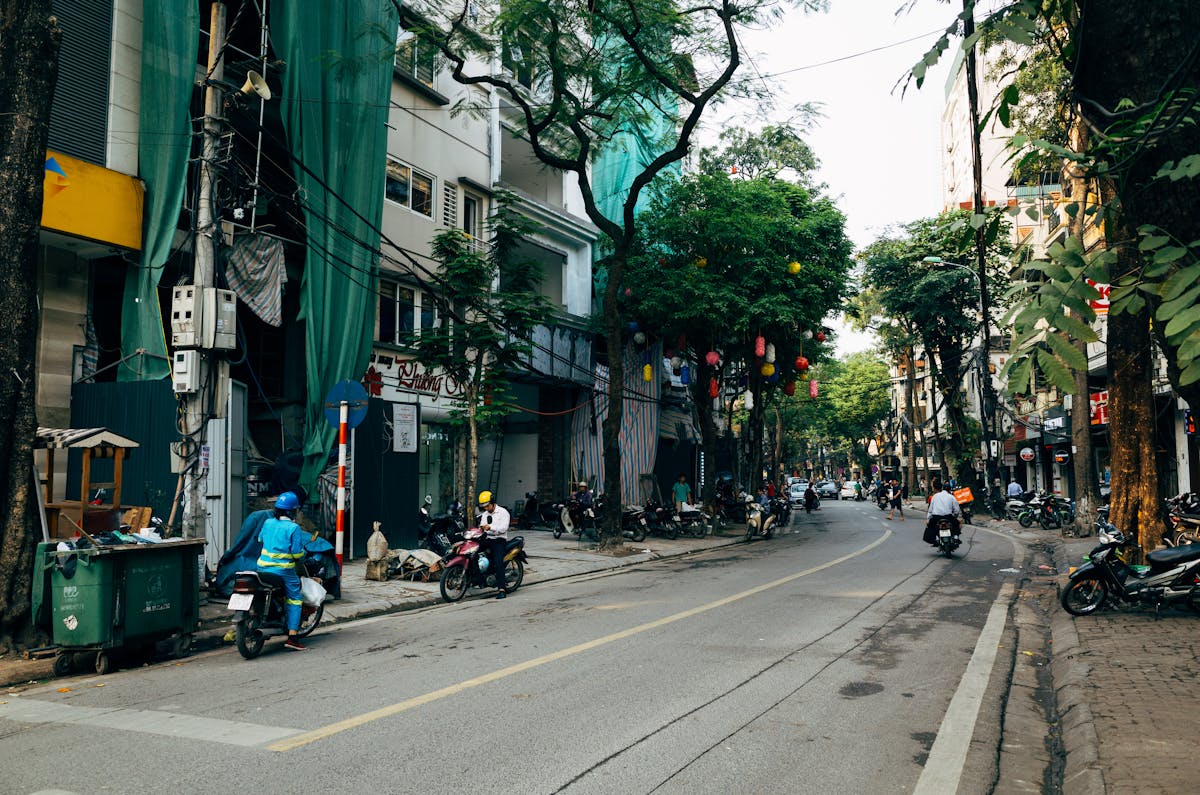
Walking is the best way to explore Hanoi’s historic core. The Old Quarter, Hoan Kiem Lake, the French Quarter, and most major attractions lie within comfortable walking distance of each other. Sidewalks can be cluttered with parked motorbikes and street vendors, so you will often find yourself walking along the edge of the road — stay alert, move predictably, and traffic will flow around you.
Grab (Ride-Hailing)
The Grab app is essential for navigating Hanoi. It works like Uber and offers GrabCar (four-wheel), GrabBike (motorbike taxi), and GrabFood. Fares are transparent, paid through the app, and significantly cheaper than traditional taxis. A 15-minute GrabCar ride across the city typically costs 40,000–80,000 VND ($1.60–3.20).
Public Buses
Hanoi’s public bus network covers the entire city with a flat fare of just 7,000 VND ($0.30) per ride regardless of distance. While routes can be confusing for first-time visitors, Google Maps now shows real-time bus routes and schedules. Buses are air-conditioned and remarkably punctual.
Metro
The Cat Linh – Ha Dong metro line connects the southwestern suburbs to the city center. While it does not yet reach the Old Quarter, it is useful for trips to specific areas along its route and offers a glimpse of Hanoi’s expanding modern infrastructure.
Cyclos and Motorbikes
Cyclo rides (pedal-powered rickshaws) remain popular for leisurely sightseeing tours, particularly through the Old Quarter. Always negotiate the fare before climbing in — expect to pay 100,000–150,000 VND ($4–6) for a 30-minute ride. Renting a motorbike is common among experienced riders, but Hanoi’s chaotic traffic is not recommended for those unfamiliar with Vietnamese road customs.
Where to Stay in Hanoi
Hanoi’s accommodation ranges from $7 dormitory beds to $200+ luxury suites. Choosing the right neighborhood is just as important as choosing the right hotel.
Old Quarter (Hoan Kiem District)
The most popular base for first-time visitors. The Old Quarter places you within walking distance of Hoan Kiem Lake, night markets, street food stalls, and the highest concentration of tour agencies. Expect narrow buildings, lively streets, and easy access to everything — but also more noise and hustle. Budget hostels start at $7–10/night; mid-range hotels run $40–80; boutique options $80–150.
French Quarter (Hai Ba Trung / Trang Tien)
South and east of Hoan Kiem Lake, the French Quarter offers wider, tree-lined avenues, colonial-era architecture, and a slightly calmer atmosphere. This area is home to the Hanoi Opera House, upscale restaurants, and luxury hotels like the Sofitel Legend Metropole. It is the best choice for travelers who want culture and convenience without the Old Quarter’s intensity. Expect $80–200+/night for quality accommodation.
West Lake (Tay Ho District)
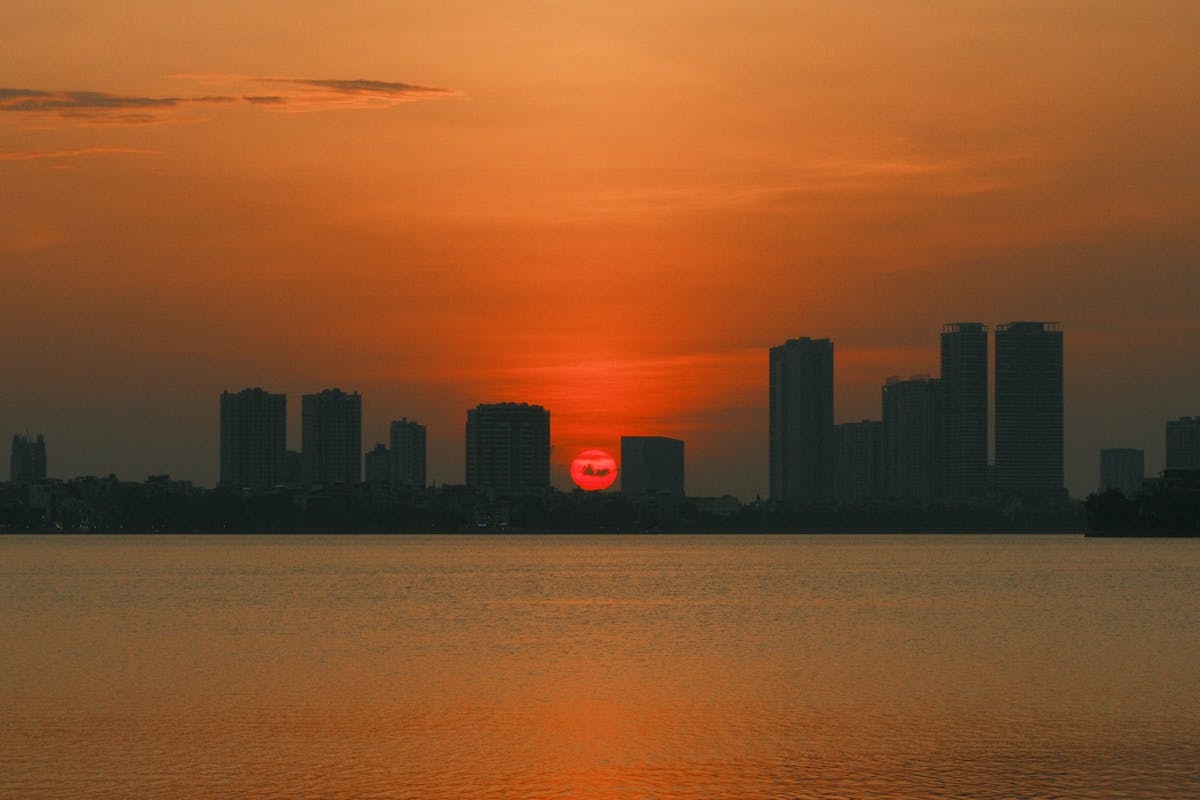
The expatriate hub surrounds Hanoi’s largest lake. West Lake offers lakeside cafes, international restaurants, yoga studios, and a more relaxed, residential atmosphere. It is farther from central attractions but rewards visitors with stunning sunsets and a sense of local life beyond the tourist core. Mid-range serviced apartments and boutique hotels here cost $50–120/night.
Ba Dinh District
Home to the Ho Chi Minh Mausoleum, Presidential Palace, and many embassies, Ba Dinh is quieter and greener. It suits history enthusiasts and those preferring a more local, less touristy experience. Accommodation options are more limited but often represent excellent value at $30–70/night.
Top Attractions and Things to Do
Hoan Kiem Lake and Ngoc Son Temple
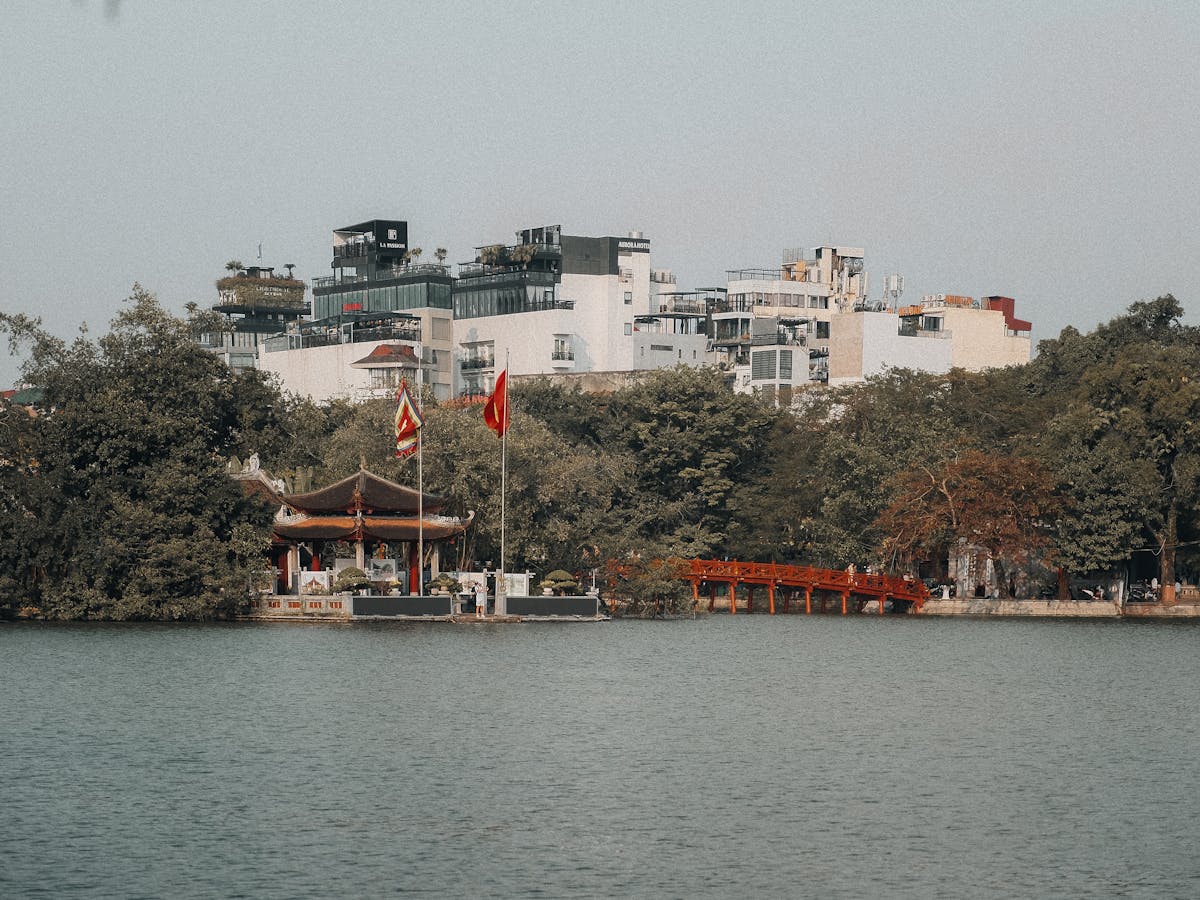
The spiritual heart of Hanoi, Hoan Kiem Lake (Lake of the Restored Sword) anchors the city both geographically and culturally. The legendary tale of Emperor Le Loi receiving a divine sword from the lake’s golden turtle permeates Vietnamese identity. Walk across the photogenic red Huc Bridge to visit Ngoc Son Temple, set on a small island. On weekend evenings (Friday through Sunday), the streets surrounding the lake close to traffic, creating a vibrant pedestrian zone filled with performers, families, and food vendors. Entry to the temple costs 30,000 VND ($1.20).
Hanoi Old Quarter
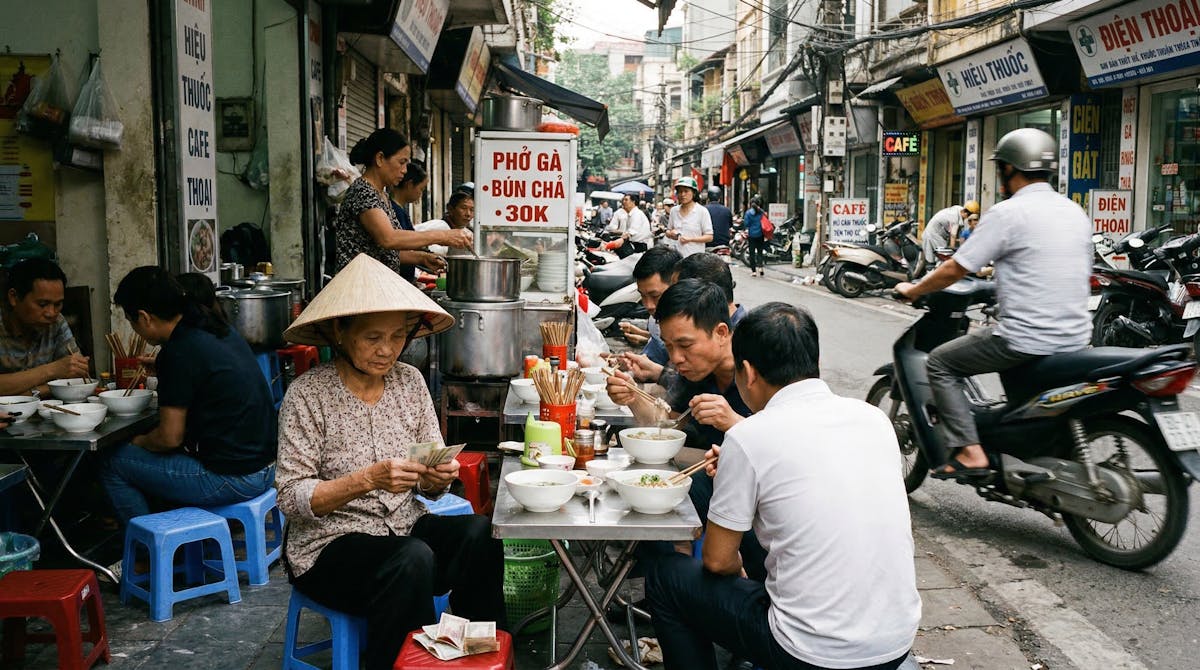
Dating back nearly 1,000 years, the Old Quarter is a living museum of Vietnamese commerce and culture. Its 36 streets were originally named for the goods sold on each — Hang Gai (Silk Street), Hang Bac (Silver Street), Hang Ma (Paper Street) — and many still specialize in their traditional trades. Wander without a fixed agenda: duck into narrow tube houses, pause at ancient communal halls, and follow your nose to whichever street stall smells most enticing. The Dong Xuan Market at the northern end is the largest indoor market and a fascinating window into local life.
Temple of Literature (Van Mieu – Quoc Tu Giam)
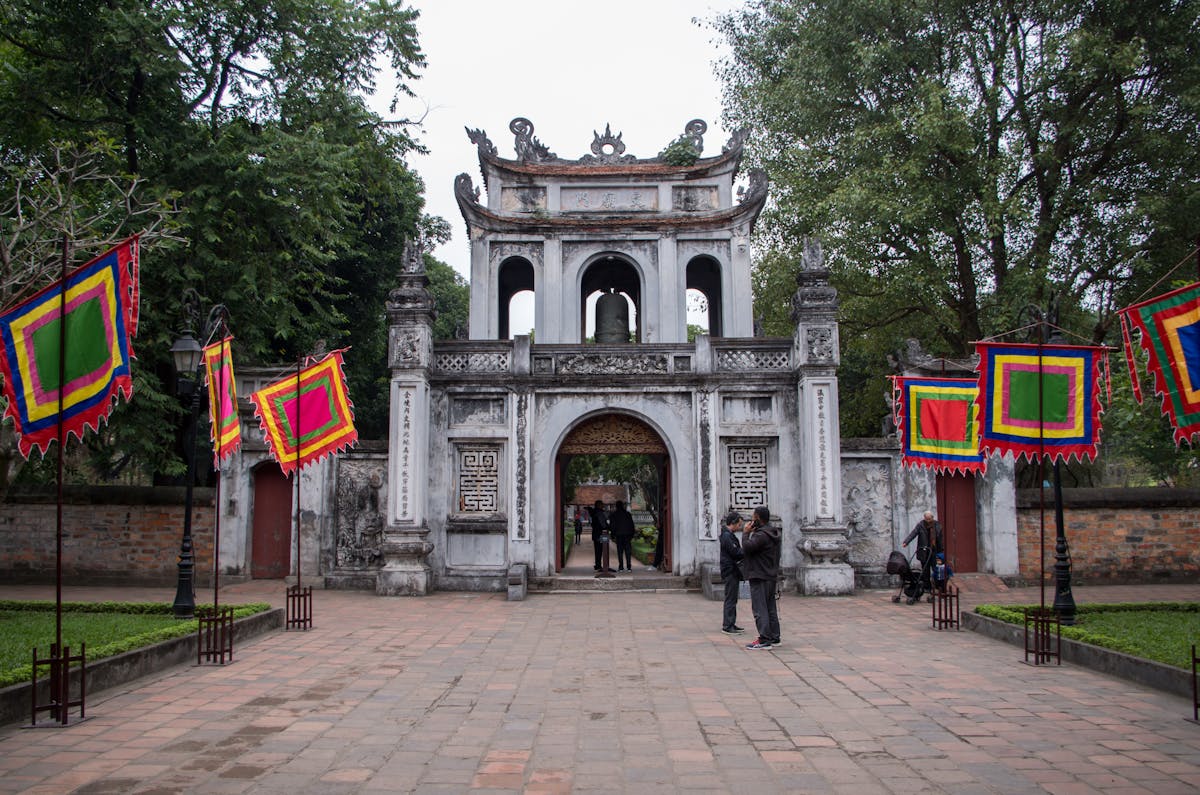
Founded in 1070 and dedicated to Confucius, the Temple of Literature is Vietnam’s first national university and one of Hanoi’s most serene sanctuaries. Five courtyards unfold in succession, each revealing traditional Vietnamese architecture, tranquil lotus ponds, and 82 stone stelae mounted on turtle bases that record the names of doctoral graduates dating from 1484 to 1780. Allow 60–90 minutes for a thoughtful visit. Entry costs 30,000 VND ($1.20).
Ho Chi Minh Mausoleum Complex
The massive granite mausoleum in Ba Dinh Square is the final resting place of President Ho Chi Minh, the founding father of modern Vietnam. The surrounding complex includes the Presidential Palace, Ho Chi Minh’s humble stilt house, a museum dedicated to his life, and the One Pillar Pagoda — a tiny wooden temple balanced on a single stone column above a lotus pond. The mausoleum is free but has strict dress codes (no shorts, sleeveless tops, or hats) and is closed Mondays and Fridays. Arrive early — lines grow quickly by mid-morning.
Hoa Lo Prison Museum
Known to American POWs as the “Hanoi Hilton,” this former prison offers a sobering look at two chapters of Vietnamese history. The French colonial section documents the brutal treatment of Vietnamese political prisoners in the early 20th century, while a smaller section covers the American prisoners of war during the Vietnam War. Entry is 30,000 VND ($1.20) and a visit takes about 45–60 minutes.
Vietnamese Women’s Museum
One of Hanoi’s best-curated museums, the Vietnamese Women’s Museum chronicles the role of women in Vietnamese society, from wartime heroism to cultural traditions like traditional dress, marriage customs, and the matriarchal traditions of ethnic minority groups. Beautifully presented across four floors with English-language displays. Entry costs 40,000 VND ($1.60).
Water Puppet Theater
Thang Long Water Puppet Theatre on the shore of Hoan Kiem Lake presents a uniquely Vietnamese art form dating back to the 11th century. Elaborately carved wooden puppets perform on a water stage accompanied by a live traditional orchestra. Shows last about 50 minutes and performances sell out quickly — book your tickets a day ahead at the box office or through your hotel. Tickets cost 100,000–200,000 VND ($4–8).
Hanoi Food: What to Eat
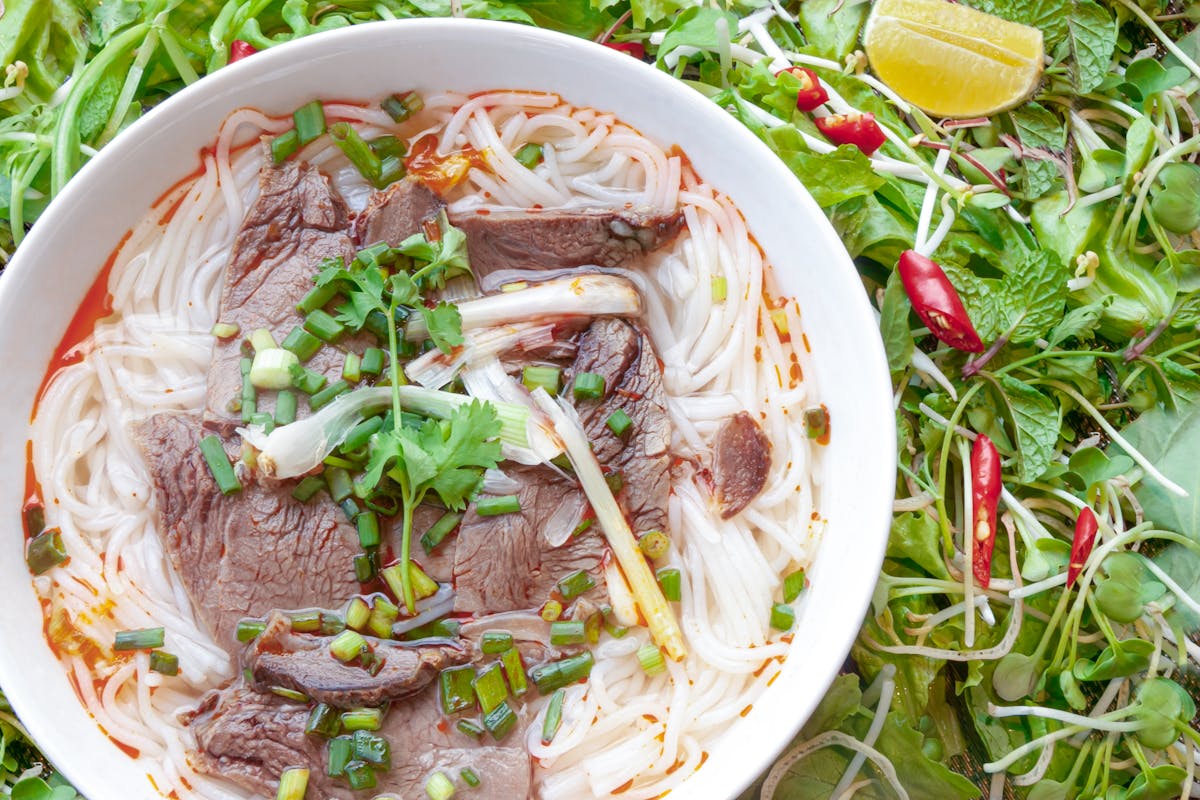
Hanoi is not merely a place to eat — it is one of the world’s great culinary capitals. The city’s food culture revolves around street stalls and tiny shop-houses where recipes have been perfected over generations. Here are the essential dishes every visitor should seek out.
Pho Bo (Beef Noodle Soup)
Hanoi is the birthplace of pho, and the local version is a study in restrained perfection. Unlike its southern counterpart, Hanoi-style pho uses a clear, deeply aromatic broth simmered for hours with star anise, cinnamon, and charred ginger. It is served with flat rice noodles, thinly sliced beef (rare, well-done, or both), and a simple garnish of green onions and fresh herbs. A bowl from a respected street stall costs 40,000–60,000 VND ($1.60–2.40). For the most authentic experience, eat where the locals crowd — look for tiny plastic stools and a single-dish menu.
Bun Cha
Grilled pork patties and sliced pork belly served over cold rice vermicelli with a bowl of sweet-and-sour dipping broth, fresh herbs, and pickled green papaya. Bun cha is quintessentially Hanoian and is traditionally a lunch dish. A full serving costs 40,000–60,000 VND ($1.60–2.40).
Banh Mi
Vietnam’s famous baguette sandwich, inherited from the French colonial era and reinvented with Vietnamese fillings — pate, cold cuts, pickled carrots and daikon, fresh cilantro, and chili. Hanoi-style banh mi tends to be simpler and less saucy than the southern version. A street-side banh mi costs just 15,000–30,000 VND ($0.60–1.20).
Egg Coffee (Ca Phe Trung)
A Hanoi original invented in the 1940s when fresh milk was scarce. Whipped egg yolk, sugar, and condensed milk are beaten into a creamy custard-like foam and served atop strong Vietnamese coffee. The result is rich, sweet, and utterly addictive. Head to Giang Cafe on Nguyen Huu Huan Street — the original inventor’s family still runs it. A cup costs 25,000–35,000 VND ($1–1.40).
Cha Ca (Turmeric Fish)
A Hanoi specialty so famous it has its own street — Cha Ca Street in the Old Quarter. White fish fillets are marinated in turmeric and galangal, then pan-fried at your table with dill, green onions, and rice noodles. Cha Ca La Vong is the most famous restaurant (since 1871), though many locals prefer smaller, less touristy establishments nearby.
Bia Hoi (Fresh Draft Beer)
Hanoi’s legendary bia hoi is among the cheapest fresh beer in the world at just 5,000–10,000 VND ($0.20–0.40) per glass. Brewed daily without preservatives, it is light, crisp, and best enjoyed at the chaotic plastic-stool junctions of the Old Quarter. The intersection of Ta Hien and Luong Ngoc Quyen — known as “Bia Hoi Corner” — is the most famous spot.
Budget Breakdown: How Much Does Hanoi Cost?
Hanoi remains one of the most affordable capital cities in Asia. Here is a realistic daily budget breakdown:
Budget Traveler ($25–40/day)
- Accommodation: $7–15 (hostel dormitory or budget guesthouse)
- Food: $5–10 (three street food meals plus snacks and coffee)
- Transport: $2–5 (buses, occasional Grab ride)
- Activities: $3–8 (temple entries, walking tours, museum visits)
Mid-Range Traveler ($60–100/day)
- Accommodation: $30–60 (3-star hotel or boutique guesthouse)
- Food: $15–25 (mix of street food and restaurant meals)
- Transport: $5–10 (Grab rides, cyclo tours)
- Activities: $10–20 (guided tours, cooking classes, water puppets)
Luxury Traveler ($150–300+/day)
- Accommodation: $100–200+ (4-5 star hotels like Sofitel Legend Metropole)
- Food: $30–60 (fine dining and curated food tours)
- Transport: $15–30 (private car with driver)
- Activities: $20–50 (private guides, premium experiences)
Practical Tips for Visiting Hanoi
Money and Currency
Vietnam uses the Vietnamese Dong (VND). As of 2026, $1 USD ≈ 25,000 VND. ATMs are plentiful in tourist areas and dispense VND. Always pay in Dong — establishments that accept USD apply unfavorable exchange rates. Banknotes come in confusingly similar denominations (the 10,000 and 100,000 notes look similar), so take a moment to sort your bills carefully. Credit cards are accepted at hotels, upscale restaurants, and larger shops, but cash is essential for street food, markets, and smaller establishments.
Internet and SIM Cards
Buy a local SIM card at the airport or any Viettel, Mobifone, or Vinaphone shop for around 100,000–200,000 VND ($4–8), which includes generous data allowances for a month. Free Wi-Fi is available in virtually every hotel, cafe, and restaurant in Hanoi.
Language
Vietnamese is the official language, and while English proficiency is growing among younger Hanoians, it remains limited in many everyday situations. Download Google Translate with the Vietnamese offline language pack before you arrive. Learning a few basic phrases — “xin chao” (hello), “cam on” (thank you), “bao nhieu” (how much?) — goes a long way and is always warmly received.
Safety
Hanoi is generally very safe for travelers. Violent crime targeting tourists is extremely rare. The main concerns are petty theft (watch your phone and bag in crowded areas), traffic-related risks (always look both ways — multiple times), and common tourist scams (inflated prices, unmetered taxis, shoe-shine boys demanding large payments). Use Grab for rides, agree on prices before services, and keep valuables secure.
Cultural Etiquette
Vietnamese culture values modesty and respect. Dress conservatively when visiting temples and pagodas — cover your shoulders and knees. Remove shoes before entering religious sites and private homes. Tipping is not traditionally expected in Vietnam, though it is increasingly appreciated at restaurants and for tour guides. Avoid public displays of affection, which are considered impolite. When handing something to an elder or someone you wish to show respect to, use both hands.
Health Considerations
Tap water is not safe to drink — stick to bottled or filtered water, which is available everywhere for 5,000–10,000 VND. Street food is generally safe if you follow the golden rule: eat where locals eat in high volume, as this ensures rapid turnover and fresh preparation. Bring basic medications (anti-diarrheal, pain relief, antihistamines) and consider travel insurance that covers medical evacuation. Hanoi’s hospitals, including Vinmec International Hospital, offer quality care at a fraction of Western prices.
Day Trips from Hanoi
Hanoi’s location in northern Vietnam makes it an ideal base for exploring some of the country’s most spectacular natural and cultural landscapes.
Ha Long Bay (170 km – 3.5 hours by road)
A UNESCO World Heritage Site featuring thousands of limestone karsts and islands rising from emerald waters. Overnight cruise packages departing from Hanoi typically include hotel pickup, meals, kayaking, and cave visits. Expect to pay $100–300+ depending on the vessel class.
Ninh Binh / Tam Coc (95 km – 2 hours by road)
Often called “Ha Long Bay on land,” Ninh Binh province features dramatic limestone formations rising from flooded rice paddies. A sampan boat ride through Tam Coc’s three caves is the signature experience. Easy to visit as a day trip or overnight.
Sapa and the Northern Highlands (320 km – 5 hours by road or overnight train)
Terraced rice paddies, ethnic minority villages, and Fansipan — Indochina’s highest peak — make Sapa a bucket-list destination. The overnight sleeper train from Hanoi is a classic experience in itself.
Perfume Pagoda (65 km – 2 hours by road + boat)
A sprawling complex of Buddhist temples and shrines built into the limestone Huong Tich mountains. Reaching the main pagoda involves a scenic boat ride and either a hike or cable car ride. Most popular during the spring festival season (February–March).
Hanoi Travel Quick Reference
| Detail | Information |
|---|---|
| Country | Vietnam |
| Language | Vietnamese |
| Currency | Vietnamese Dong (VND) · $1 USD ≈ 25,000 VND |
| Time Zone | ICT (UTC+7) |
| Electricity | 220V, Types A, C, and F plugs |
| Best Season | Autumn (Sep–Nov) and Spring (Feb–Apr) |
| Airport | Noi Bai International (HAN), 25 km north of city center |
| Emergency | Police: 113 · Ambulance: 115 · Fire: 114 |
| Daily Budget | Budget $25–40 · Mid-range $60–100 · Luxury $150–300+ |
Start Planning Your Hanoi Adventure
Hanoi is a city that reveals itself slowly. The first impression is sensory overload — honking motorbikes, unfamiliar aromas, a tangle of electrical wires overhead. But give it a day and the city’s deeper rhythms emerge: the quiet reverence of an elderly man practicing tai chi by the lake at dawn, the pride of a street vendor who has spent thirty years perfecting a single recipe, the warmth of a stranger who stops to help you cross the street. Hanoi does not perform for tourists — it simply lives, and invites you to live alongside it.
This guide is your starting point. Dive deeper into specific topics with our detailed companion guides on the best things to do in Hanoi, our comprehensive Hanoi food guide, recommendations on where to stay in Hanoi, and our complete Hanoi transportation guide. Each one builds on this foundation to help you plan the perfect trip to one of Asia’s most extraordinary cities.
More Hanoi planning guides
Once you have the big picture, these focused guides go deeper on every part of your trip:
- First Time in Hanoi: Complete Visitor Guide
- Hanoi Travel Checklist: Don’t Forget These Essentials
- How to Plan a Trip to Hanoi: Step-by-Step Guide
- Hanoi Travel Mistakes to Avoid: Expert Tips
- Hanoi for Solo Travelers: Complete Safety & Tips Guide
- Hanoi on a Budget: How to Save Money & Travel Cheap
- Hanoi for Couples: Romantic Getaway Planning Guide
- Hanoi with Kids: Family-Friendly Activities & Hotels
- Hanoi for Seniors: Accessible Travel & Leisure Guide
- Hanoi Digital Nomad Guide: Coworking, WiFi & Visas
- Hanoi 3-Day Itinerary: Must-See Attractions & Routes
Keep planning: explore our guides to things to do in Hanoi, Hanoi itineraries, where to stay in Hanoi, getting around Hanoi.