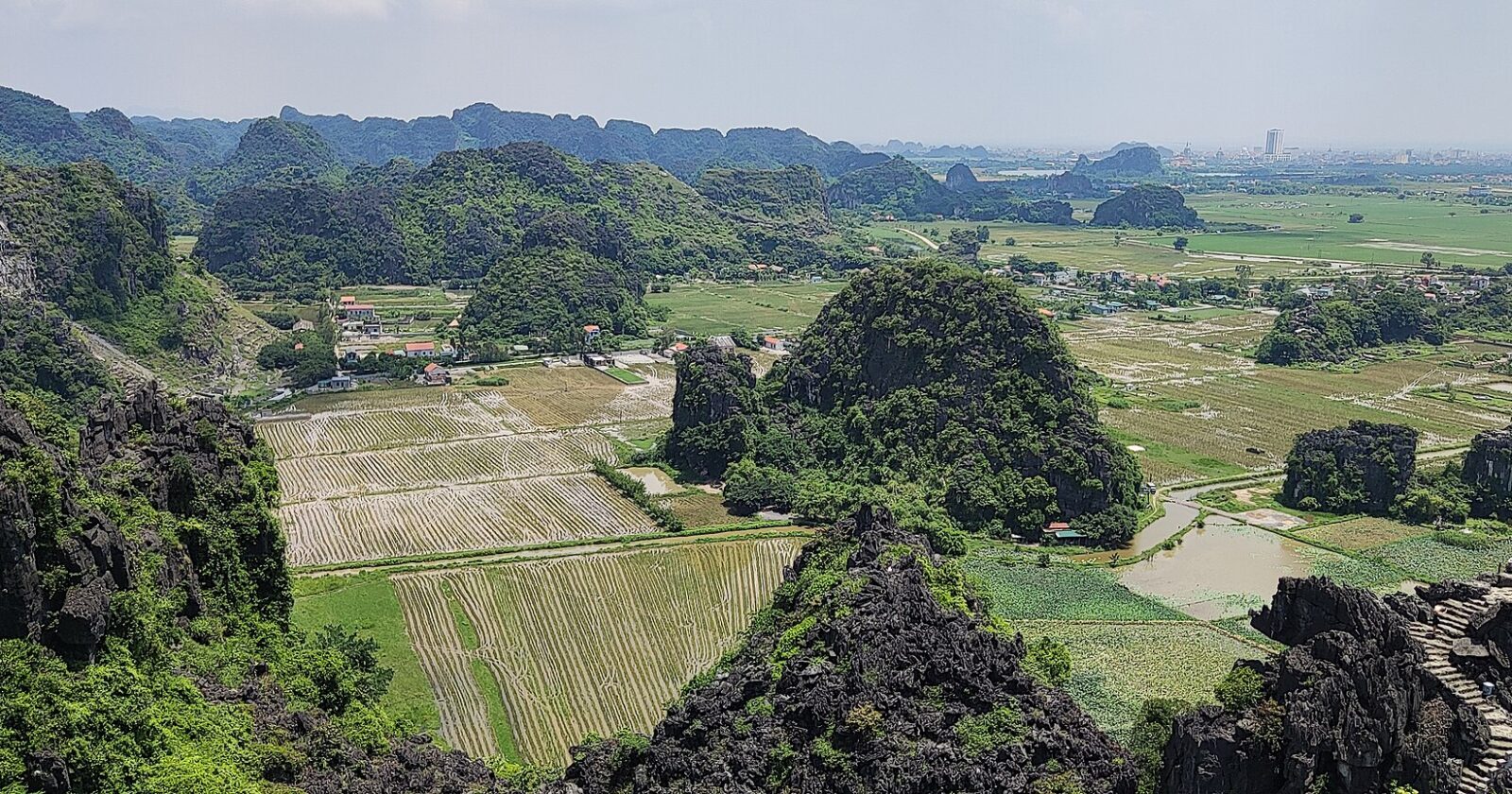
The first thing that strikes most people about Ninh Binh is how sudden it is. The road south from Hanoi runs through the flat, built-up plain of the Red River delta for the best part of two hours, past factories, petrol stations and rice fields. Then, almost without warning, limestone towers rise straight out of the paddies on either side: sheer grey cliffs furred with green, with rivers threading between them and boats moving slowly on the water. Ninh Binh is often called “Ha Long Bay on land”, which is a fair description of the scenery and an unfair one of the place: it’s farmland, villages, temples and caves, a working landscape with people in it, not just a view. This Ninh Binh travel guide is about how to see it well.
It covers how the area fits together, each of the main sights with what it costs and whether it’s worth it, how to get there from Hanoi, where to stay and why staying at least one night beats the standard day trip, when to go, and sample plans for one to three days. Ticket prices come from the Trang An heritage management board and the provincial tourism authority, and transport and room costs from the provincial tourism portal; all were checked in November 2026. Treat them as the right order of magnitude and confirm on the day. If you only have a day, our Ninh Binh day trip guide covers that version of the trip.
Ninh Binh at a Glance
| Sight or cost | 2026 price (adult) | Notes |
|---|---|---|
| Trang An boat trip | 300,000 VND (about US$11.50) | Children 1–1.3 m tall 150,000 VND; under 1 m free. Several routes. |
| Tam Coc–Bich Dong | 250,000 VND (about US$9.50); 350,000 VND with the electric car | The electric-car ticket links Tam Coc, Thai Vi Temple, Tien Cave and Bich Dong Pagoda |
| Mua Cave viewpoint | 150,000 VND (about US$5.70) on the board’s price list | The provincial tourism portal quotes about 100,000 VND; confirm at the gate |
| Hoa Lu ancient capital | 20,000 VND (under US$1) | 10,000 VND for children aged 6–15, over-60s and disabled visitors |
| Bai Dinh Pagoda | No entry fee listed; electric car 150,000 VND return | 300,000 VND package adds the Bao Thap tower and a foot soak |
| Thung Nham bird park | 150,000 VND | Electric car extra |
| Van Long reserve | 100,000 VND entry | Ask at the gate about the boat |
| Cuc Phuong National Park | 60,000 VND | Further out; worth a full day |
| Phat Diem Cathedral | Free | In Kim Son, south-east of the karst area |
| Bus from Hanoi | 80,000–150,000 VND | 1.5–2 hours, from Giap Bat, My Dinh or Nuoc Ngam stations |
| Train from Hanoi | Economy seat 90,000–150,000 VND | Check the timetable on Vietnam Railways’ booking site |
| Motorbike rental | 100,000–150,000 VND a day | Fuel extra |
| Car with driver | 800,000–1,200,000 VND a day | Best for a fast-moving day trip or a family |
| Double room | 250,000–500,000 VND (budget) · 600,000–1,200,000 VND (2–3 star) · from about 2,000,000 VND (resorts near Trang An) | Provincial portal’s ranges |
US dollar figures are rounded at roughly 26,000 VND to the dollar.
The Short Version
- Make Trang An your first boat trip. Trang An is the bigger, more varied trip, with caves and temples; Tam Coc is shorter and runs through rice fields. If you only have time for one, it’s Trang An for most people.
- Climb Mua Cave. The view from the top over the Tam Coc valley is the image most people have in their heads when they think of Ninh Binh. Go early or late in the day, when it’s cooler and the light is better.
- Stay a night if you can. The day trip from Hanoi works, but you spend three to four hours on the road and see the boats at the busiest time of day. A night in Tam Coc lets you do the boats early and Mua Cave at sunset.
- Bai Dinh is optional. It’s huge and impressive in scale, but if you’re short of time, the boats, Mua Cave and Hoa Lu are a better use of a day.
- Check the weather. Trang An suspends its boats in heavy rain and high water. It did so on 9 November 2026.
How Ninh Binh Fits Together
“Ninh Binh” means three different things, and it helps to keep them apart.
First, it’s a province. In 2025 Vietnam merged the old Ninh Binh province with its neighbours Nam Dinh and Ha Nam, and the enlarged province kept the Ninh Binh name. Its capital is Hoa Lu ward. You’ll still see older maps, hotel addresses and signs that use the old names, so don’t be thrown if an address says “Hoa Lu city” or uses a district name that no longer exists on paper.
Second, there’s the city, the old provincial town on the main road and railway south from Hanoi. It’s where the train station and the long-distance buses arrive, and it has plenty of practical hotels and local restaurants. Few visitors spend much time in it.
Third, and this is what people mean when they talk about visiting Ninh Binh, there’s the karst country just west and south-west of the city. That’s where the sights are, and they sit close together:
- Trang An, the UNESCO World Heritage area with the main boat trip through caves and past river temples.
- Tam Coc and Bich Dong, the boat trip along the Ngo Dong river through rice fields and three caves, the pagoda built into the cliffs at Bich Dong, and the village of Tam Coc, which is the main tourist base.
- Mua Cave (Hang Mua), the viewpoint on a ridge above Tam Coc.
- Hoa Lu, the site of Vietnam’s 10th- and 11th-century capital, with its temples to the early kings.
- Bai Dinh, the modern pagoda complex to the north-west of Trang An.
- Van Long and Thung Nham, quieter wetland and bird-park trips on the edges.
Further out are Cuc Phuong National Park, to the west, and Phat Diem Cathedral at Kim Son, to the south-east. Both are worth a dedicated trip but are easy to leave out if your time is short.
The Trang An Landscape Complex, the UNESCO-listed area, was inscribed on the World Heritage List in 2014 under both cultural and natural criteria, and it takes in Trang An, Tam Coc–Bich Dong and Hoa Lu. That’s worth knowing because it tells you something about the place: the listing isn’t just for the scenery but for the long history of people living in and around these limestone hills.
Trang An: The Main Boat Trip
Trang An is the boat trip that justifies the journey. You sit in a low, flat-bottomed boat with a handful of other passengers, and a local rower takes you along the rivers and channels between the limestone towers. Again and again the river runs straight into a cliff, and the boat slides into a cave: low, dark tunnels where you duck your head and the rower pushes off the rock with an oar, then out into daylight in a new, completely enclosed valley. Along the way the boats stop at small temples and shrines built on the water’s edge, where you can get off and look around.

Routes, tickets and practicalities
- Price: 300,000 VND per adult (over 1.3 m tall), 150,000 VND for children between 1 and 1.3 m, free for children under 1 m. The price covers the boat, the rower and the route.
- Routes: There are several routes. They take in different combinations of caves and temples, and they’re not the same length. Ask at the ticket office which caves each passes through and roughly how long it takes.
- Weather: In the rainy season, high water can flood the caves, and the management board then pauses individual routes or the whole site. It suspended all sightseeing on 9 November 2026 because of heavy rain and strong winds. If the weather has been bad, call the board’s hotline (1900 9251) before you set off.
- Bring: A hat and sun cream (there’s little shade on the open water), water, and something to sit on if you’re particular about damp seats.
Is Trang An worth it?
Yes, and it’s the one sight in Ninh Binh we’d tell you not to skip. The caves are the difference: being rowed through a dark tunnel under a mountain and coming out into a hidden valley is an experience you can’t get from a viewpoint. The two honest caveats are crowds and pace. In the middle of the day, at weekends and on Vietnamese holidays, the river is a procession of boats, and at popular temples you’ll queue to get off. Go as early as you can. And it’s a slow trip: if you’re not a fan of sitting in a boat, choose a shorter route.
Tam Coc and Bich Dong
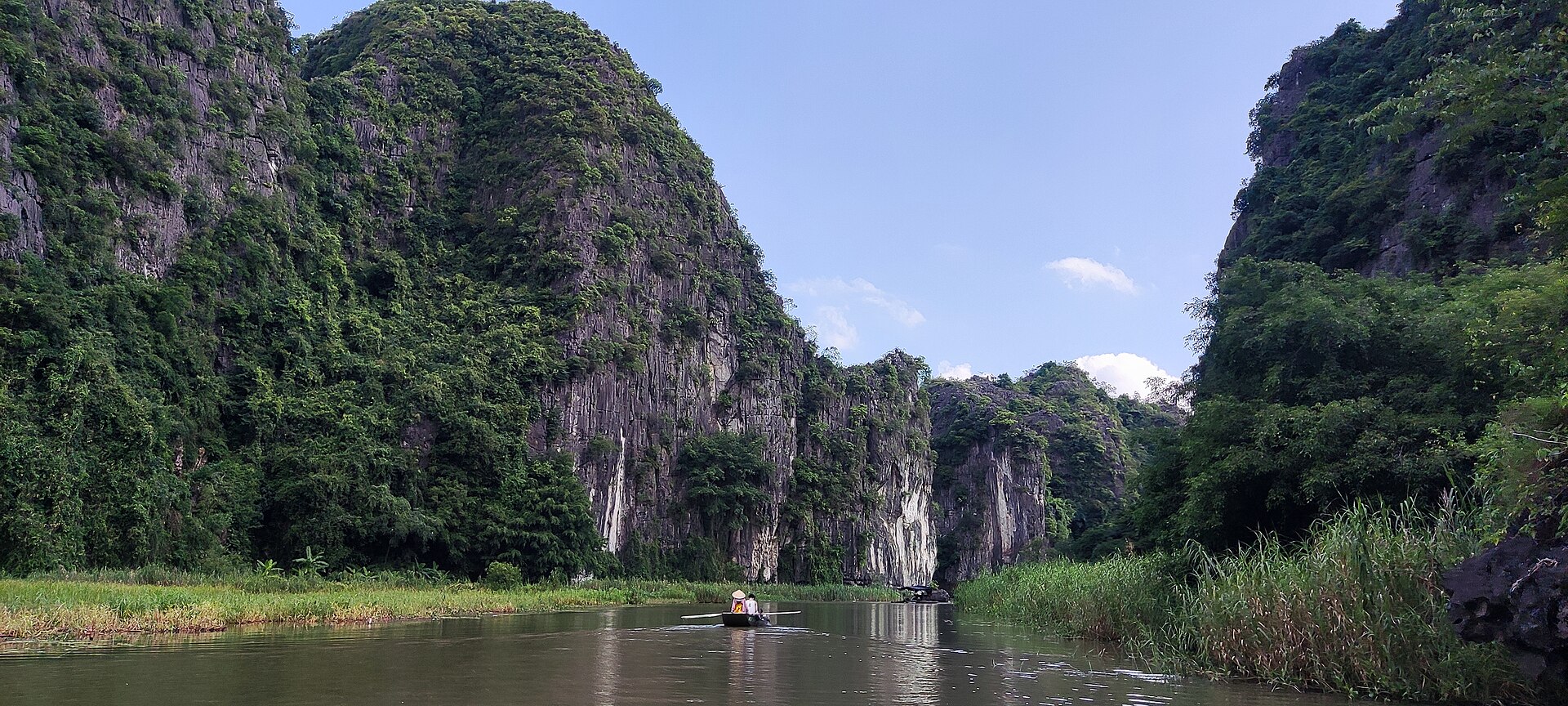
Tam Coc (“three caves”) is the older, smaller boat trip. Boats leave from the Van Lam wharf in Tam Coc village and are rowed along the Ngo Dong river through rice paddies and three river caves, then turn round and come back the same way. It’s the classic Ninh Binh picture: a narrow river winding through bright green or golden fields between the towers, lined with rowing boats. The rowers here are famous for rowing with their feet, which frees their hands, although you’ll see the same technique at Trang An too.
Tickets
- Tam Coc boat: 250,000 VND per adult, 120,000 VND for children between 1 and 1.3 m tall.
- With the electric car: 350,000 VND per adult (190,000 VND for children), which adds an electric-car link along the route from Tam Coc to Thai Vi Temple, Tien Cave and Bich Dong Pagoda.
- Hotline: 1900 9157.
Bich Dong Pagoda
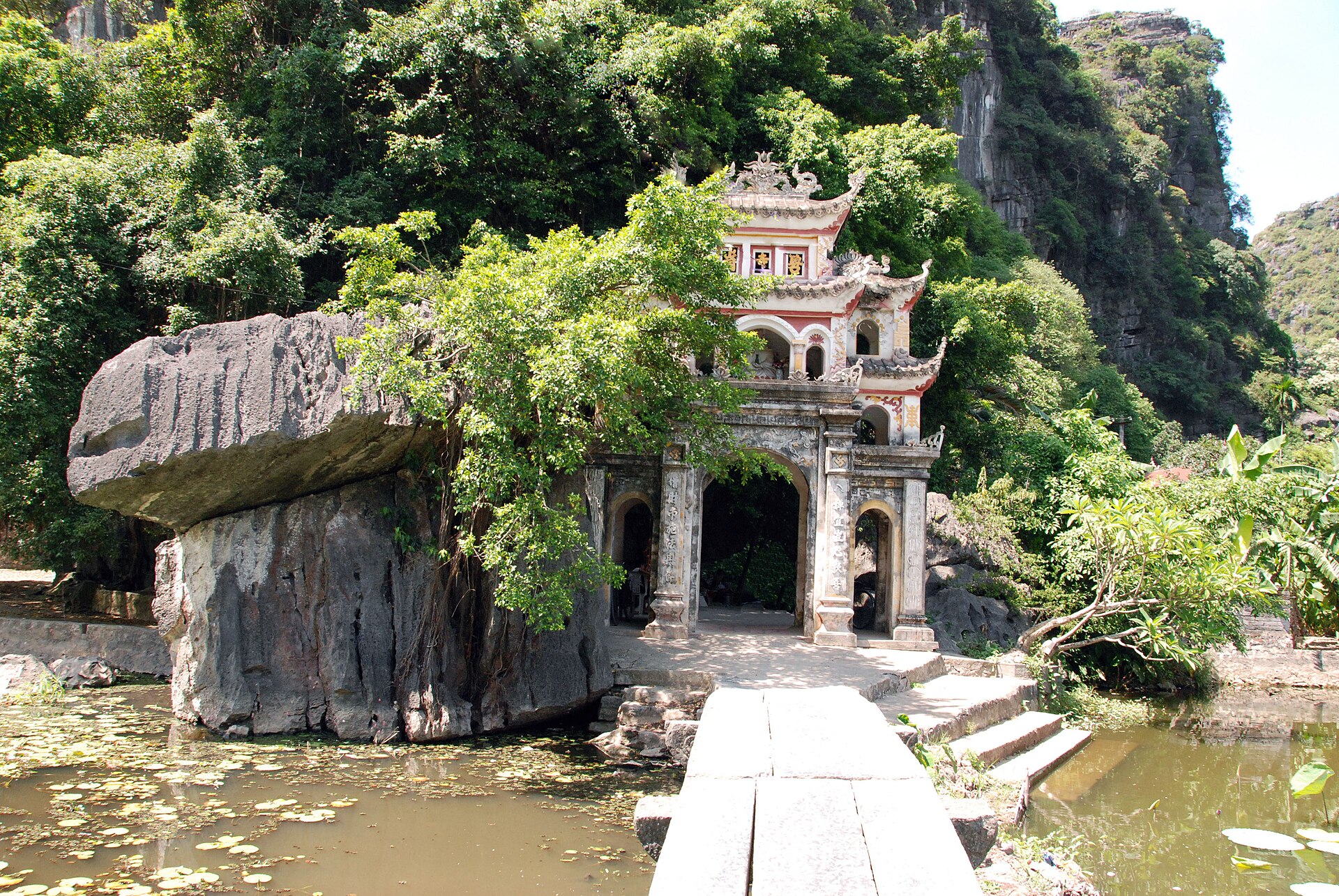
Bich Dong is a pagoda in three parts, the lower, middle and upper pagodas, climbing up the side of Ngu Nhac Mountain, with the upper part set in a cave in the cliff. You reach it by stone steps from the bottom, and it’s a lovely, quiet place, with views back over the fields. It’s a short ride or cycle from Tam Coc village, or it’s on the electric-car route above.
Tam Coc or Trang An?
If you have time for both, do both: they’re different enough. If you have time for one, most people should choose Trang An, for the caves, the temples and the sense of being deep inside the karst. Choose Tam Coc if you’ve come for the rice fields, especially in late May and early June when they turn gold; if you want a shorter trip; or if you’re staying in Tam Coc village and want something on your doorstep. One honest drawback to Tam Coc is that on the way back, vendors in boats sometimes pull alongside to sell drinks and snacks, and you may be encouraged to buy something for your rower. Buy if you want to; you’re under no obligation.
Mua Cave: The View
Mua Cave (Hang Mua) is not really about the cave, which is small. It’s about the climb. From the foot of the hill, a stone stairway of nearly 500 steps zigzags up the ridge to a viewpoint and a small pagoda. From the top you look straight down over the Ngo Dong river winding through the Tam Coc fields and out over the limestone towers in every direction. It’s one of the best-known views in Ninh Binh, and it’s worth every step.
- Price: The heritage management board’s price list gives 150,000 VND per person. The provincial tourism portal quotes about 100,000 VND. Confirm at the gate.
- The climb: Steep and uneven in places, with no shade near the top. Allow time to stop on the way up. Take water, and wear proper shoes.
- When: Early morning and late afternoon are cooler and have the best light. Sunset is the most popular time, so expect company at the top.
- Getting there: The site is at Khe Ha village, a short cycle or motorbike ride from Tam Coc village.
Is it worth it? Yes. If you climb one thing in Ninh Binh, climb this.
Hoa Lu: The Old Capital
Before Hanoi, Vietnam’s capital was here. In the 10th and 11th centuries the kings of the Dinh and early Le dynasties ruled from Hoa Lu, a site protected by the ring of limestone hills around it. Very little of the original city survives. What you visit today are the temples to the kings, set among ponds and gardens with the cliffs behind.
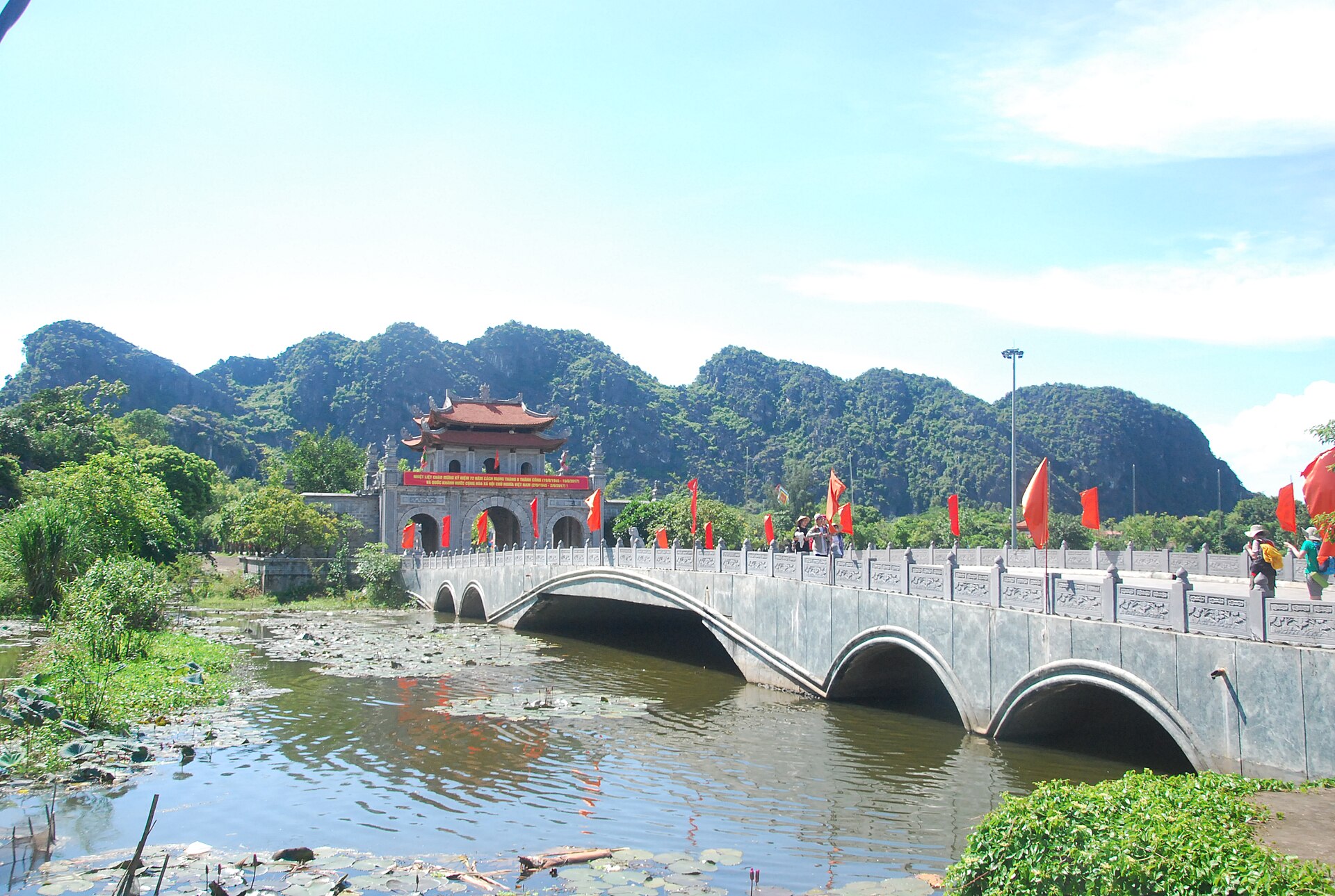
- Price: 20,000 VND for adults; 10,000 VND for children aged 6–15, people over 60 and disabled visitors.
- Time needed: An hour is plenty for most people.
Is it worth it? It’s not the most dramatic sight in Ninh Binh, but it’s cheap, quiet, close to Trang An, and the best place in the area to learn why it matters historically. Combine it with the Trang An boat trip on the same morning or afternoon. For more on Vietnamese temples and what you’re looking at, see our guide to Hanoi’s pagodas and temples.
Bai Dinh Pagoda
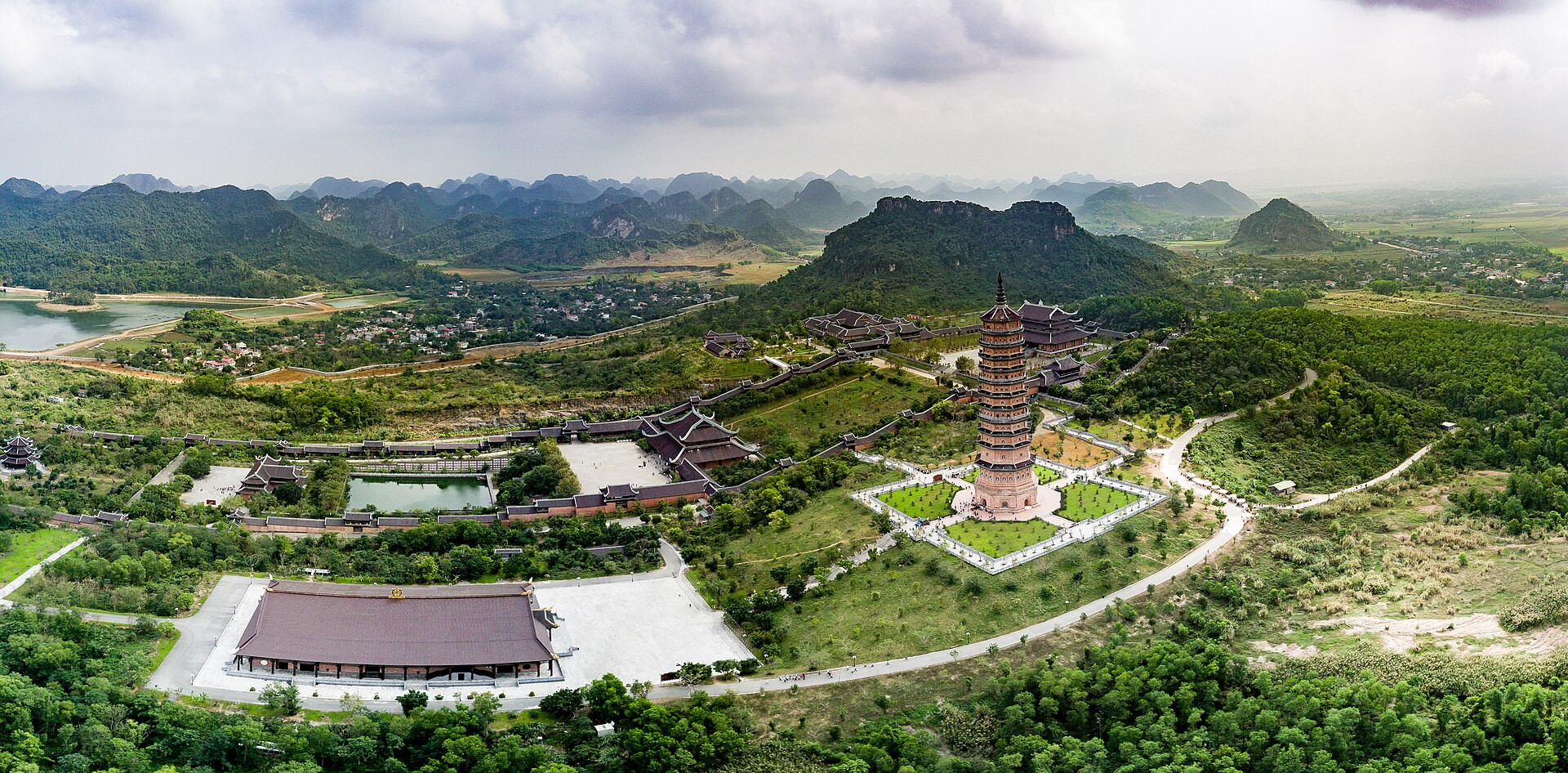
Bai Dinh is a modern Buddhist complex on a hillside north-west of Trang An, and its selling point is scale. The provincial tourism authority describes it as Vietnam’s largest pagoda complex. Its corridors are lined with 500 stone arhat statues; the gilded bronze Buddha in the Phap Chu Hall is about 10 metres tall and weighs 100 tonnes; and its bronze bell weighs 36 tonnes. At the top end stands the Bao Thap, a tall tower that you can go up for the view.
Tickets and the electric car
The heritage management board’s price list shows no entry fee for the pagoda itself. What you pay for is transport: the complex is big, and the car park is a long way from the main halls.
- Electric car, return: 150,000 VND per adult, 100,000 VND per child between 1 and 1.3 m.
- Package with the Bao Thap tower and a foot soak: 300,000 VND per adult, 210,000 VND per child.
- Guide: 500,000 VND per tour, if you want one.
Is Bai Dinh worth it?
Honestly, it depends on what you like. If you’re interested in contemporary Vietnamese Buddhism, or simply in seeing something on an enormous scale, it’s impressive, and on festival days the crowds of pilgrims give it a real buzz. But it’s a modern building, not an ancient one, and if you’ve only got a day or two, the boat trips, Mua Cave and Hoa Lu say more about Ninh Binh. Our advice: go if you have a spare half-day, take the basic return electric car, and decide at the top whether the tower is worth the extra.
Van Long, Thung Nham and the Quieter Corners
If Trang An and Tam Coc feel too busy, Ninh Binh has quieter options.
Van Long is a wetland nature reserve north of the main karst area, where boats glide across shallow, reedy water between the cliffs. It’s calmer than Trang An and Tam Coc, and it’s the place to go if you’d rather watch the landscape than the boat in front. Entry is 100,000 VND for adults and 50,000 VND for children; ask at the gate about the boat.
Thung Nham is a bird park and eco-tourism area among the hills, with caves, gardens and a boat trip. It’s best known for the birds that roost there. Admission is 150,000 VND for adults and 100,000 VND for children between 1 and 1.3 m; an electric car is 40,000 VND extra.
Both work well as a second-day trip once you’ve seen the big two.
Further Afield: Cuc Phuong and Phat Diem
Cuc Phuong National Park was established in 1962 as Vietnam’s first national park. It’s forest rather than river scenery: walking trails, caves and big old trees, including one the provincial tourism authority says is a thousand years old, and a long bird list (the provincial tourism page counts 336 resident species). Adult entry is 60,000 VND. It’s further west than the other sights and deserves a full day, ideally with a night nearby. Check the park’s own site for its current visitor rules before you go.
Phat Diem Cathedral, in Kim Son to the south-east, is a large Catholic cathedral complex built in a mix of Vietnamese and European styles. Entry is free. It’s off the main karst circuit, so it suits people with a car and an interest in architecture, or anyone staying a third day.
Getting to Ninh Binh from Hanoi
Ninh Binh is about 90–100 km south of Hanoi. By the provincial tourism portal’s reckoning, the bus takes 1.5 to 2 hours; in practice, allow longer for Hanoi traffic at either end. Train journey times are on the Vietnam Railways timetable.
By bus
Buses leave from three of Hanoi’s bus stations: Giap Bat, My Dinh and Nuoc Ngam. Fares run from about 80,000 to 150,000 VND. There are also door-to-door “limousine” vans run by private companies, which pick you up from your hotel in the Old Quarter and drop you at your hotel in Ninh Binh or Tam Coc; your hotel can book one. For a first-timer, the limousine is the easiest option.
By train
Trains on the north–south line stop at Ninh Binh station. Economy seats cost about 90,000 to 150,000 VND. Departure times suit some trips better than others, so check the current timetable on Vietnam Railways’ booking site before you plan around it. From Ninh Binh station, you’ll need a taxi or a Grab to Tam Coc or Trang An.
By car or tour
A car with a driver costs around 800,000 to 1,200,000 VND a day, according to the provincial portal’s guide. That’s good value for a family or a group of three or four, and it gives you the freedom to start early and fit in Hoa Lu or Bai Dinh. Organised day tours from Hanoi are the other option. They’re easy, but you’ll be on the boats at the busiest time of day.
For a full comparison of these options for a one-day trip, see our Ninh Binh day trip from Hanoi guide, and for Hanoi’s bus stations, the Hanoi transport guide.
Getting Around Ninh Binh
The sights are spread over an area too big to walk, but small enough that you don’t need a car.
- Bicycle. Most hotels and homestays in Tam Coc lend or rent bicycles, and the lanes between Tam Coc, Mua Cave and Bich Dong are flat and lovely to cycle. Trang An and Hoa Lu are a longer ride, along busier roads.
- Motorbike. 100,000 to 150,000 VND a day, plus fuel. Only ride if you’re experienced and properly licensed; see our guide to renting a motorbike for the legal and insurance side.
- Car with driver or Grab. For Bai Dinh, Cuc Phuong or Phat Diem, or if you’d rather not ride. See our Grab guide.
Where to Stay in Ninh Binh
There are three realistic bases.
Tam Coc village is where most foreign visitors stay, and for good reason. It’s right by the Tam Coc boats and a short cycle from Mua Cave and Bich Dong, and it has the most choice: homestays, small hotels, cafés, bars and bike rental, all within a few streets. The trade-off is that it’s become a tourist village, busy in the evenings, and some of the charm of the paddies is lost to the strip of bars and restaurants.
The Trang An side is quieter: homestays and small resorts set among the fields and hills, with the boat wharf nearby. It’s lovely if you want peace and have your own transport or are happy to cycle, less so if you want restaurants on the doorstep. Resorts near Trang An start at around 2,000,000 VND a night, according to the provincial portal.
Ninh Binh city is practical rather than attractive. It’s by the train station and bus stops, rooms are cheap and plentiful, and there’s local food everywhere. It suits a late arrival or an early departure, but you’ll be commuting to the sights.
Prices, from the provincial tourism portal’s September 2026 guide: budget double rooms about 250,000–500,000 VND a night, 2–3 star hotels about 600,000–1,200,000 VND, and resorts from around 2,000,000 VND. Tam Coc Garden is one of the established resorts in the Tam Coc area, if you want something higher-end.
Day Trip or Overnight?
Most visitors see Ninh Binh on a day trip from Hanoi, and it’s a perfectly good day out. But here’s the honest arithmetic. You spend three to four hours of the day on the road. You arrive at the boats around the same time as everyone else on a day tour, so you’re on the water at the busiest time. You usually get Trang An or Tam Coc plus one other sight, and you head back to Hanoi as the light gets good in the late afternoon.
Stay one night and the trip changes. You can be on the boats first thing, before the tour groups arrive. You can climb Mua Cave at sunset and cycle back through the fields in the dusk. You get both boat trips, or one boat trip plus Hoa Lu and Bich Dong, without rushing. And you see Tam Coc in the evening, when the day-trippers have gone. If you have the time, our firm recommendation is at least one night, ideally two.
When to Go
Ninh Binh can be visited year-round, and each season changes it.
- Late May to early June: the rice around Tam Coc turns gold before the harvest. This is the season of the classic photos, and the province built its 2026 Tourism Week around a Tam Coc “golden season” festival in late May. It’s hot, and busy at weekends.
- Summer: hot, humid and green, with heavy rain. High water can close cave routes at Trang An for short periods; check before you go.
- Autumn: generally pleasant weather, although heavy rain still happens: Trang An suspended its boats for the weather on 9 November 2026.
- Winter: cool, often grey and misty, with fields fallow or freshly planted. The karst scenery doesn’t depend on the rice, and it’s quieter. Bring a warm layer for the boat. See our Hanoi in December and Hanoi in January guides for what the season is like.
- Festival season: the weeks after Tet bring pilgrims to Bai Dinh and other temples. The Trang An Festival was held on 3 May 2026, the 17th day of the third lunar month. Check the provincial tourism site for the 2027 date.
Whatever the season, weekdays are calmer than weekends, and mornings are calmer than middays. For the Hanoi side of your trip, see the best time to visit Hanoi.
How Many Days? Sample Plans
One day (from Hanoi)
- Leave Hanoi by 7:00, by limousine van or car.
- Trang An boat trip mid-morning.
- Lunch near Trang An, then Hoa Lu.
- Mua Cave in the late afternoon if you have a car and can stay for the light; otherwise head back to Hanoi.
Two days, one night
- Day 1: Morning transfer from Hanoi to Tam Coc. Afternoon cycle to Bich Dong. Mua Cave for sunset. Dinner in Tam Coc village.
- Day 2: Trang An first thing in the morning. Hoa Lu late morning. Lunch, then back to Hanoi, or the Tam Coc boat in the afternoon if you’re staying another night.
Three days
- Add Van Long or Thung Nham for a quieter third boat trip, Bai Dinh for the scale, or a full day at Cuc Phuong. For a car-based day, combine Phat Diem with a stop on the way back to Hanoi.
The provincial tourism portal estimates 1,500,000 to 2,500,000 VND per person for a two-day, one-night independent trip, covering transport, a room, tickets and food. That’s a useful ballpark for planning. Ninh Binh fits neatly into a longer northern Vietnam trip; see our seven-day Hanoi and northern Vietnam itinerary or the two-week Vietnam itinerary.
Practical Tips
- Cash. Bring cash in small notes for tickets, tips, drinks and bike rental. Cards are accepted at the bigger hotels and some ticket offices, but not everywhere.
- Sun and rain. On the boats you’re exposed for an hour or more. Take a hat and sun cream, and a light waterproof in the wet season.
- Tipping the rowers. Not compulsory. A small tip at the end for a rower who’s done a good job is appreciated, and the decision is entirely yours.
- Temple dress. Cover shoulders and knees at Bich Dong, Hoa Lu and Bai Dinh. See our guide to Vietnamese etiquette.
- Check before you go. After heavy rain, call the Trang An (1900 9251) or Tam Coc (1900 9157) hotline, or ask your hotel, to make sure the boats are running.
- Travel insurance. If you’re renting a motorbike, check your policy covers it. See travel insurance for Hanoi.
Ninh Binh Travel Guide FAQ
Is Ninh Binh worth visiting?
Yes. It’s one of the most striking landscapes in Vietnam and the easiest of the big northern trips from Hanoi: no overnight bus, no cruise, and as little as two hours on the road. The boat trip at Trang An and the view from Mua Cave are among the best things to do in the north.
Should I do Trang An or Tam Coc?
Trang An, if you can only do one: it’s the bigger trip, with more caves and temples. Tam Coc is shorter and is at its best when the rice is green or gold. If you’re staying the night, do both.
How many days do you need in Ninh Binh?
One day is enough for a boat trip and one other sight. Two days, with a night in Tam Coc, lets you see the main sights without rushing. Three days adds the quieter reserves, Bai Dinh or Cuc Phuong.
Is a day trip to Ninh Binh from Hanoi worth it?
Yes, if it’s all the time you have. But you’ll spend three to four hours on the road and be on the boats at the busiest time of day. If you can, stay at least one night.
How do you get from Hanoi to Ninh Binh?
By bus from Giap Bat, My Dinh or Nuoc Ngam stations (80,000–150,000 VND), by limousine van with a hotel pickup, by train to Ninh Binh station (economy seats 90,000–150,000 VND), or by car with a driver. The bus takes around 1.5 to 2 hours, plus Hanoi traffic.
How much does the Trang An boat trip cost?
300,000 VND per adult in 2026, and 150,000 VND for children between 1 and 1.3 m tall. The Tam Coc boat is 250,000 VND, or 350,000 VND with the electric car to Bich Dong.
Is Bai Dinh worth it?
If you have a spare half-day and like big religious sites, yes. The scale is remarkable. But it’s a modern complex, and if your time is short, the boat trips, Mua Cave and Hoa Lu are a better use of it.
When is the best time to visit Ninh Binh?
Late May to early June for the golden rice at Tam Coc, and spring or autumn for comfortable weather. Avoid the days after very heavy rain, when cave routes at Trang An can close.
More Ninh Binh Guides
This page is the overview. Each Ninh Binh guide on this site takes one part of the trip further, starting with the one-day version: our Ninh Binh day trip from Hanoi guide covers the transport options and a realistic timetable for a single day.
Can’t decide between the two boat trips? Our Trang An vs Tam Coc comparison sets them side by side: caves and temple stops against rice-field scenery, route lengths, crowds, vendors and tips, and how to fit both into one day.
For the climb itself, our Mua Cave guide covers the nearly 500 steps, what’s at the summit, how hard it really is, and whether to go for sunrise or sunset, with sun times for every season.
Once you’ve settled on Trang An, the next decision is the route. Our Trang An boat tour guide takes each numbered route stop by stop, from the nine caves of route 1 to the short route 4, with timings, high-water closures and the one most first-time visitors should pick.
For the shorter of the two boat trips, our Tam Coc boat ride guide covers what to expect before you board: the two ticket types, the rowers who row with their feet, the three caves, the vendor boats and the tipping question, and when the rice turns gold.
For the history behind Hoa Lu, our Hoa Lu ancient capital guide explains the 42 years when this valley was the capital of Dai Co Viet, what’s left of it today, the climb to King Dinh’s tomb and how to see it all in an hour or two.
If you’re deciding whether Bai Dinh deserves half a day, our Bai Dinh pagoda guide covers the electric car and the tower package, the 500 stone arhats, the old pagoda on the mountain, festival season and an honest verdict on the scale.
If you’re staying a night, our Ninh Binh 2 day itinerary lays out a plan that uses the early and late hours a day trip misses: Hoa Lu, Trang An and Mua Cave at sunset on day one, then Tam Coc at dawn and Van Long, Bai Dinh or Thung Nham on day two.
Related Hanoi Guides
- Ninh Binh Day Trip from Hanoi
- Day Trips from Hanoi
- Ha Long Bay: The Complete Visitor Guide
- Sapa from Hanoi
- Perfume Pagoda from Hanoi
- Mai Chau Day Trip
- 7 Days in Hanoi and Northern Vietnam
- Hanoi Transportation Guide
- Best Time to Visit Hanoi
- Hanoi Pagodas and Temples
Photo Credits
Featured image, the karst landscape seen from Mua Cave: View from Hang Mua by Shyamal, CC BY-SA 4.0, via Wikimedia Commons.
Water pavilion at Trang An: Trang An, Ninh Binh by GieohatchoHaiLy, CC0, via Wikimedia Commons.
The gate at Bich Dong: Bich dong by Tupham, public domain, via Wikimedia Commons.
A boat on the Ngo Dong river at Tam Coc: Tam Coc 29 by Shyamal, CC BY-SA 4.0, via Wikimedia Commons.
Approach to Hoa Lu: Co do Hoa Lu 112 by Kien1980v, public domain, via Wikimedia Commons.
Bai Dinh from above: Bai Dinh Pagoda (36519413585) by Felix Nagel from Germany, CC BY 2.0, via Wikimedia Commons.