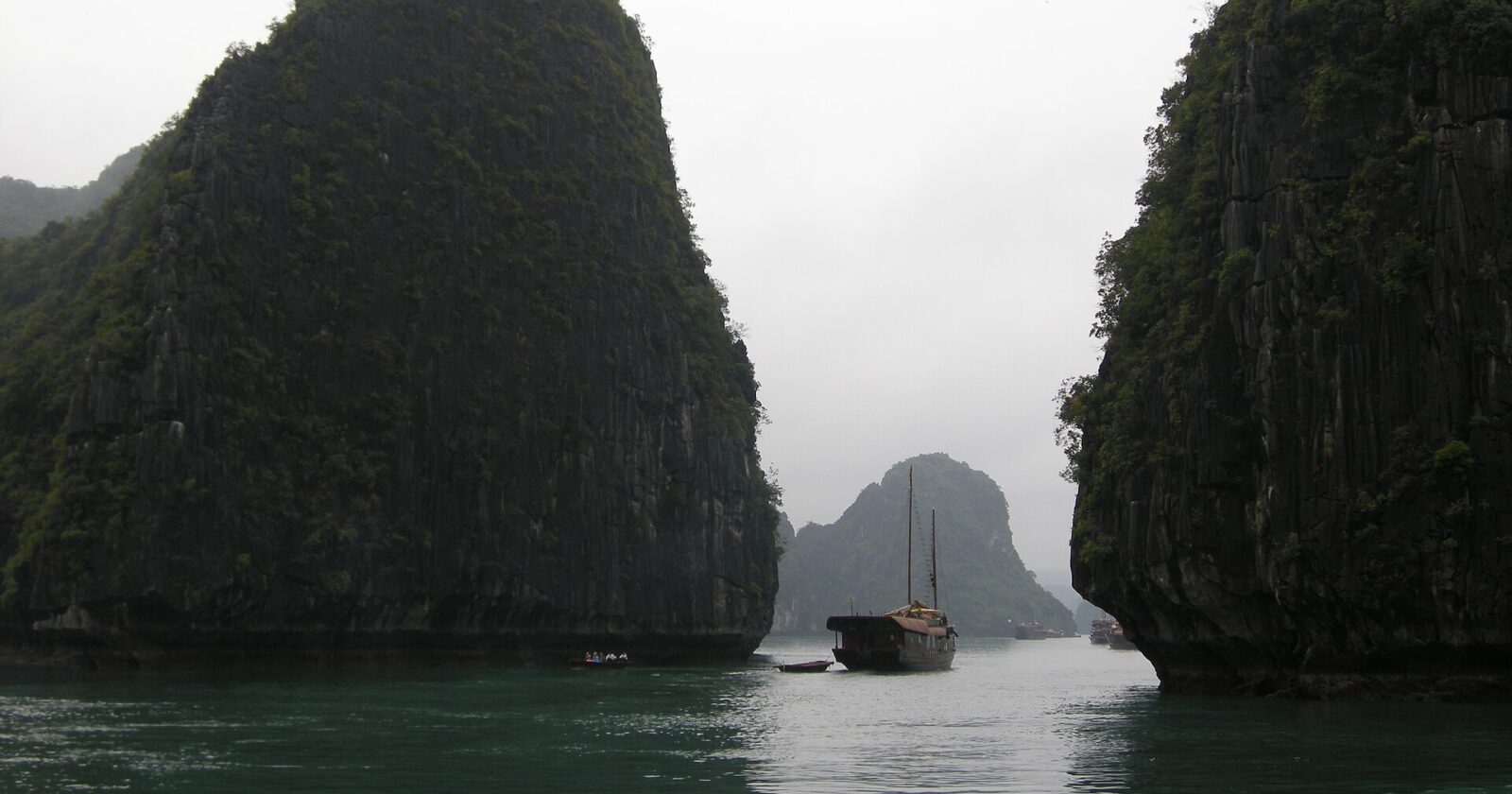
Tuan Chau marina at half past eleven on a weekday looks nothing like the brochures. Limousine vans back into the drop-off lane, porters wheel suitcases down the pontoons, and dozens of white cruise boats sit nose to tail waiting for their lunch guests. Give it forty minutes, though, and your boat rounds the first headland, the engine note drops, and the limestone starts closing in on both sides. This Ha Long Bay guide is mostly about that second part: how to spend as much of your time as possible out among the islands, and as little as possible queuing for them.
It covers the three bays and how to choose between them, whether a day trip is worth the drive (usually not), the cruise tiers and the point where extra money stops buying anything, the caves and islands by name, the official route system that decides where every boat goes, the weather month by month, and what things cost once you’re on board. Prices were checked in September 2026; treat them as the right order of magnitude rather than a quote, because cruise rates move with the season and the dong. For the journey itself, including shuttles, buses and private cars, see our separate guide to getting from Hanoi to Ha Long Bay.
Ha Long Bay at a Glance
If you only read one part of this page, read this table. Everything below it is the reasoning behind the numbers.
| What | The short answer (2026) |
|---|---|
| Where | Quang Ninh province, roughly 170 km east of Hanoi |
| Journey from Hanoi | About 2.5 hours by expressway; most cruises include a shuttle from the Old Quarter |
| UNESCO status | World Heritage Site since 1994; extended in 2023 to take in the Cat Ba archipelago |
| Islands | Around 1,600 in the core bay, nearer 2,000 across the wider area |
| Standard day cruise | US$40–60 (about 1–1.6 million VND); newer premium day ships US$90–150 |
| 2 days, 1 night | US$65–120 budget · US$120–200 mid-range · US$200–350 premium · US$350+ luxury, per person |
| Route sightseeing fee | 250,000–290,000 VND (US$10–11) per person, included in almost every cruise price |
| Best months | March to May, and October to November |
| Riskiest months | August and September, when storms cancel the most sailings |
| How long to stay | One night is the minimum that works; two if you want Lan Ha or Bai Tu Long properly |
What Ha Long Bay Actually Is
Ha Long Bay is a drowned limestone landscape. The rock was laid down on an ancient sea floor, lifted, and then eaten away by millions of years of warm tropical rain until only towers, domes and ridges were left standing. When sea levels rose after the last ice age, the valleys between them flooded. What you sail through today is the tops of a mountain range with the sea let in, which is why the islands rise sheer from the water, why so many of them are hollow, and why the caves you walk through on a cruise were carved by water long before there was any sea around them.
The scale takes a while to register. The bay covers roughly 1,550 square kilometres, close to the area of Greater London, and UNESCO describes it as holding “some 1,600 islands and islets”. Wider counts that take in the smaller rocks come closer to 2,000. Almost all of them are uninhabited, and most are too steep to land on. The name means “descending dragon”: in the version of the legend you’ll hear on board, a dragon sent by the Jade Emperor to defend the coast spat out jewels that turned into islands and wrecked the invading fleet. It’s a better story than the geology, and the guides tell it well.
The history is real as well as mythical. The Bach Dang estuary at the western edge of the bay is where Vietnamese commanders twice beat invading fleets by driving iron-tipped wooden stakes into the riverbed and luring enemy ships in at high tide, first in 938 and again against the Mongols in 1288. One of the caves on the standard route, Dau Go, takes its name from the stakes supposedly stored there. UNESCO inscribed the bay in 1994 for its scenery, extended the listing in 2000 for its geology, and in 2023 enlarged it again to include the Cat Ba archipelago. The site is now officially “Ha Long Bay – Cat Ba Archipelago” and spans two provinces.
Three bays, one seascape
The most useful thing to know before you book anything is that “Ha Long Bay” in a cruise name doesn’t tell you where the boat actually goes. The same karst seascape runs for well over a hundred kilometres of coast, and the tourist trade divides it into three bays with different permits, different departure piers and very different crowd levels.
- Ha Long Bay proper is the core: the famous caves, the most boats and the most day-trippers. Boats leave from Tuan Chau International Marina and from Bai Chay.
- Bai Tu Long Bay runs north-east from Ha Long toward Van Don. It’s the same geology with far fewer boats, a floating fishing village at Vung Vieng, and a quieter, slightly wilder feel.
- Lan Ha Bay lies to the south, off Cat Ba island in Hai Phong province. The islands are smaller and greener, there are dozens of small beaches, the water is usually cleaner, and the boats are smaller. Most Lan Ha boats board on the Hai Phong side or from Cat Ba itself.
Ha Long, Lan Ha or Bai Tu Long: Which Bay to Book
This is the decision that shapes your trip more than the choice of boat, so it’s worth getting right. Here’s how they compare in practice.
| Ha Long Bay | Lan Ha Bay | Bai Tu Long Bay | |
|---|---|---|---|
| Boats on the water | Busiest by a distance | Moderate, rising every year | Fewest |
| Typical boat | Large multi-deck ships, many cabins | Smaller boats, often 20–40 passengers | Mid-sized, fewer operators |
| Day cruise | US$40–60 from Ha Long | Around US$25 from Cat Ba | Mostly overnight; few day boats |
| Headline sights | Sung Sot Cave, Ti Top Island, Luon Cave, Fighting Cock islets | Beaches, lagoons, kayaking, Cat Ba | Vung Vieng fishing village, Thien Canh Son cave |
| Swimming | Ti Top and Soi Sim beaches only, both busy | The best of the three, often straight off the boat | Good, with little company |
| Best for | First-timers who want the famous caves | Swimmers, kayakers, anyone who hates crowds | Quiet, and people who’ve seen Ha Long before |
Our verdict: if you have one night and care more about the scenery than ticking off Sung Sot, book a Lan Ha or Bai Tu Long itinerary. The karsts look the same, but you share them with a fraction of the boats. If you have your heart set on the big caves, or you’re travelling with someone who would rather walk through a cave than paddle a kayak, stay in Ha Long proper and accept that the 2 pm cave visit will be busy. For a proper Lan Ha trip on your own terms, base yourself on Cat Ba and take a day boat from there. Our guide to getting from Hanoi to Cat Ba Island covers the bus, ferry and speedboat combinations.
Day Trip, One Night or Two?
This is the most common question, and the honest answer depends on what you’re willing to trade for time.
The day trip
Do the maths before you book. A day trip from Hanoi usually means a pickup around 07:30–08:00, about 2.5 hours on the expressway, four to five hours on the water, and the same drive back, getting you home around 19:00–20:00. The boat time typically covers lunch on board, one cave (usually Sung Sot or Thien Cung), and either a kayak or bamboo-boat loop at Luon Cave or a stop at Ti Top. You’ll be on the water in the middle of the day, which is when the light is flattest and every other day boat is out too.
It isn’t a bad day. But you spend more time on the road than among the islands, and you miss the evening and early morning, which are the two things an overnight cruise is really selling. If you genuinely have one spare day and no other chance, go, and pick a boat with a smaller group. If you can give it a night, give it a night.
Two days, one night
This is the standard booking and it works. The rhythm is nearly identical across operators: shuttle from the Old Quarter at around 08:00, boarding at about midday, lunch as the boat pulls out, an afternoon cave or beach plus kayaking, sunset from the top deck, a spring-roll “cooking class”, dinner, and squid fishing off the back of the boat. The next morning brings tai chi at dawn, one more cave or a short paddle, brunch while the boat heads back, and disembarkation at around 10:30–11:00. You’re back in Hanoi by mid-afternoon.
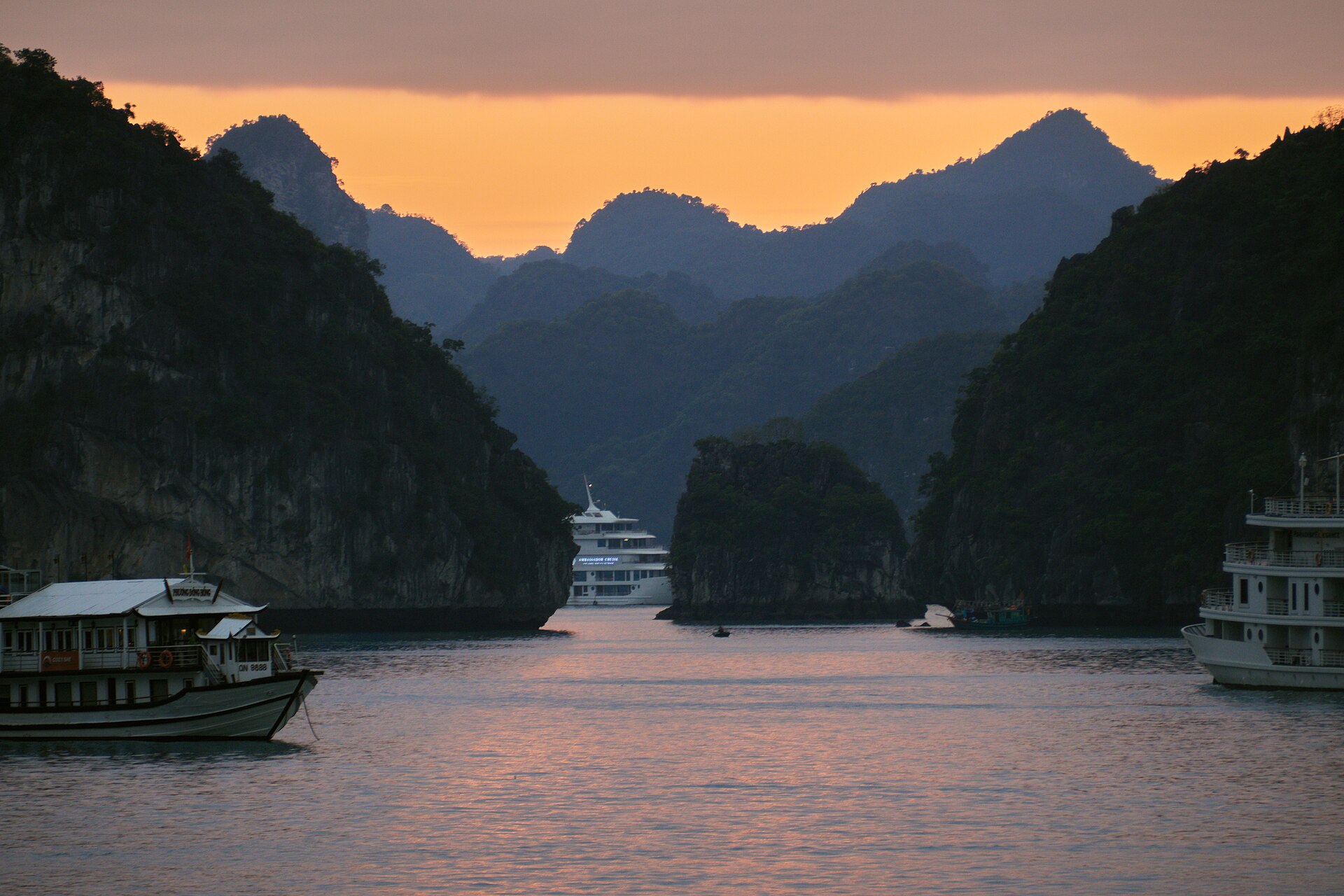
That gives you about 22 hours on board, roughly eight of which you’ll spend asleep. The good hours are late afternoon, sunset and the first hour after dawn, when the day boats haven’t arrived yet and the bay goes quiet. That window is why one night beats a day trip, even though the itinerary looks similar on paper.
Three days, two nights
A second night lets the boat go further: deeper into Lan Ha or Bai Tu Long, a proper half-day of kayaking, a village visit or a morning on a beach you don’t share with a coachload of people. If the bay is the main reason you came to northern Vietnam, it’s worth it. Read the day-two plan closely, though. On some itineraries the big boat goes back to harbour to drop off and collect one-night guests while you spend the day on a smaller tender. That’s fine, but it isn’t what the photos suggest, and you should know before you pay for it.
If you’re fitting the bay into a longer trip, our seven-day Hanoi and northern Vietnam itinerary and the ten-day Vietnam route from Hanoi both show where one night fits and where two does.
How to Choose a Cruise Without Reading 400 Reviews
There are hundreds of licensed boats, and on booking sites they blur into one long scroll of balconies and sunset cocktails. These are the things that actually separate a good night from a mediocre one, roughly in order of importance.
- The route comes before the boat. Find out which bay and which official route the itinerary uses (more on routes below). A mid-range boat in Lan Ha usually beats a luxury boat stuck in the Sung Sot traffic.
- Age and last refit. Boats built or refitted in the last five years have better plumbing, quieter generators and cabins that don’t smell of damp. Ask the operator, or look for dates in recent reviews.
- Cabin count. A boat with 10–20 cabins feels like a small hotel; one with 40 or more feels like a ferry at mealtimes. It also affects how long everyone takes to get on and off the tender at each stop.
- What’s included. Check kayaks, the route fee, drinks, and the type of transfer (a nine-seat limousine van is much more comfortable than a coach). The extras section below shows how quickly these add up.
- Timings. Some cheaper itineraries board late and disembark early, which quietly cuts the good hours. Compare boarding and check-out times, not just the list of stops.
- Recent reviews of the specific boat. Look for reviews from the last twelve months that name the vessel, not the company. Operators run several boats of very different quality under the same brand.
- Who you’re actually buying from. Book on the operator’s own site or through an agent you trust. The cheap cruise sold from a shopfront in the Old Quarter sometimes turns out to be a different, older boat on the day. Our guide to common Hanoi scams covers the switch.
Here’s roughly what each tier costs for two days and one night, per person sharing a twin or double cabin.
| Tier | 2D1N per person | What you get | Worth it? |
|---|---|---|---|
| Budget | US$65–120 (about 1.7–3.1 million VND) | Older boats, small cabins, coach transfers, kayaks often extra | Only if the budget is fixed; extras narrow the gap |
| Mid-range | US$120–200 (about 3.1–5.2 million VND) | Newer boats, decent cabins, kayaks and fees included | The best value on the water |
| Premium | US$200–350 (about 5.2–9.1 million VND) | Balcony cabins, better food, smaller groups, quieter routes | Yes for two nights or a special occasion |
| Luxury | US$350–600 (about 9.1–15.6 million VND) | Suites, fine dining, butler-style service | Rarely for one night |
| Ultra-luxury | US$600–900+ | A handful of boats with very few suites | A treat, not an upgrade in scenery |
The tier that doesn’t pay back is luxury on a one-night trip. Going from premium to luxury gets you a bigger bathroom, a longer wine list and more attentive staff, but the same bay, the same route and the same eight hours of sleep. If you have that money to spend, a second night on a premium boat buys more of what you came for. At the other end, the cheapest boats are often less of a saving than they look once you’ve paid for the kayak, the transfer and the drinks. Mid-range is where the value is. Couples looking for a proper occasion should read our Hanoi honeymoon itinerary, which builds the cruise night in rather than bolting it on.
The Official Routes, and Why Every Boat Visits the Same Caves
Here’s what the brochures leave out: cruise companies don’t choose where they sail. Quang Ninh province licenses a set of numbered routes through Ha Long Bay, and every tourist boat has to stick to one. That’s why so many itineraries look alike, and why Sung Sot Cave has a queue at two in the afternoon. The route fee is set by the province, not the operator, and is almost always included in your cruise price. The fees below come from the provincial newspaper’s published table. Some agents still quote the older 290,000 VND rate, so expect to see either figure.
| Route | Main stops | Fee per person |
|---|---|---|
| Route 1 | Thien Cung and Dau Go caves, Dog Head islet, Ba Hang, Dinh Huong (Incense Burner) and Trong Mai (Fighting Cock) islets | 250,000 VND (about US$10) |
| Route 2 | Soi Sim beach, Ti Top Island, Sung Sot Cave, Me Cung Cave, Luon Cave, Trinh Nu Cave | 250,000 VND (about US$10) |
| Route 3 | Cua Van fishing village cultural centre, Tien Ong Cave, the Ba Ham lakes | 200,000 VND (about US$8) |
| Overnight on Route 2 | One night / two nights | 550,000 / 750,000 VND (about US$21 / US$29) |
| Kayak or bamboo boat | At Luon Cave and other set points | 50,000 VND (about US$2) state fee |
Two practical points follow from this. First, only Route 2 includes swimming stops, so if a Ha Long itinerary promises a beach, it’s on Route 2 and it’s Ti Top or Soi Sim. Second, when you compare two Ha Long cruises, compare their routes before their cabins. Route 1 is heavier on caves and the famous islets; Route 2 has the beach, the viewpoint and the kayaking; Route 3 leans towards the fishing-village side of the bay. Lan Ha and Bai Tu Long have their own permits and routes, which is a big part of why they feel quieter.
The Sights Worth Knowing by Name
Guides will point out dozens of rocks shaped like animals. These are the stops that come up again and again on itineraries, and what they’re actually like.
Sung Sot Cave
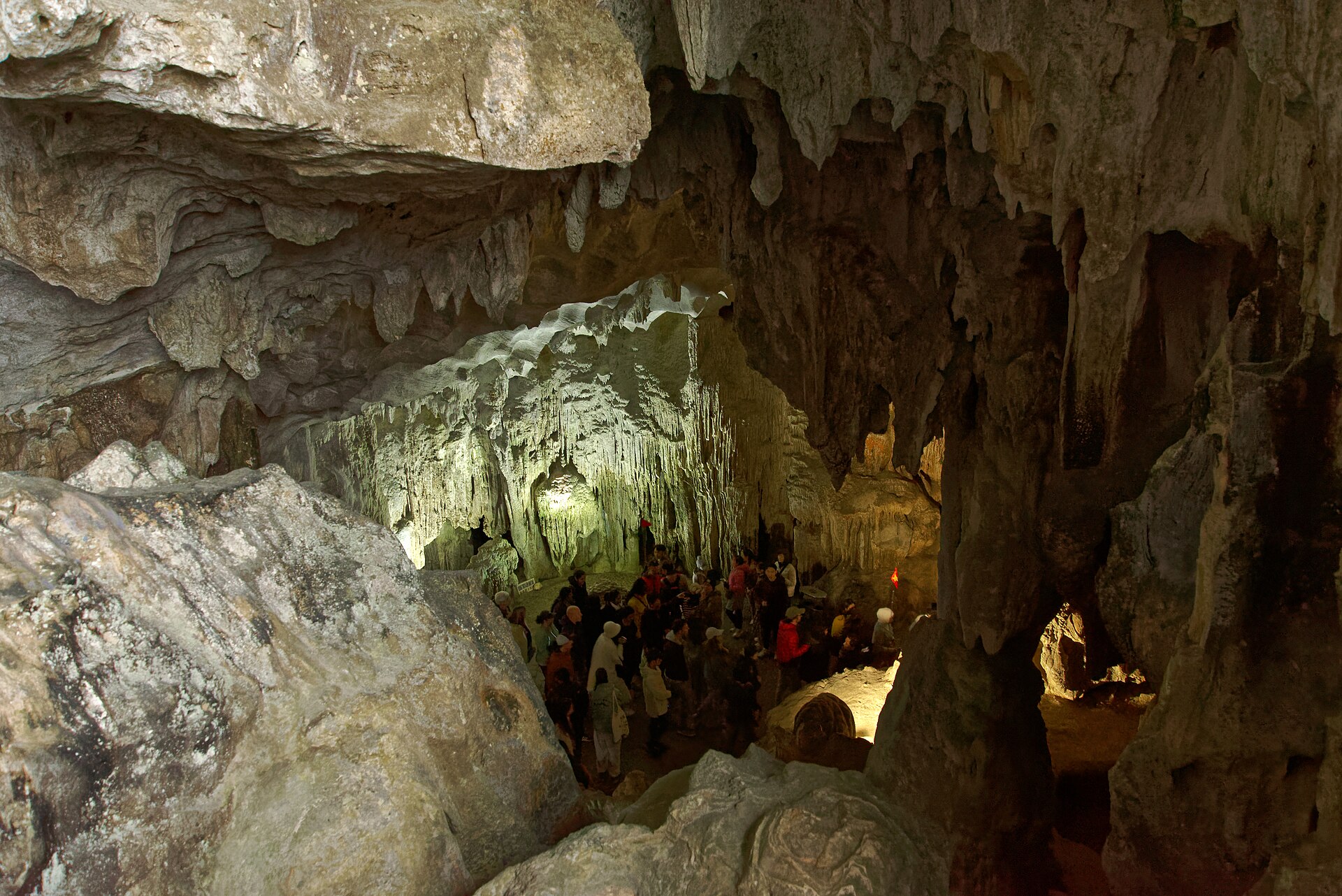
Sung Sot (“Surprise”) Cave, on Bo Hon island, is the biggest and busiest cave in the bay, and on most Ha Long itineraries it’s non-negotiable. You climb a stone staircase to the entrance, pass through a smaller first chamber, and then the second chamber opens up into a vast hall of stalactites and pale, pitted rock that easily holds several boatloads at once. It’s genuinely impressive. It’s also lit in bright colours, walked in a slow one-way shuffle at peak times, and home to a pink-lit rock formation that guides will describe as a fertility symbol with a perfectly straight face. Go on the earliest or latest visit your itinerary allows, and wear shoes with grip, because the path gets slippery in humid months.
Ti Top Island
Ti Top has a small crescent beach and a steep staircase of a few hundred steps up to a pavilion with the classic panoramic view over the bay. The island is named after the Soviet cosmonaut Gherman Titov, who came here with Ho Chi Minh in 1962. The climb takes 15–20 minutes and the view repays it, but the steps are narrow and the traffic runs both ways, so it’s a slow, sweaty climb on a summer afternoon. The beach is the busiest swimming spot in the bay. If you only have energy for one of them, do the climb.
Luon Cave
Luon is less a cave than a tunnel: a low arch through the side of Bo Hon island that opens into a lagoon enclosed on every side by cliffs. You go through by kayak or on a bamboo boat rowed by a local, and it’s one of the loveliest short experiences in the bay. Macaques sometimes sit on the rocks above the water. Don’t feed them, and keep a hand on anything loose. If you’re not confident in a kayak, the bamboo boat is the better choice. You sit low on the water, it’s quieter, and the rower knows the currents.
Thien Cung and Dau Go Caves
These two sit close together on Route 1. Thien Cung (“Heavenly Palace”) is a compact, heavily decorated cave, only rediscovered in the 1990s, full of formations that guides turn into stories of dragons, fairies and royal weddings. Dau Go (“Wooden Stakes”) is larger and plainer, and tied to the legend of the Bach Dang stakes. Between them they give you the Route 1 cave fix in under an hour. If your itinerary includes Sung Sot, you don’t need both, and you won’t miss much if the day runs short.
Trong Mai and Dinh Huong islets
Trong Mai, the Fighting Cock islets, are two slim rocks facing each other that are often sold as the “kissing rocks”. They’ve become the unofficial logo of Ha Long. Dinh Huong, the Incense Burner islet, is the rock on the back of the 200,000 dong note, so check your wallet and compare. Neither is a stop as such; the boat slows down, everyone crowds the rail, and you move on. Both are on Route 1.
Cua Van and Vung Vieng floating villages
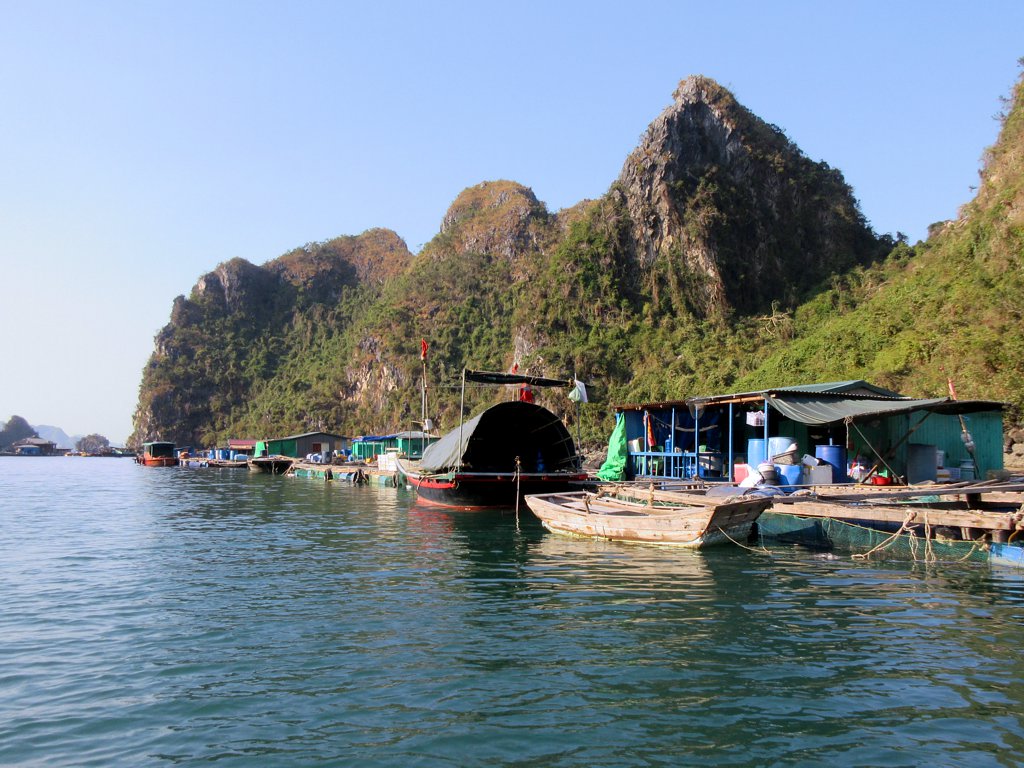
For generations, fishing families lived on the bay in houses built on floating platforms, farming fish and shellfish in cages beneath them. Most of the Ha Long families were moved ashore in the mid-2010s, and what remains at Cua Van is part working village, part living museum, with a floating cultural centre and a school building you can see from the water. In Bai Tu Long, Vung Vieng is quieter and feels more like a place where people still work. The usual visit is a slow tour in a rowing boat, often paddled by a woman from the village. It’s worth doing, as long as you go as a guest rather than a spectator. Ask before you photograph people up close.
The pearl farm stop
Plenty of itineraries include a pearl farm, especially in Bai Tu Long and Lan Ha. You get a short demonstration of how oysters are seeded, then you’re led into a showroom. Some people love it; for others it’s the least interesting half hour of the trip. Nobody minds if you don’t buy anything, and if you do want pearls, there’s no rush. Hanoi’s jewellers sell the same thing without the boat mark-up.
Kayaking, Swimming and the Rest of the Programme
Every cruise sells more or less the same list of activities. Here’s how they compare in practice.
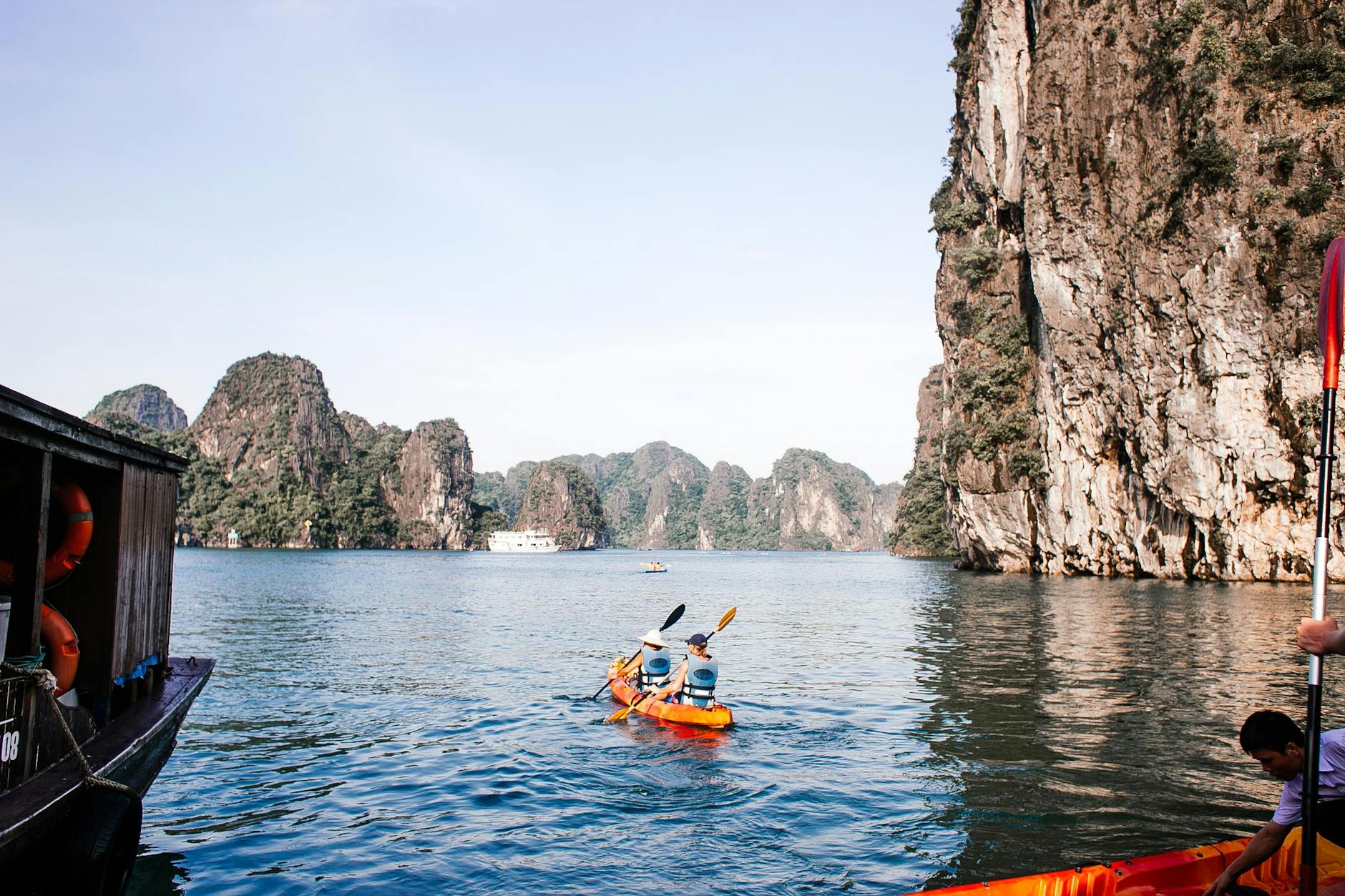
- Kayaking: the best thing on the programme, full stop. Sessions usually last 30–45 minutes, at Luon Cave or around a sheltered lagoon. Lan Ha itineraries tend to give you longer and more interesting water. Budget boats sometimes charge US$10–15 on the day; mid-range and above include it. Bring a dry bag for your phone.
- Bamboo boats: the relaxed alternative, rowed by a local, and a good choice for older travellers, small children or anyone who’d rather look than paddle.
- Swimming: easy in Lan Ha, often straight off the boat or from a small beach. In Ha Long it’s limited to Ti Top and Soi Sim on Route 2. The water near Ha Long City isn’t the cleanest in the region, so swim further out if you can.
- Sunset on the top deck: usually sold as “happy hour”. Drinks are rarely cheap, but the light is the best of the day.
- The spring-roll cooking class: a friendly 20 minutes rolling nem, not really a class. Fun with children.
- Squid fishing: a line, a lamp and a lot of patience off the back of the boat. Very few people catch anything, and hardly anyone minds.
- Tai chi at dawn: worth getting up for, if only for the light. The bay at 06:00 is the quietest it will be all trip.
- The spa: fine if you’re on a two-night trip with time to spare. On one night, the hour is better spent on deck.
For more active days out of the city, including trekking and climbing, see our guide to adventure activities around Hanoi.
When to Go
Ha Long’s weather follows northern Vietnam’s, with one extra risk: the sea. What matters here isn’t whether Hanoi is pleasant, but whether boats are allowed to sail and whether you’ll see anything when they do.
| Months | Conditions on the bay | Verdict |
|---|---|---|
| January–February | Cool, often around 15–20 °C, grey skies, drizzle and sea mist; Tet brings domestic crowds and higher prices | Atmospheric, not for swimming |
| March–April | Warming up, seas settled; early spring can be hazy | Good, and calmer than summer |
| May | Warm, often clear, before the storms | One of the best months |
| June–August | Hot and humid, afternoon thunderstorms, Vietnamese school holidays | Warm water, crowds and some storm risk |
| September | Peak of the storm season | Highest chance of cancellation |
| October–November | Cooler, clearer and drier as the storms die down | Very good; October can still see storms |
| December | Cool and fairly dry, quieter on the water | Underrated; bring a jacket |
Storms decide more trips than sunshine does. From roughly June to October, and above all in August and September, tropical storms and typhoons push in from the South China Sea, and when one is forecast the provincial authorities stop boats from sailing. They take this seriously, and with reason. In July 2025 a day-tour boat capsized in a sudden summer thunderstorm and dozens of passengers died, most of them Vietnamese families on holiday. Since then sailings have been suspended earlier and more often. If your cruise is cancelled by an official order, reputable operators will reschedule or refund. Check the operator’s weather policy before you pay, and build a spare day into your plans if you’re travelling in late summer.
The other thing to plan around is crowds. Weekends are busier than weekdays because of domestic tourism, and the national holidays (the 30 April–1 May break, 2 September and Tet) fill boats and push up prices. Summer brings school-holiday crowds. For Hanoi’s own weather across the year, see the best time to visit Hanoi and our month-by-month weather guide.
Getting There from Hanoi
The expressway has made this much easier. Most cruises include a shuttle, often a nine-seat limousine van, that collects you from your Old Quarter hotel at around 07:30–08:30 and reaches the marina in about 2.5 hours with one rest stop. Private cars take about the same time and let you choose when to leave. Public buses are cheapest, but they drop you in Ha Long City, not at the pier. Lan Ha trips usually go via Hai Phong and a ferry or boat transfer to Cat Ba. Our full comparison of every way from Hanoi to Ha Long Bay has the times, costs and pickup details.
One practical tip: stay near the Old Quarter the night before, because that’s where most shuttle routes start. Our Hanoi neighbourhood guide explains why that matters for early pickups.
Ha Long City, Briefly
The city on the shore gets overlooked, and mostly for good reason. Bai Chay, on the western side, is the resort strip, with high-rise hotels, seafood restaurants, a night market and Sun World Ha Long, whose double-decker Queen Cable Car crosses the water to a hilltop Ferris wheel and theme park. Hon Gai, across the bridge, is the older, more Vietnamese half of town and grew up around Quang Ninh’s coal industry. Tuan Chau, joined to the mainland by a causeway, is mainly the marina and a resort.
Stay a night on shore only if you’re taking an early day boat from the pier, arriving late from somewhere else, or travelling with children who’ll get more from a cable car and a water park than from another cave. For most people, the cruise is the hotel.
What It Really Costs
The advertised cruise price is rarely the final bill. These are the typical 2026 costs that come on top, or that are hidden inside the price.
| Item | Typical cost | Notes |
|---|---|---|
| Route sightseeing fee | 250,000–290,000 VND (US$10–11) | Included by almost every cruise |
| Overnight bay fee | 550,000 VND (about US$21) for one night | Included; explains part of the jump from day to overnight prices |
| Kayak or bamboo boat | 50,000 VND state fee; US$10–15 on some budget boats | Included on most mid-range boats |
| Shuttle from Hanoi | US$8–12 each way | Only when it isn’t bundled in; check which vehicle you’re getting |
| Beer on board | US$3–5 | Bringing your own is usually forbidden or charged a corkage fee |
| Cocktail | US$6–10 | Happy-hour deals help |
| Crew tips | US$5–10 per guest | Usually left in an envelope at check-out |
| Single supplement | +30–70% of the cabin price | Some boats waive it in low season; ask |
| Spa treatment | US$15–40 | Optional |
A realistic all-in figure for a mid-range 2D1N trip, with a couple of drinks and a tip, is about US$150–230 per person. If you’re watching every dong, a Lan Ha day boat from Cat Ba at around US$25 is the cheapest good day on the water in the region. Our Hanoi budget travel guide shows how that fits into a wider northern Vietnam budget, and our tipping guide covers what’s expected.
Before You Book: Practical Tips
- Bring your passport. Overnight boats register guests with the authorities just as hotels do, and operators will ask for passport details when you book.
- Carry some cash. Tips and small purchases are easier in dong, and some boats add a surcharge for cards. Our money and currency guide covers ATMs and exchange.
- Pack for a boat, not a hotel. Bring swimwear, shoes with grip for cave steps, a light layer for air-conditioned cabins, a warm jacket from December to February, insect repellent and a dry bag. Our Hanoi packing list covers the rest.
- Don’t worry much about seasickness. The bay is sheltered by thousands of islands and is usually flat calm. If you’re very prone to it, a lower cabin in the middle of the boat is the steadiest.
- Tell the operator about dietary needs when you book. Vegetarian and vegan meals are routine on mid-range boats and above, and seafood allergies are well understood.
- Travelling with children? Cave staircases and tenders need a hand, and life jackets are provided. Many boats have family cabins. Our family itinerary for Hanoi shows how to pace the trip around a cruise night.
- Get insured. Weather cancellations are usually refunded by the operator, but missed flights and medical costs aren’t. See our travel insurance guide.
- Photographers: the best light is from dawn until about 07:30 and the hour before sunset, both of which you’ll only get on an overnight trip. Our Hanoi photography itinerary has more on timing your shots.
Ha Long Bay FAQ
Is Ha Long Bay worth visiting in 2026?
Yes, as long as you set your expectations and plan around the crowds. The scenery really is extraordinary, and nothing in northern Vietnam quite replaces a sunset among the karsts. What disappoints people is the main Ha Long route in the middle of the day, when it’s crowded, noisy and busy with boats. Choosing an overnight trip, or a Lan Ha or Bai Tu Long itinerary, avoids most of that.
How many days do you need for Ha Long Bay?
One night (two days) is enough for most visitors and is the best balance of time and cost. Two nights is worth it if you want Lan Ha or Bai Tu Long properly, or plenty of kayaking and beach time. A day trip works, but you’ll spend more time on the road than on the water.
Can you do Ha Long Bay as a day trip from Hanoi?
Yes. Day cruises pick up in Hanoi at around 08:00 and get back around 19:00–20:00, with four to five hours on the water. Standard boats cost about US$40–60 and newer premium day ships US$90–150. It’s a good option if you’re short on time, but you’ll miss the evening and early morning, which are the bay’s best hours.
Is Lan Ha Bay better than Ha Long Bay?
For swimming, kayaking and avoiding crowds, usually yes. The karsts are just as dramatic, the boats are smaller and there are more beaches. Ha Long proper has the big caves, including Sung Sot and Thien Cung, and the famous viewpoint on Ti Top. If those matter to you, stay in Ha Long; if they don’t, Lan Ha is the more relaxing trip.
Is it safe to swim in Ha Long Bay?
At the official beaches and the swimming stops cruises use, yes, in the warmer months. In Ha Long proper, swimming is limited to Ti Top and Soi Sim on Route 2. Lan Ha has cleaner water and more places to swim. Always swim where the crew says it’s allowed, and never in a storm warning.
When is typhoon season in Ha Long Bay?
Roughly June to October, with the highest risk in August and September. When a storm is forecast, the authorities suspend sailings, sometimes for several days. March to May and October to November are the safest times to book if you can’t be flexible.
What happens if my cruise is cancelled because of the weather?
If the authorities order boats to stay in port, reputable operators offer a new date or a refund. Policies differ in the details, so read them before paying, especially for trips from June to October. Travel insurance covers the costs the operator won’t, such as extra hotel nights or rebooked flights.
Is the entrance fee included in the cruise price?
Almost always. The route sightseeing fee, 250,000–290,000 VND per person, and the overnight fee are normally built into the ticket. Kayaking is included on most mid-range boats, but some budget boats charge for it separately, so check the inclusions list.
Do I need to book a Ha Long Bay cruise in advance?
For weekends, national holidays and the best boats in March–May and October–November, book at least a couple of weeks ahead. Midweek outside those peaks, you can often book a day or two before. Last-minute bargains exist, but the best-reviewed small boats sell out first.
More Ha Long Bay Guides
This page is the overview. Each guide below takes one of its decisions further, from choosing a boat and reading a cruise itinerary to Cat Ba, the caves and the city on the shore.
Choosing a boat. Our guide to the best Ha Long Bay cruises skips the paid top-ten lists and works through the five decisions that actually separate a good night from a mediocre one: the bay, the length, the route and timings, the price tier and the boat itself, with the red flags to watch for and the questions to send an operator before you pay.
The standard trip, hour by hour. Our two-day, one-night itinerary follows a typical cruise from the 08:00 Old Quarter pickup to the mid-afternoon drop-off the next day. It shows where the 31 hours actually go, when the caves are busiest, and why the dawn you have to set your own alarm for is the best part of the trip.
Lan Ha or Ha Long? Our Lan Ha Bay vs Ha Long Bay comparison goes deeper into the decision that shapes the trip more than the boat does. It covers crowds, the true price difference, boat sizes, kayaking and swimming, where each bay falls short, and which suits which kind of traveller.
The quiet third bay. Our Bai Tu Long Bay guide covers Ha Long’s north-eastern neighbour: the same karst scenery with a fraction of the boats, the floating village at Vung Vieng, Thien Canh Son Cave, what cruises there cost, and the outer islands such as Quan Lan for anyone who wants to go further.
When to go, month by month. Our guide to the best time to visit Ha Long Bay goes through the year from the water: the storm months when sailings are cancelled, the hazy spring and misty winter, when you can swim, and the holiday weeks when boats fill and prices rise.
Day trip or overnight? Our day trip vs overnight comparison puts the two side by side, hour by hour and dollar by dollar. It shows why a mid-range overnight costs about the same per waking hour as a day boat, and when a day trip is still the right call.
The real bill. Our guide to what a Ha Long Bay cruise really costs breaks down the official fees inside every ticket, the extras nobody quotes, and four worked examples of all-in costs, from a budget couple to a solo traveller. It also explains why the second night costs so much less than the first.
Staying on Cat Ba. Our Cat Ba Island guide covers the land base for Lan Ha Bay: the day boats from Ben Beo harbour, the national park and the climb to Ngu Lam peak, the wartime Hospital Cave and Cannon Fort, the beaches, where to stay, and how to combine the island with a Ha Long cruise.
Kayaking and the caves. Our guide to kayaking and caves in Ha Long Bay explains where paddling is allowed, what a session is like, why Lan Ha’s Dark and Bright Cave beats a queue at Luon, whether Sung Sot deserves its reputation, and which routes and cruises include which caves.
The city on the shore. Our guide to Ha Long City and Bai Chay explains why most visitors drive straight through and when a night on land is worth it. It covers how Bai Chay, Hon Gai and Tuan Chau fit together, Sun World and the Queen Cable Car with 2026 ticket prices, and where to stay and eat.
Related Hanoi Guides
- How to Get from Hanoi to Ha Long Bay – shuttles, buses and private cars compared
- Hanoi to Cat Ba Island – the gateway to Lan Ha Bay
- Day Trips from Hanoi – everything within reach of the capital
- Hanoi and Ha Long Bay Itinerary – how to combine the city and the bay
- Seven Days in Hanoi and Northern Vietnam
- Ten Days in Vietnam from Hanoi
- Ninh Binh Day Trip from Hanoi – limestone karsts on land
- Sapa from Hanoi – the mountain alternative
- Best Time to Visit Hanoi
- Hanoi Honeymoon Itinerary
- What to Pack for Hanoi
Photo Credits
Featured image, a wooden junk between limestone towers in Ha Long Bay: Ha Long Bay, Tower karsts by Vyacheslav Argenberg, CC BY 4.0, via Wikimedia Commons.
Cruise boats anchored at dusk: Ha Long Bay – Halong1407 by lumoplank, CC0, via Wikimedia Commons.
The main chamber of Sung Sot Cave: Sung Sot Cave, Ha Long Bay, Vietnam, 20240128 1549 3836 by Jakub Hałun, CC BY 4.0, via Wikimedia Commons.
Floating houses at Cua Van: Cua Van Floating Village by David Stanley, CC BY 4.0, via Wikimedia Commons.