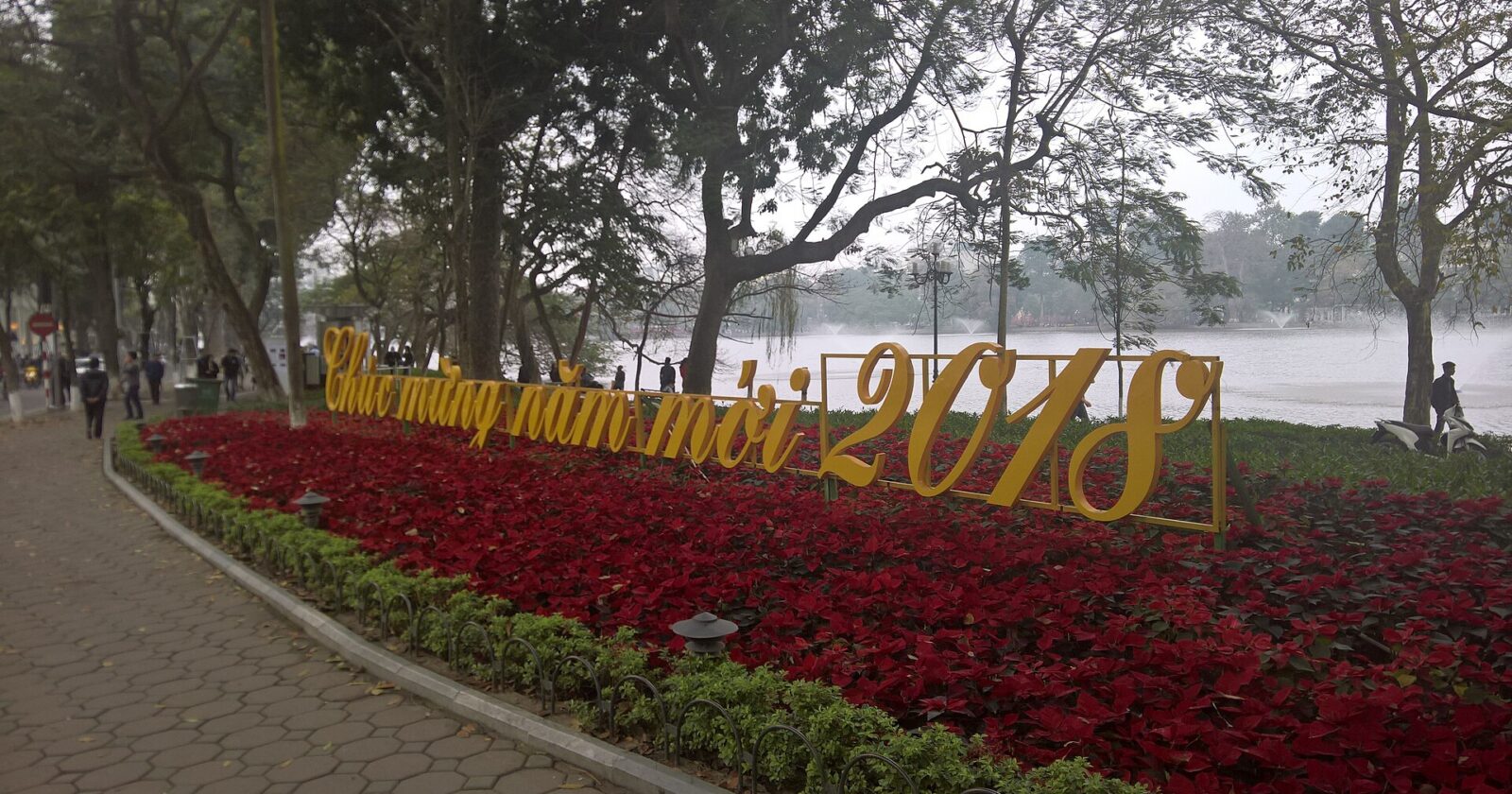
In January 2027, Hanoi spends the month counting down. Tet, the Lunar New Year, falls on 6 February, and from the middle of January you can watch the city get ready for it: kumquat trees strapped upright on the backs of motorbikes, branches of peach blossom wrapped in plastic heading home through the traffic, red and gold decorations going up over the Old Quarter’s shopfronts. All of this happens under some of the greyest skies of the year. That combination, cold and overcast outside and busy with preparation for the biggest holiday of the year, is what Hanoi in January is about this time round.
This guide goes through the month in order: the New Year holiday, the quiet middle weeks, and the last ten days before Tet, when the flower markets open and the whole country starts moving. It covers the weather and air quality, what to see and do, how the Tet rush affects transport, how January changes a trip to Sapa, Ba Vi or Ha Long Bay, and what to pack. Climate figures are the Láng weather station’s 1991–2020 averages. Prices and dates were checked in November 2026; treat prices as the right order of magnitude and confirm them before you go. For Tet itself, see our full guide to Tet in Hanoi, and for how January compares with the rest of the year, our Hanoi weather by month page.
January 2027 at a Glance
| December | January | February | |
|---|---|---|---|
| Average daily high | 21.3°C | 20.2°C | 21.7°C |
| Average daily low | 13.8°C | 14.1°C | 16.4°C |
| Monthly mean | 18.2°C | 16.4°C | 17.2°C |
| Rainfall | 19.5 mm | 19.8 mm | 20.2 mm |
| Relative humidity | 75% | 80% | 84% |
| Sunshine | 124 hours | 74 hours | 45 hours |
| Date | What happens |
|---|---|
| Fri 1 – Sun 3 January | New Year public holiday |
| Mid-January onwards | Tet decorations, peach and kumquat sellers, flower markets |
| Sat 30 January | Kitchen Gods day (Ông Công Ông Táo), the 23rd day of the twelfth lunar month |
| Thu 4 – Wed 10 February | Tet public-sector holiday |
| Sat 6 February | Tet: the first day of the Year of the Goat |
January’s mean temperature is the lowest of the year at Láng. But look at the sunshine figure, which is where January really differs from December: it drops from 124 hours to 74. December is cool and often bright. January is cool and mostly grey.
What the Weather Is Like
On paper, January is barely different from December: highs of about 20°C, lows of about 14°C, and very little rain. In practice it feels like a different season. The sky is overcast for days at a time, the humidity creeps up towards 80%, and the city takes on a muted, damp, pale grey look. The light on the lakes in the morning can be beautiful in its own way, soft and flat. It is not the month for blue-sky photos.
Cold surges
The averages hide the cold spells. Several times each winter, a surge of cold air arrives from the north and temperatures drop sharply for a few days. These are the days when you see Hanoians wrapped in winter coats, hats and scarves. The national tourism authority describes Hanoi from late December to March as colder, with lows around 10°C, and colder spells than that do happen: the lowest temperature on record downtown is 2.7°C, set on 12 January 1955.
The cold is damp rather than crisp, and buildings in Hanoi aren’t made to hold heat. Old shophouses, cafés with open fronts, tiled floors and stairwells open to the street all mean you feel the cold inside as well as out. Check that your hotel room’s air conditioning has a heating setting before you book. In a cold snap, a room without one is a miserable place to spend the evening.
Does it snow in Hanoi?
Not in the city. Snow in the Hanoi area is a rare event in the mountains to the west: in January 2016 it was reported on the peaks of Ba Vi National Park. In the far north, it’s a different story; the Vietnam National Authority of Tourism notes occasional snowfall in Sapa in January.

Air Quality
January is in the middle of Hanoi’s pollution season, and it’s worth knowing that before you go. The city’s Department of Agriculture and Environment says Hanoi’s air pollution is mainly fine dust, PM2.5, concentrated in the dry season from about September to April, with episodes most common from November to March. It puts the 2025 annual average at 48.5 µg/m³.
The worst days are the still ones, when a layer of cold air traps smoke and exhaust close to the ground and the far side of West Lake fades into haze. A cold front usually clears it. For a short trip, the sensible approach is to check a live air-quality reading each morning and plan around it: put the long walks and the motorbike tour on the clearer days, and the museums and cafés on the hazy ones. If you have asthma or a heart or lung condition, bring properly fitted N95, KN95 or FFP2 masks; the cloth masks sold on the street won’t help with fine dust. Our Hanoi health guide has more.
January Week by Week
In most years, the first half of January and the last week or so before Tet feel like two different months. In 2027, with Tet in early February, the run-up falls in late January.
1–3 January: the New Year holiday
The Western New Year is a public holiday in Vietnam, and in 2027 it gives a three-day weekend from Friday 1 to Sunday 3 January. Government offices close, and many Hanoians travel. Book any trains, buses or rooms you need outside the city for those dates in advance. In Hanoi itself, most cafés, restaurants, museums and shops stay open: the long holiday that closes things is Tet, not the Western New Year. The Hoan Kiem walking street normally runs from 19:00 on Friday to midnight on Sunday; hours are sometimes adjusted around holidays, so check the Hoan Kiem ward’s announcements. For the night of 31 December itself, see our Hanoi in December guide.
Mid-January: the quiet weeks
The two weeks after New Year are the calmest part of Hanoi’s winter. The Christmas and New Year crowds have gone home, and the pre-Tet rush hasn’t started. Hotel rooms are easy to find, restaurants have tables, and the main sights are as quiet as they get in the dry season.
It is a good time for the city’s indoor and half-indoor sights. The Temple of Literature, Vietnam’s first national university, is open from 08:00 to 17:00 every day, and adult admission is 70,000 VND (about US$2.70). On a grey January morning, before the tour groups arrive, its courtyards and the stone stelae carrying the names of 1,304 doctoral laureates are at their most atmospheric. See our Temple of Literature guide. Hanoi’s museums are the other obvious choice for a cold, overcast day; our museums guide covers them all, and our list of things to do on a rainy day works just as well for a cold one.
One thing you can’t do this January: go inside the Hanoi Opera House. It closed to visitors after 31 January 2026 for a restoration expected to take about two years. You can still see the façade from the square in front.
The second half of January: Tet arrives in the streets
Somewhere around the middle of the month, Hanoi starts to look like Tet is coming. Decorations go up over the streets and around the lakes. Shops on Hang Ma, the Old Quarter street of paper goods and decorations, fill with red envelopes, lanterns and gold-lettered banners. Roadside stalls start selling peach-blossom branches and potted kumquat trees, and you see them everywhere on the move, strapped to motorbikes, held upright by a passenger, taking up half the lane.
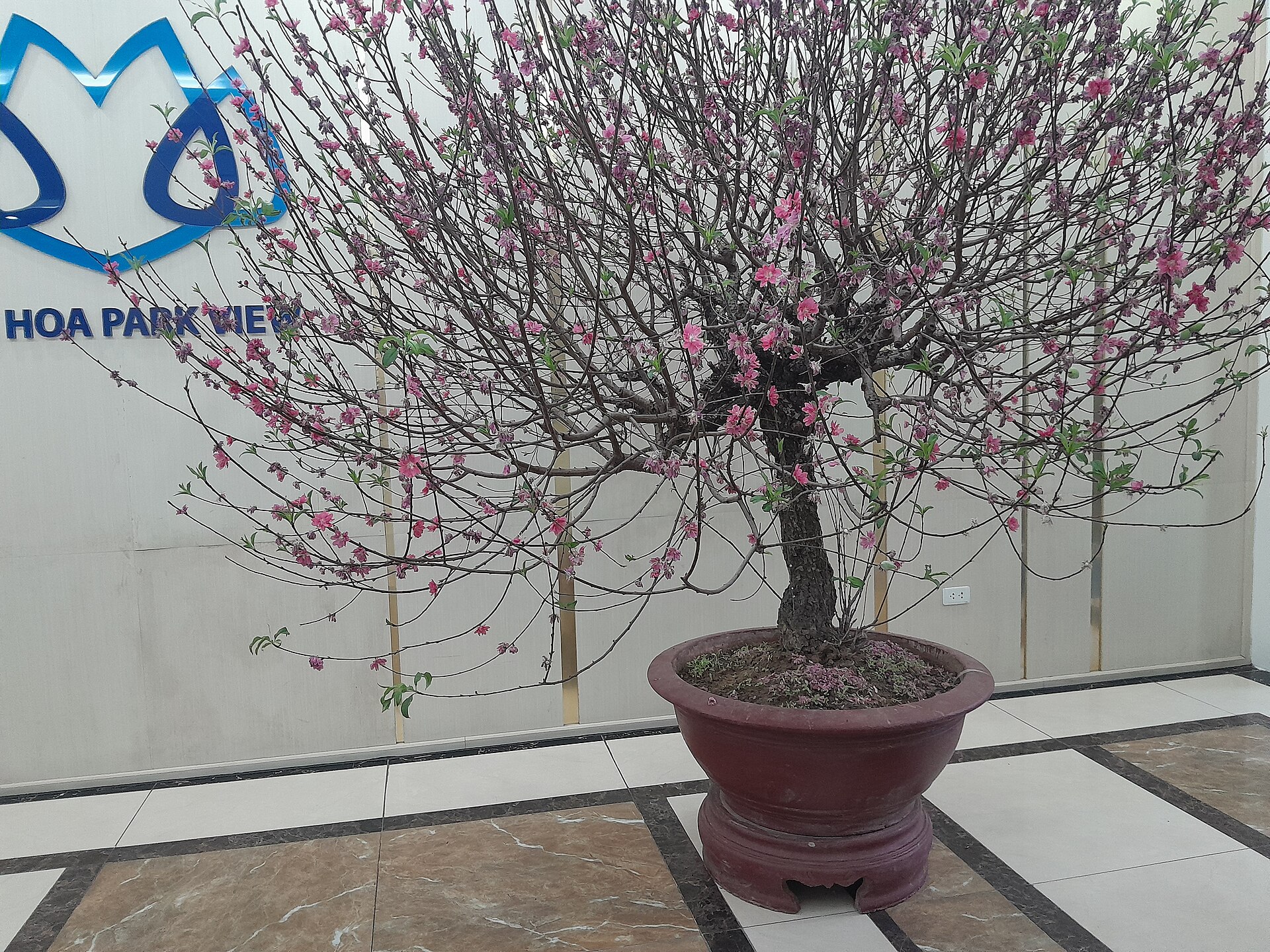
The Old Quarter flower market. The seasonal flower market on Hang Luoc street is a traditional pre-Tet market in the city. It traditionally opens around the middle of the twelfth lunar month and runs until the afternoon of New Year’s Eve. In 2026 the ward expanded it into a “Spring Flower Market of the Old Quarter” across five streets (Hang Luoc, Hang Khoai, Hang Ruoi, Hang Ma and the Phung Hung mural street) from 30 January to 16 February, open 08:00 to 22:00 every day, with those streets closed to traffic. The 2027 dates are set by Hoan Kiem ward each year; check its announcements in January. If it follows the 2026 pattern, it will open in the second half of January.
Quang Ba flower market. Hanoi’s wholesale flower market, by West Lake in Tay Ho, sees flower deliveries and unloading in the small hours, roughly midnight to 03:00, when florists and street sellers stock up. It’s an early-hours outing; ask your hotel for the current hours before you go.
The peach gardens of Nhat Tan. The peach-growing villages along the Red River in Tay Ho are where much of Hanoi’s Tet blossom comes from, and in a normal year you can walk among the trees and watch people choosing branches. Be aware that many riverside gardens were flooded by Typhoon Bualoi in October 2025, and Tet sales in 2026 were unusually quiet as a result. Ask locally how the gardens are doing before you make a special trip.
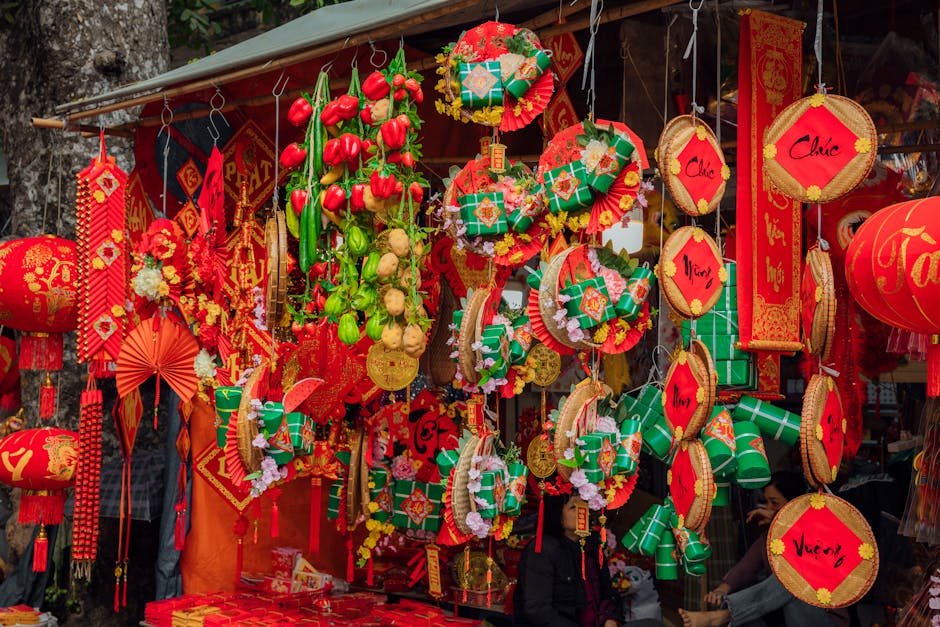
For more on the shopping side, see our Hanoi markets guide.
30 January: Kitchen Gods day
A week before Tet, on the 23rd day of the twelfth lunar month, Vietnamese families send the Kitchen Gods (Ông Công Ông Táo) back to heaven to report on the household’s year. In 2027 this falls on Saturday 30 January. At home, people make offerings at the family altar. In public, the part you’ll see is the release of live carp into lakes and rivers, since the gods are said to ride a carp to heaven. Around Hoan Kiem and West Lake, people come down to the water with small fish in bags and bowls. It’s a gentle, very local ritual, and it marks the moment when Tet preparations go into the final week.
The last days of January: the rush
Tet is a homecoming holiday. In the last week before it, millions of people travel back to their home provinces, and the effect on transport is enormous. The public-sector holiday runs from Thursday 4 to Wednesday 10 February 2027, but the travel peak starts well before that.
- Trains. Vietnam Railways put its Tet 2027 tickets on sale on 5 September 2026. If you need a train in late January or early February and haven’t booked, check availability on the railway’s official sales channels now, and expect the popular departures to be gone. Exchanging or refunding some tickets during the peak period, 29 January to 17 February 2027, costs 30% of the fare.
- Flights and buses. Domestic flights and long-distance buses out of Hanoi fill and get more expensive in the final days. Book as early as you can.
- Getting around the city. Traffic gets heavier and ride-hailing gets slower and pricier as everyone does their last shopping. Leave more time.
- Hotels and tours. Some small hotels, family restaurants and tour operators close or run reduced services over Tet itself. That mostly affects early February rather than January, but if your trip runs into February, check with each business.
If you’re travelling around northern Vietnam in late January, our Hanoi transport guide and the domestic flights guide cover the options.
Eating Through a Hanoi January
The cold makes Hanoi’s food make sense. Breakfast pho or bún riêu in a steamy shophouse, with the doors open to the street, is a morning ritual in any month, but it’s at its best when you can see your breath outside. In the evenings, groups of friends sit around a bubbling hotpot on the pavement for hours, wrapped in coats. Street vendors roast chestnuts and sweet potatoes over charcoal. And the city’s coffee culture moves indoors to the hot drinks: egg coffee served in a bowl of hot water, or a hot cà phê sữa. See our guides to the best pho in Hanoi and egg coffee.
In the run-up to Tet, look out for the food of the holiday too. Bánh chưng, the square sticky-rice cakes wrapped in green leaves, are made and sold in huge numbers in the final weeks. Old Quarter shops pile up candied fruit, dried snacks and boxes of Tet sweets. Our Hanoi food guide has more.
January Beyond Hanoi
Sapa and Fansipan
January is mid-winter in the mountains. The national tourism authority describes Sapa from December to March as chilly, misty and cloudy, with occasional snowfall in January. That chance of snow draws plenty of Vietnamese visitors. Honestly, though, a more typical January trip means cold nights, cloud on the peaks and bare, brown terraces. Go for mountain air and a cosy homestay, book a room with heating, and check the Fansipan cable car’s operator site and the forecast before you go. If you want green or golden terraces, come back between May and October. Our Sapa from Hanoi guide covers the trip, and remember the Tet transport rush if you’re travelling at the end of the month.
Ba Vi National Park
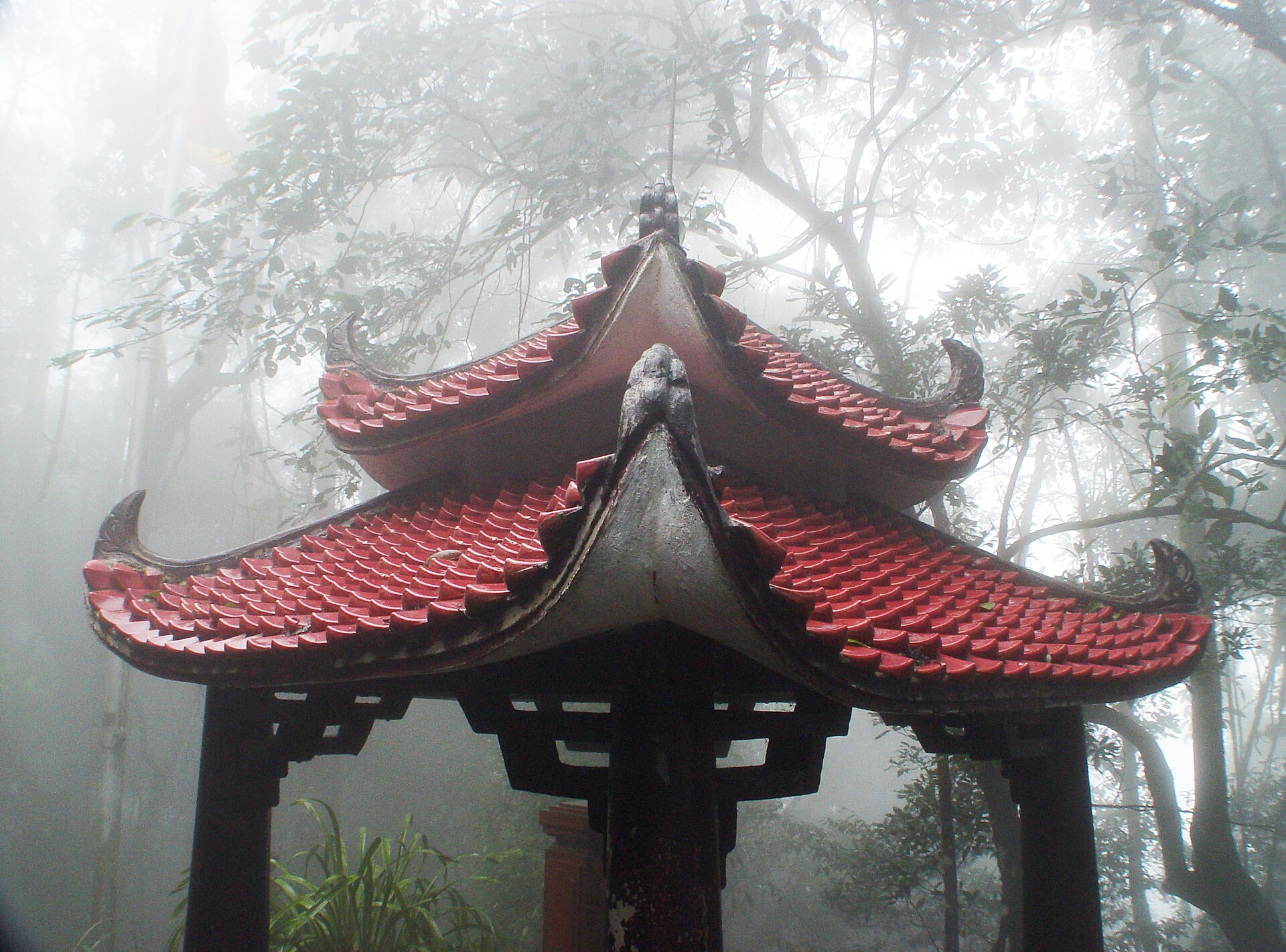
Ba Vi, the mountain park west of the city, is the closest place to Hanoi where winter actually looks like winter: the upper slopes are often in cloud, and the forest and temples near the summit can be wrapped in fog for days. The park’s price list shows adult admission at 60,000 VND (about US$2.30), with lower prices for students and seniors. Check the park’s own website for current prices and opening hours before you go. Our Ba Vi National Park guide has the details.
Ha Long Bay
From December to March, the national tourism authority describes Ha Long Bay as cool to cold, misty and cloudy. January falls outside the June to August storm season, but the karsts are often grey shapes in the haze, and it’s too cold to swim. If you like moody seascapes, it’s a beautiful time to go. If you want the classic green-on-turquoise postcard, choose another month. See the best time to visit Ha Long Bay.
Ninh Binh
An easy day trip in any season. The boats at Trang An and Tam Coc usually run through the winter (check operating times around Tet), and the karst scenery works in grey light. Bring a warm layer for the boat, where you’ll sit still on the water for a couple of hours. See our Ninh Binh day trip guide.
What to Pack for Hanoi in January
Pack for the cold snaps, not the averages. The difference between a pleasant trip and a miserable one in January is whether you can stay warm indoors in the evening.
- A proper warm jacket. A light down jacket or a thick fleece. You’ll wear it every evening, and every day in a cold snap.
- Layers. A thermal base layer, a couple of long-sleeved tops and a jumper, so you can add and remove clothes as you go in and out of unheated buildings.
- A hat, scarf and light gloves. Essential on a motorbike or Grab bike, or anywhere in the mountains.
- Closed shoes and warm socks. Tiled floors and damp pavements are cold underfoot.
- Something warm to sleep in. Especially for Sapa, Ba Vi or a budget room without heating.
- A light waterproof. Rain is light, but drizzly days happen.
- Fine-particle masks (N95, KN95 or FFP2) for high-pollution days.
- Moisturiser and lip balm. Cold wind is drying.
Forgotten something? Warm clothes are cheap and easy to buy in Hanoi. For a year-round list, see what to pack for Hanoi.
Is January a Good Time to Visit Hanoi?
It depends on what you want from the trip.
Come in January if you like a city in its everyday winter routine, you don’t mind grey skies, and you’d rather have quiet sights and easy hotel bookings than sunshine. The first three weeks of January 2027 are among the calmest weeks of the dry season. And the final week, with flower markets, decorations and the whole city getting ready for Tet, is a fascinating time to be in Hanoi, as long as you’ve sorted your transport in advance.
Choose another month if you want sunshine and photos with blue sky (October and November are better), if you’re sensitive to air pollution, or if your trip depends on long-distance trains and buses in the last week of January. If you want to see Tet itself, come in early February instead. Be aware that over Tet many family-run businesses close for several days.
Our pick: arrive in the middle of January, spend the quiet days on the sights, and stay long enough to see the flower markets open. Then leave before the Tet travel peak.
Hanoi in January FAQ
How cold is Hanoi in January?
The 1991–2020 averages at Láng are a high of about 20°C and a low of about 14°C, making January the coldest month on average. Cold surges bring several days much colder than that, and the damp air and unheated buildings make it feel colder than the numbers suggest.
Does it snow in Hanoi in January?
No, not in the city. Snow was reported on the peaks of Ba Vi National Park, west of Hanoi, in January 2016, and Sapa in the far north sees occasional snowfall in January.
Is Tet in January in 2027?
No. Tet falls on Saturday 6 February 2027, and the public-sector holiday runs from 4 to 10 February. The run-up, with flower markets, decorations and the Kitchen Gods day on 30 January, falls in late January.
Will things be closed in Hanoi in January?
Mostly not. Government offices close for the New Year holiday from 1 to 3 January, but cafés, restaurants, shops and the main sights stay open. The big closures come over Tet in early February.
Is it worth visiting Hanoi just before Tet?
Yes, if you plan around the travel rush. The last ten days or so before Tet are one of the most interesting times to see the city, with the flower markets, the peach and kumquat sellers and the Kitchen Gods day. But long-distance transport is extremely busy, so book early.
Is the air bad in Hanoi in January?
It can be on still days. January falls in Hanoi’s fine-dust season. Check a live reading each morning, and bring proper masks if you have a respiratory condition.
Is January a good month for Sapa?
For cold, misty mountain scenery and the occasional chance of snow, yes. For rice terraces, no: they’re bare in winter. Book a heated room, and avoid travelling in the Tet rush at the end of the month.
Planning the Rest of Your Winter Trip
January sits in the middle of Hanoi’s cool season. Our Hanoi in winter guide covers what to do from December to February, and our Tet in Hanoi guide picks up where this one leaves off. If you’re still choosing your dates, the best time to visit Hanoi compares every season, and the festivals and events calendar lays out the year.
Related Hanoi Guides
- Hanoi Weather by Month
- Hanoi in December
- Tet in Hanoi
- Hanoi in Winter
- What to Pack for Hanoi
- Temple of Literature
- Ba Vi National Park
- Hanoi Markets Guide
- Sapa from Hanoi
- Hanoi Museums Guide
Photo Credits
Featured image, New Year greetings and flowerbeds along a misty Hoan Kiem Lake: Hoan Kiem District Tết decorations, Hanoi (2018) 05 by Donald Trung, CC BY-SA 4.0, via Wikimedia Commons.
Potted peach tree in an apartment lobby: Under the peach blossom tree of Yên Hòa Parkview City 25-02-2026 E1 by Bohdan Phúc Đan, CC BY-SA 4.0, via Wikimedia Commons.
Temple roof in the fog on Ba Vi: Ba-Vi5-Vietnam by Steven C. Price, CC BY-SA 4.0, via Wikimedia Commons.