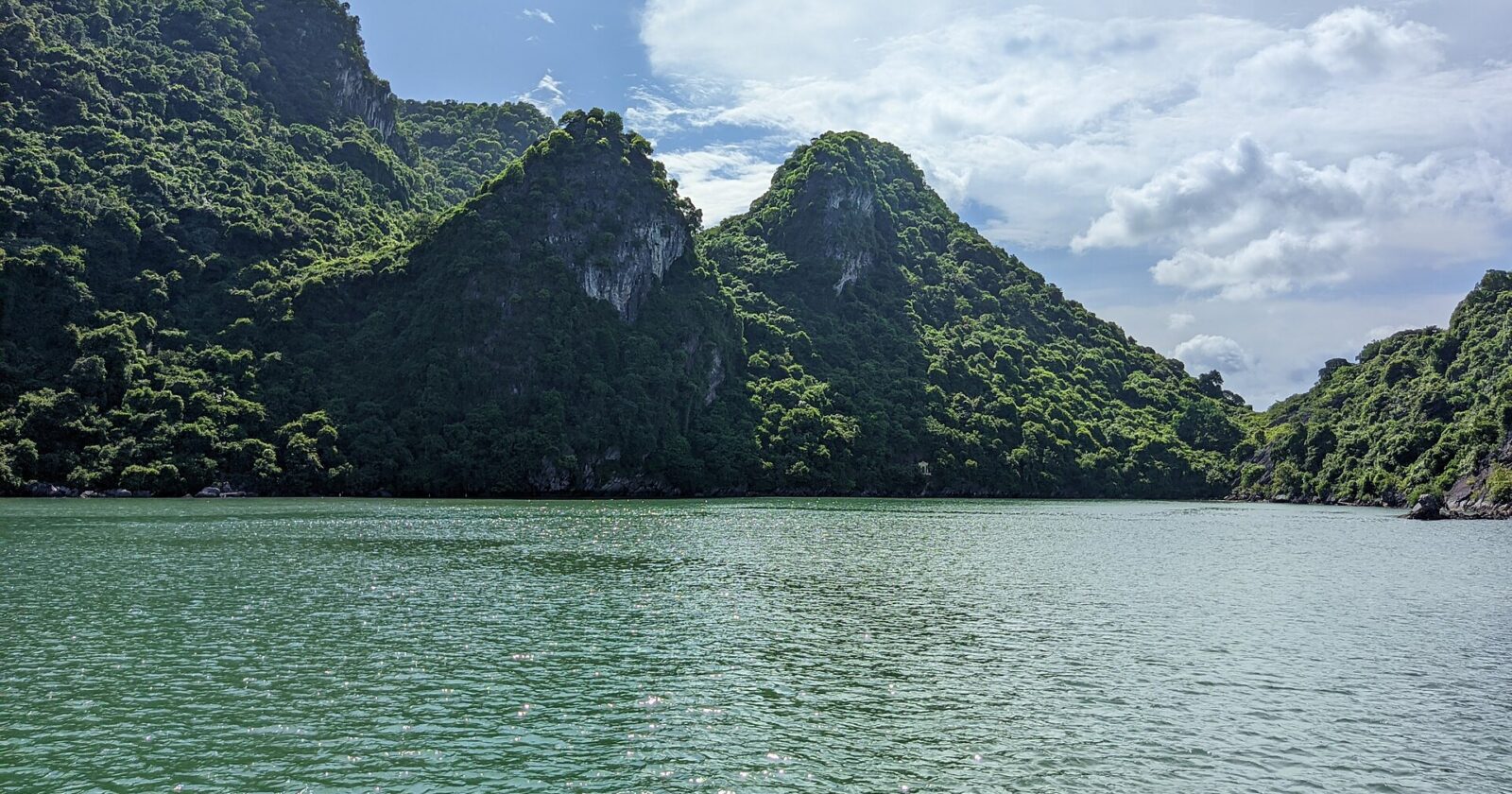
The same stretch of Ha Long Bay can look like two different places six months apart. On a clear afternoon in late October the karsts stand sharp against a blue sky and the water turns green around the kayaks. On a February morning the same islands are grey shapes in a white haze, drizzle beads on the deck rail and nobody is swimming. Both are worth seeing. But when people ask about the best time to visit Ha Long Bay, the question that matters isn’t which month has the nicest weather. It’s which month gives you the best odds of sailing at all, seeing the islands clearly, and not sharing them with every boat on the route.
This page goes through the year month by month from the water: temperature and mist, storm and cancellation risk, crowds and prices, and whether you can swim. It’s about sailing conditions, not the city. For Hanoi’s own weather, see our Hanoi weather by month guide. What follows describes typical patterns, not a forecast, and any prices were checked in October 2026. For everything else about the bay, start with our complete Ha Long Bay guide.
The Short Answer
- Best overall: March to May, when the sea is at its most settled, and October to November, when the skies clear as the storms fade.
- Best for swimming and kayaking: May and June, or early October, when the water is warm and the storm risk is lower than at the height of summer.
- Most atmospheric: December to February. Cool, often misty, quiet on the water, and no good for swimming.
- Riskiest: August and September, when storms cancel the most sailings.
- Book early: around Tet and other Vietnamese public holidays, and check availability before fixing your dates.
Ha Long Bay by Month at a Glance
| Month | On the water | Storm risk | Crowds | Swimming | Verdict |
|---|---|---|---|---|---|
| January | Cool, grey, often misty; drizzle | Very low | Low, unless Tet falls this month | No | Atmospheric; dress warmly |
| February | Cool, damp, hazy | Very low | Very high around Tet | No | Fine outside Tet week |
| March | Milder; settled sea; often hazy | Very low | Low to moderate | Only the hardy | Good |
| April | Warmer, calm, haze thinning | Low | Busier around 30 April | Starting | Very good |
| May | Warm, often clear, before the storms | Low | Moderate | Yes | One of the best |
| June | Hot, humid, afternoon thunderstorms | Moderate | High (school holidays) | Yes | Good, with flexibility |
| July | Hot and wet | Moderate to high | High | Yes | Book with a spare day |
| August | Hot, wet, storm season peaks | High | High | Yes | Riskiest, with September |
| September | Warm, a mix of sun and cloud | Storms still possible | Busier around 2 September | Yes | Keep plans flexible |
| October | Cooler, clearer, drier | Moderate early, low late | Moderate | Early in the month | Very good |
| November | Cool, dry and clear | Low | Moderate | Rarely | Very good |
| December | Cool, fairly dry, quiet | Very low | Low, busier at New Year | No | Underrated |
What “Best” Means on the Water
Three things decide how good your time on the bay will be, and they don’t peak in the same months.
- Whether you can sail at all. From roughly June to October, tropical storms and typhoons push in from the South China Sea, and when one is forecast the authorities keep boats in port. This is the one factor that can cancel your trip outright.
- Whether you can see the islands. Spring and winter bring haze, mist and drizzle that soften the karsts into grey silhouettes. It’s beautiful in its way, but it isn’t the postcard. October and November usually give the clearest views.
- Whether you’ll share them. Crowds follow Vietnamese holidays and weekends as much as the weather. A clear Saturday in a holiday week can be less pleasant on the water than a misty Tuesday.
The months that score well on all three are late March to May, and October and November. Everything else involves a trade: warm water against storm risk in summer, quiet water against grey skies in winter.
Storm Season and Cancellations
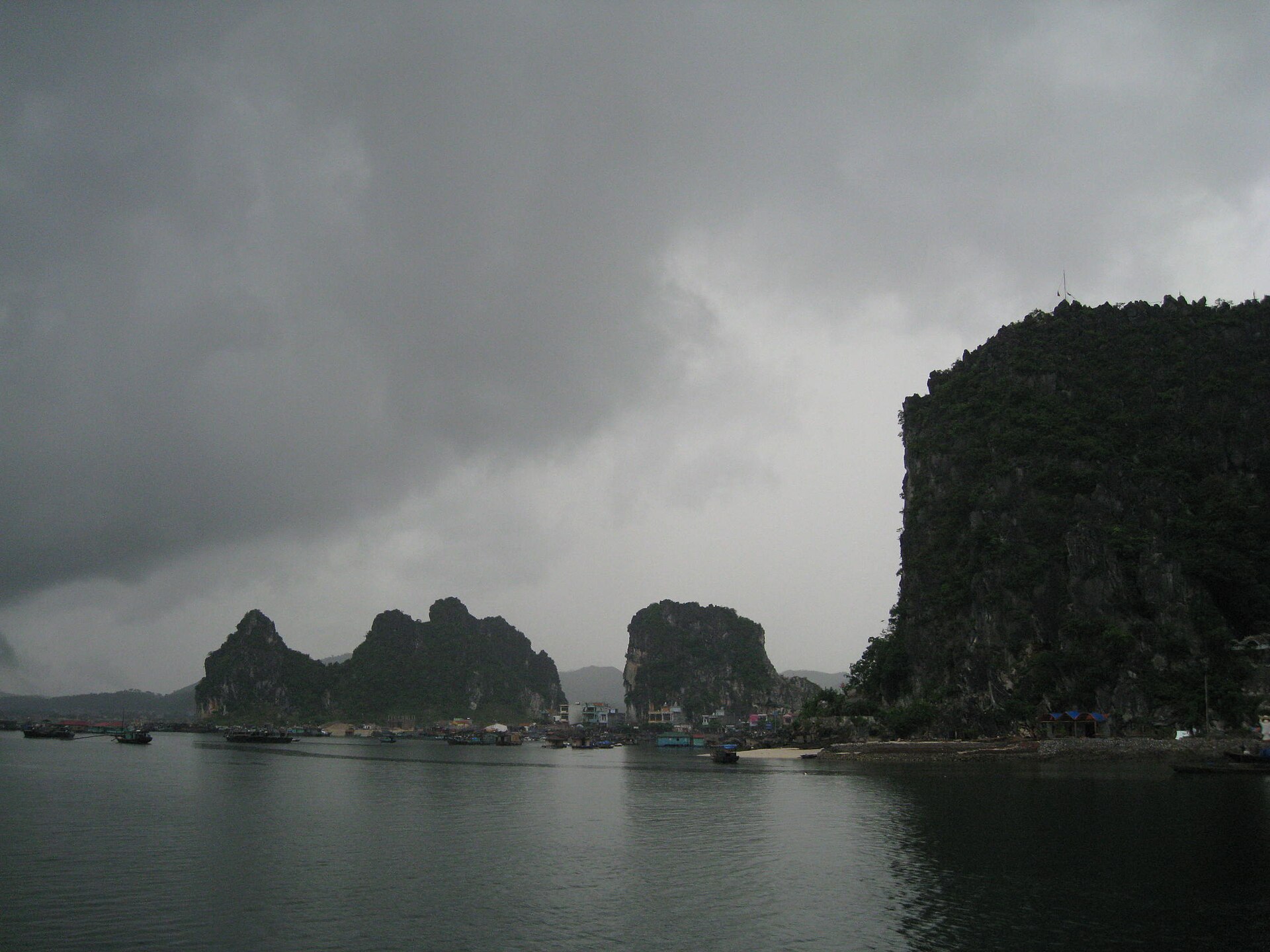
Storms decide more Ha Long trips than sunshine does. The risk runs through the summer months. When a tropical storm or typhoon is forecast, the authorities suspend sailings, sometimes for several days, and they take this seriously. In September 2024 Super Typhoon Yagi made landfall in Quang Ninh and Hai Phong.
Summer also brings sudden thunderstorms that forecasts don’t always catch. On 19 July 2025, a day-tour boat capsized in a violent afternoon squall near Dau Go Cave and dozens of the people on board died. It’s the reason sailings are now halted earlier and more readily when storms threaten, and the reason you shouldn’t argue with a cancellation.
What this means if you’re travelling between June and October:
- Read the weather policy before you pay. If the authorities cancel sailings, reputable operators offer a new date or a refund. Know which, and what happens to the transfer.
- Build in a spare day. Put the cruise early in your time in northern Vietnam, so a cancellation can be rebooked rather than lost.
- Don’t book the cruise the day before an international flight. Storm delays and slow traffic back to Hanoi are both common.
- Get travel insurance that covers extra hotel nights and missed connections. Our travel insurance guide explains what to look for.
None of this means you shouldn’t go in summer. Most summer cruises sail as planned, and the water is at its warmest. It just means you should book as if a storm might happen.
Month by Month
January
Cool and often grey, with colder evenings on deck. Mist and fine drizzle are common, and the karsts can disappear into the haze for whole mornings. If Tet falls late in the month, many businesses close for several days, so book ahead. Bring a proper warm layer, and choose a boat with a heated or enclosed lounge. Skip the balcony upgrade; you won’t use it.
February
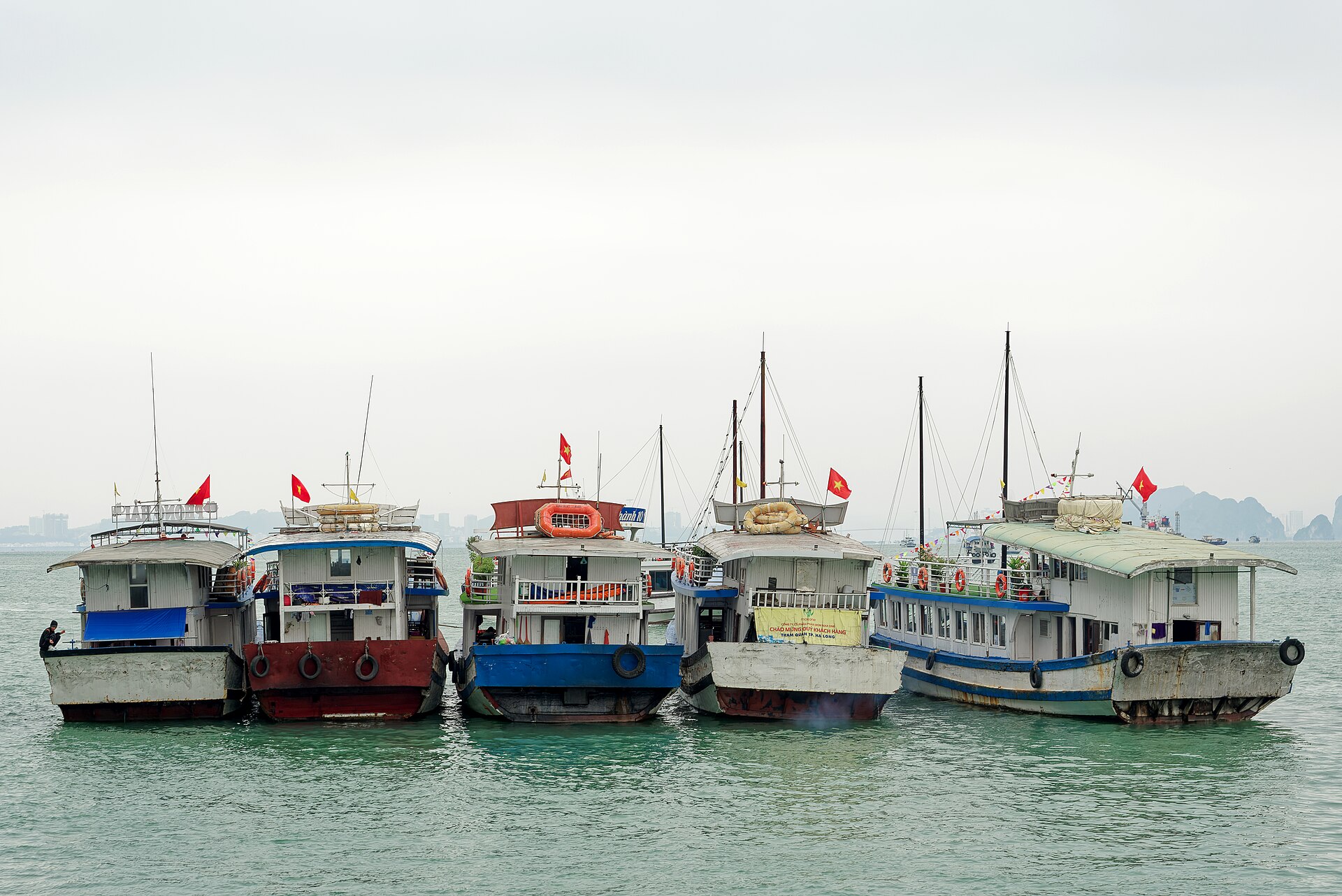
Much like January, damp and hazy, with the drizzle that northern Vietnam gets in late winter. The big variable is Tet, the Lunar New Year, which falls in late January or February. It is Vietnam’s main holiday, and many businesses close for several days, so book ahead and check what your boat is doing over the holiday itself. Outside Tet, February is quiet and cheap.
March
Milder, and the start of the most settled stretch of the year on the sea. The downside is haze. Spring skies are often white rather than blue, so the islands fade in layers into the distance rather than standing out sharply. Photographers either love that or hate it. Crowds are still moderate, and it’s a good month for a cruise if you don’t need sunshine.
April
Warmer, calmer and usually a little clearer as the month goes on. Hardy swimmers start going in by late April. The date to plan around is the 30 April–1 May holiday, Reunification Day and Labour Day: check availability and book early. The Hung Kings holiday, which moves with the lunar calendar and often falls in April, can add another busy long weekend.
May
One of the two or three best months of the year. It’s warm, often clear, the sea is still settled, and the storm season hasn’t really begun. The water is warm enough for most people, which makes it a good month for Lan Ha, where swimming and kayaking are the main event. Book two to three weeks ahead for weekends.
June
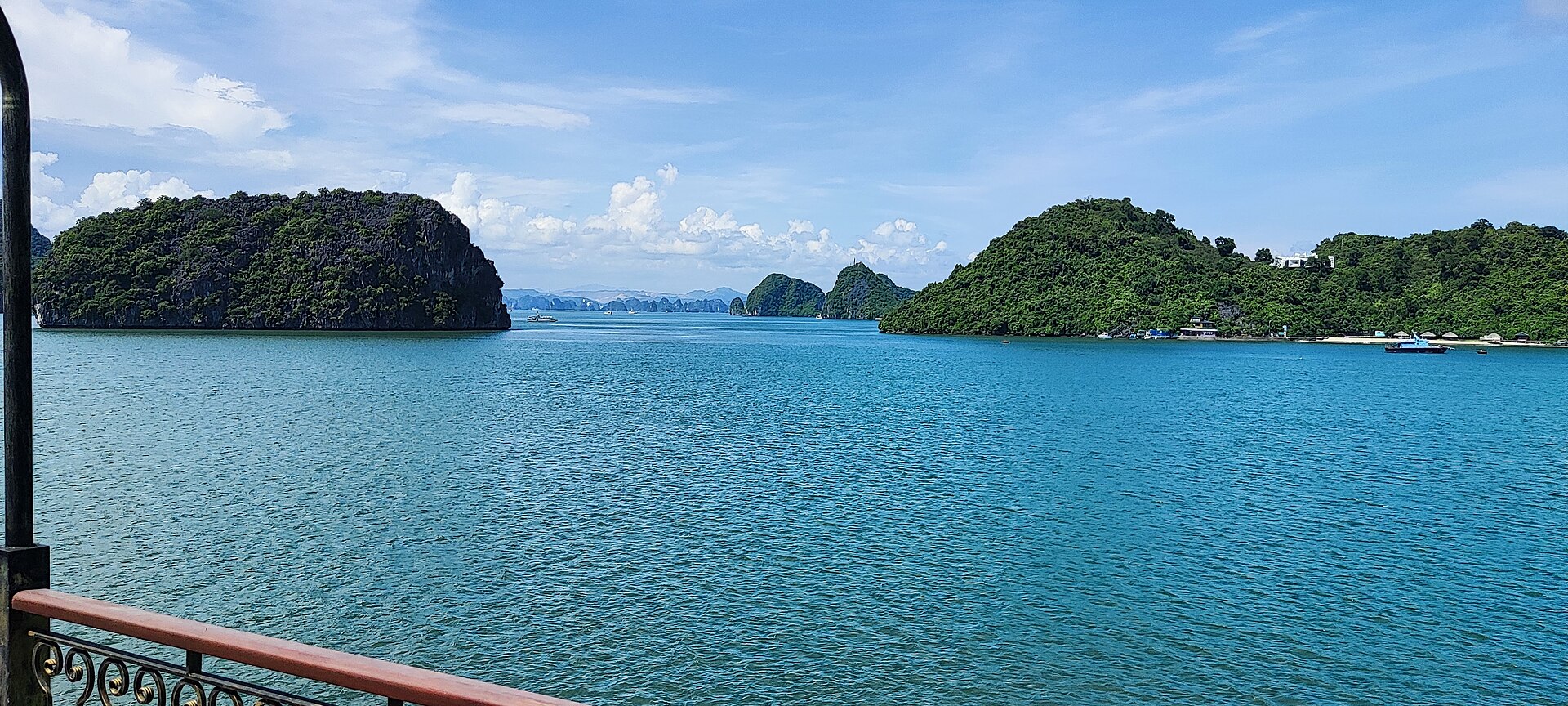
Hot and humid, with thunderstorms likely. Vietnamese school holidays begin, so weekends are busy. The water is warm and swimming is at its best, and most sailings go ahead, but this is the month the storm risk starts to matter. Book a boat with a clear weather policy.
July
Hot and wet, and among the rainiest months of the year. Storms become more frequent, and sudden squalls on summer afternoons are a real hazard, which is why boats return to shelter quickly when the sky turns. If you’re travelling in July, go, but keep a spare day and don’t schedule anything tight around the cruise.
August
With September, the riskiest month. It’s hot, wet and at the heart of the storm season, and it’s also holiday season for Vietnamese families. Cancellations are most likely now, sometimes for several days in a row. If August is your only window, choose Lan Ha, where the swimming makes the most of the heat, book flexibly and have a plan B in Hanoi or Ninh Binh.
September
Still the peak of the storm season. The water is at its warmest and the crowds start to thin after the summer holidays, apart from the National Day holiday around 2 September. Late September can be lovely if the weather holds. Just don’t plan your whole trip around one cruise date.
October
The turning point. Storms become less frequent as the month goes on, the air cools and dries, and the skies clear. Early October still carries some storm risk; by late October the odds are good. Swimming is still possible in the first half of the month. If we had to pick a single fortnight on the bay, it would be the second half of October.
November
Cool, dry and usually clear, with good visibility and settled seas. It’s too cool for most swimmers, but ideal for everything else: the views, the caves, kayaking in a light layer, and long evenings on deck with a jacket. Crowds are moderate, and weekdays can be very quiet.
December
Underrated. It’s cool, fairly dry and quiet on the water, and the light, when the sun comes out, is soft and low. Evenings on deck need a warm jacket, and cabins with a good heater matter more than balconies. Christmas and New Year bring a bump of international visitors, but nothing like the summer crowds.
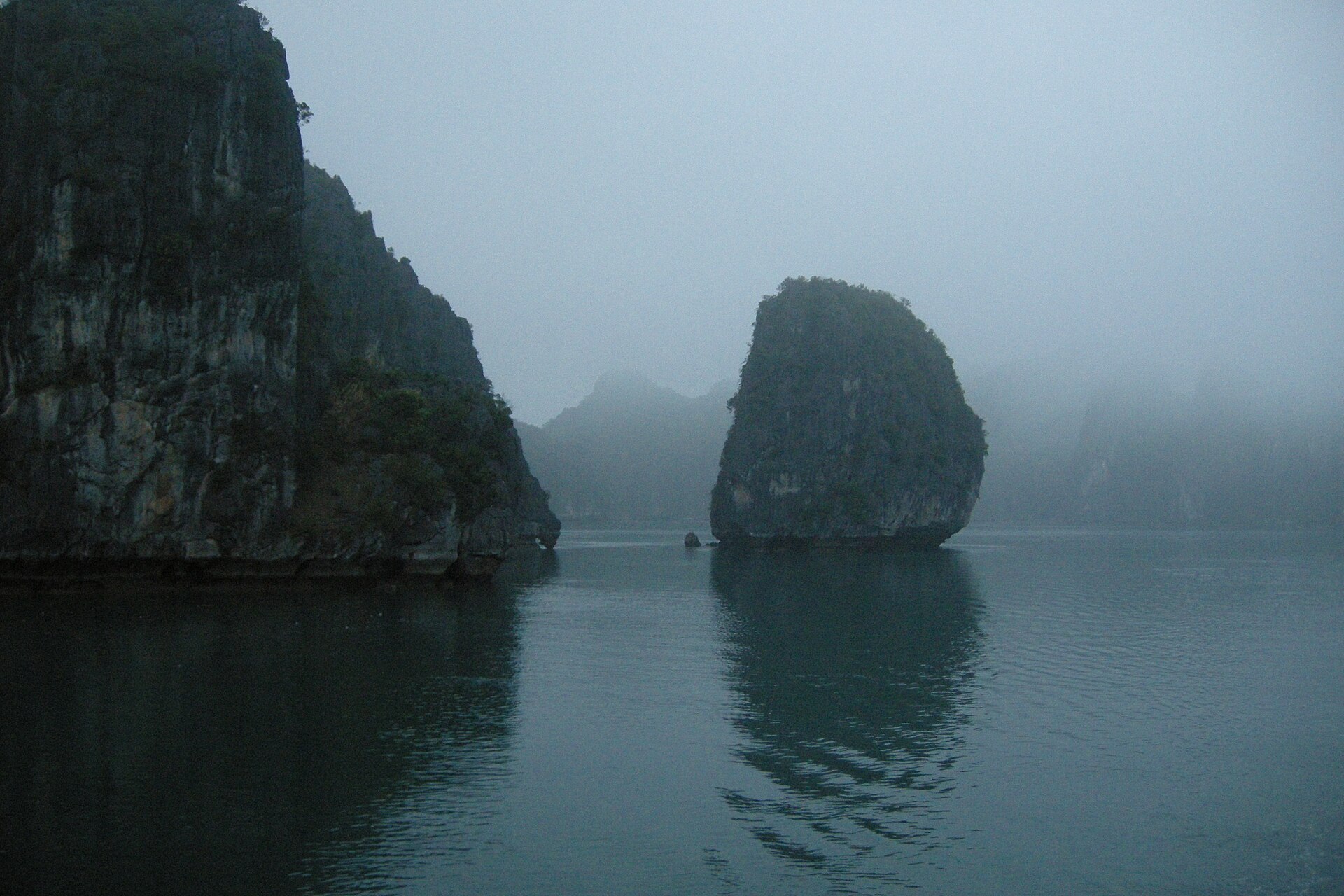
Mist, Haze and Visibility
Visibility is the most underrated part of timing a trip here. From about December to April, and especially in the drizzly weeks of late winter, moisture hangs in the air and the karsts fade into pale layers. On the water that’s atmospheric and often lovely, and many photographers seek it out. But if you’re hoping for the sharp, blue-sky postcard, spring haze can be a disappointment.
October and November generally give the clearest air, followed by May. Summer can be clear between storms, but the heat haze and cloud build through the day, so the mornings are best. Whatever the season, the light at dawn and in the hour before sunset is what makes the photographs. Sunrise is just after 05:00 in June and about 06:30 in December; sunset is around 18:40 in June and 17:15 in December. Plan your deck time around those, not around the itinerary. Our Hanoi photography itinerary covers the city side of the trip.
Crowds and Prices Through the Year
Cruise prices follow demand more than weather. The dearest periods are Tet, the 30 April–1 May break, the 2 September holiday, and summer weekends. The cheapest are weekdays in the quieter months: November, December, March, and the parts of January and February away from Tet.
Weekends are busier than weekdays all year round, so if you can, sail midweek. Book two to three weeks ahead for holidays, weekends and the best months. Outside those, a few days’ notice is often enough. Whatever the season, the price tiers are roughly the same: about US$65–120 per person for a budget two-day, one-night cruise, US$120–200 for mid-range and US$200–350 for premium. Our guide to choosing the best Ha Long Bay cruise explains what each tier buys.
How the Seasons Change Each Bay
The three bays share the same weather, but not the same strengths, so the season can tip the choice between them.
- Ha Long Bay‘s great caves are the best use of a cold, grey winter afternoon, when a kayak is the last place you’d want to be.
- Lan Ha Bay is the swimming bay, so it makes most sense from May to early October, when you can climb off the stern into warm water and spend an hour in a kayak. In winter the beaches empty and the kayaking is still possible on calm days in a light jacket, but it loses its main advantage.
- Bai Tu Long Bay is quiet all year, and its mist-softened islands suit the cooler months especially well. It’s the bay to choose if you’re travelling at a busy time, such as a summer weekend or a holiday week, and want to escape the worst of the traffic.
Our comparison of Lan Ha and Ha Long and our Bai Tu Long Bay guide go into each bay in more detail.
What to Pack, Season by Season
- December to March: a warm jacket for the deck after dark, long trousers, a jumper for the cabin, and a waterproof layer for drizzle. Cave steps are slippery when it’s damp, so bring shoes with real grip.
- April, May, October and November: light layers, with a fleece for evenings from late October. Bring swimwear in May and early October, plus sunscreen and a hat for the sun deck.
- June to September: light, breathable clothes, a proper rain jacket, swimwear, high-factor sunscreen, insect repellent and a dry bag for your phone on the kayak. Pack as if a storm might change your plans: keep essentials in a small bag so you can move quickly.
Whatever the month, leave the big suitcase at your Hanoi hotel. Our Hanoi packing list covers the rest of the trip.
The Best Time for…
- Swimming and kayaking: May and June, or early October. The water is warm and the storm risk is lower than in August and September. Lan Ha is the bay for it.
- Clear views and photography: late October and November, then May.
- Mist and atmosphere: December to March, ideally on an overnight boat, for the dawn.
- Avoiding crowds: weekdays in November, December and March. Bai Tu Long is quiet in any month.
- Families: May, or October half-term, when it’s warm without the height of summer’s storm risk and crowds. If you must go in the summer holidays, book flexibly.
- A budget trip: midweek in the cooler months, when you’ll find the best rates on mid-range boats.
- Combining with Sapa: September to November, when Sapa’s skies are clearest too. Our Sapa from Hanoi guide covers the mountains.
Best Time to Visit Ha Long Bay FAQ
What is the best month to visit Ha Long Bay?
Late October is hard to beat: storms are fading, the air is clear and dry, and the water is still warm early in the month. May is a close second. March and April are the most settled at sea but often hazy.
When is typhoon season in Ha Long Bay?
Mainly the summer months. When a storm is forecast the authorities suspend sailings, sometimes for days. Sudden summer thunderstorms are a separate hazard, which is why crews head for shelter quickly when the sky darkens.
Is it worth visiting Ha Long Bay in winter?
Yes, if you don’t mind cool, grey weather. From December to February the bay is quiet, misty and atmospheric, and prices are lower outside Tet. You won’t swim, and you’ll want a warm jacket on deck.
Can you swim in Ha Long Bay in December?
Very few people do. The sea is cool from roughly November to April. For swimming, go between May and early October.
Is Ha Long Bay good in the rainy season?
Often, yes. Much of the summer rain comes in short, heavy bursts rather than all-day downpours, and the water is warm. The real issue is storms, which can cancel sailings. Book flexibly and keep a spare day.
What happens if my cruise is cancelled because of the weather?
If the authorities order boats to stay in port, reputable operators offer a new date or a refund. Policies differ in the details, so read them before paying, especially for trips between June and October.
When is Ha Long Bay least crowded?
Midweek in November, December and March, away from public holidays. Bai Tu Long Bay is the quietest of the three bays at any time of year.
Should I avoid Tet?
Often, yes. The Lunar New Year is Vietnam’s main holiday and many businesses close for several days, so book ahead and check what your boat is doing over the holiday itself. Our guide to Tet in Hanoi explains what to expect.
Planning the Rest of Your Ha Long Trip
Once you’ve chosen your month, the next decisions are the bay and the boat. Our Lan Ha vs Ha Long comparison helps with the first and our guide to choosing a cruise with the second. For a quieter trip in any season, look at Bai Tu Long Bay.
Related Hanoi Guides
- Ha Long Bay: The Complete Visitor Guide
- Hanoi Weather by Month
- Best Time to Visit Hanoi
- Best Ha Long Bay Cruises: How to Choose
- Ha Long Bay 2 Days, 1 Night, Hour by Hour
- Hanoi in Autumn
- Hanoi in Summer
- Hanoi in Winter
- Travel Insurance for Hanoi
Photo Credits
Featured image, green islands on a clear day in Ha Long Bay: Halong Bay Island by Shyamal, CC BY-SA 4.0, via Wikimedia Commons.
Storm clouds over the islands: Bái Tử Long by Viethavvh at Vietnamese Wikipedia, CC BY-SA 3.0, via Wikimedia Commons.
Ti Top Island in January: Boats on the coast of Titov Island in Ha Long Bay, Vietnam, 20240128 1331 3730 by Jakub Hałun, CC BY 4.0, via Wikimedia Commons.
A clear day from the deck: Ha Long Bay 22 by Shyamal, CC BY-SA 4.0, via Wikimedia Commons.
Winter mist on the bay: Halong Bay after dark by Vyacheslav Argenberg, CC BY 4.0, via Wikimedia Commons.