
Leave Ha Long’s main channel heading north-east and within an hour the traffic starts to thin. The white cruise ships that sat nose to tail near the marina become a few dots behind you, and what you pass instead are fish-farm rafts, the odd wooden boat hauling nets, and island after island with nobody looking at it. That’s Bai Tu Long Bay: the same drowned limestone landscape as Ha Long, continuing towards Cam Pha and Van Don, with a fraction of the boats. It’s the quietest of the three bays that make up the Ha Long area, and the one fewest visitors have heard of.
This guide covers what Bai Tu Long actually is, why it stays quiet, the floating villages, caves and beaches its cruises visit, how it compares with Ha Long and Lan Ha, how to get there, and the outer islands such as Quan Lan for anyone who wants to go further. Prices were checked in October 2026 and mostly come from operators; treat them as the right order of magnitude rather than a quote. For the whole region at a glance, start with our complete Ha Long Bay guide.
Bai Tu Long Bay at a Glance
| What | The short answer (2026) |
|---|---|
| Where | North-east of Ha Long Bay, Quang Ninh province, running towards Cam Pha and Van Don |
| Where cruises leave from | Depends on the operator (Dragon Legend’s two-day cruise leaves from Ha Long International Port); the drive from central Hanoi is about 2.5 hours |
| Main sights | Vung Vieng and Cong Dam floating villages, Thien Canh Son Cave, Tra Gioi beach, the Cong Do area |
| Crowds | The fewest of the three bays |
| Day cruises | Bhaya Legend offers a six-hour private day cruise visiting Ha Long and Bai Tu Long |
| Overnight cruises | 2 days, 1 night or 3 days, 2 nights, from about US$110 per person per night |
| Swimming | Yes, at quiet beaches and coves in the warmer months |
| Best for | Anyone who wants the scenery without the crowds, and second-time visitors |
| Not for | People set on Sung Sot Cave and the Ti Top viewpoint, which are in Ha Long proper |
What Bai Tu Long Bay Actually Is
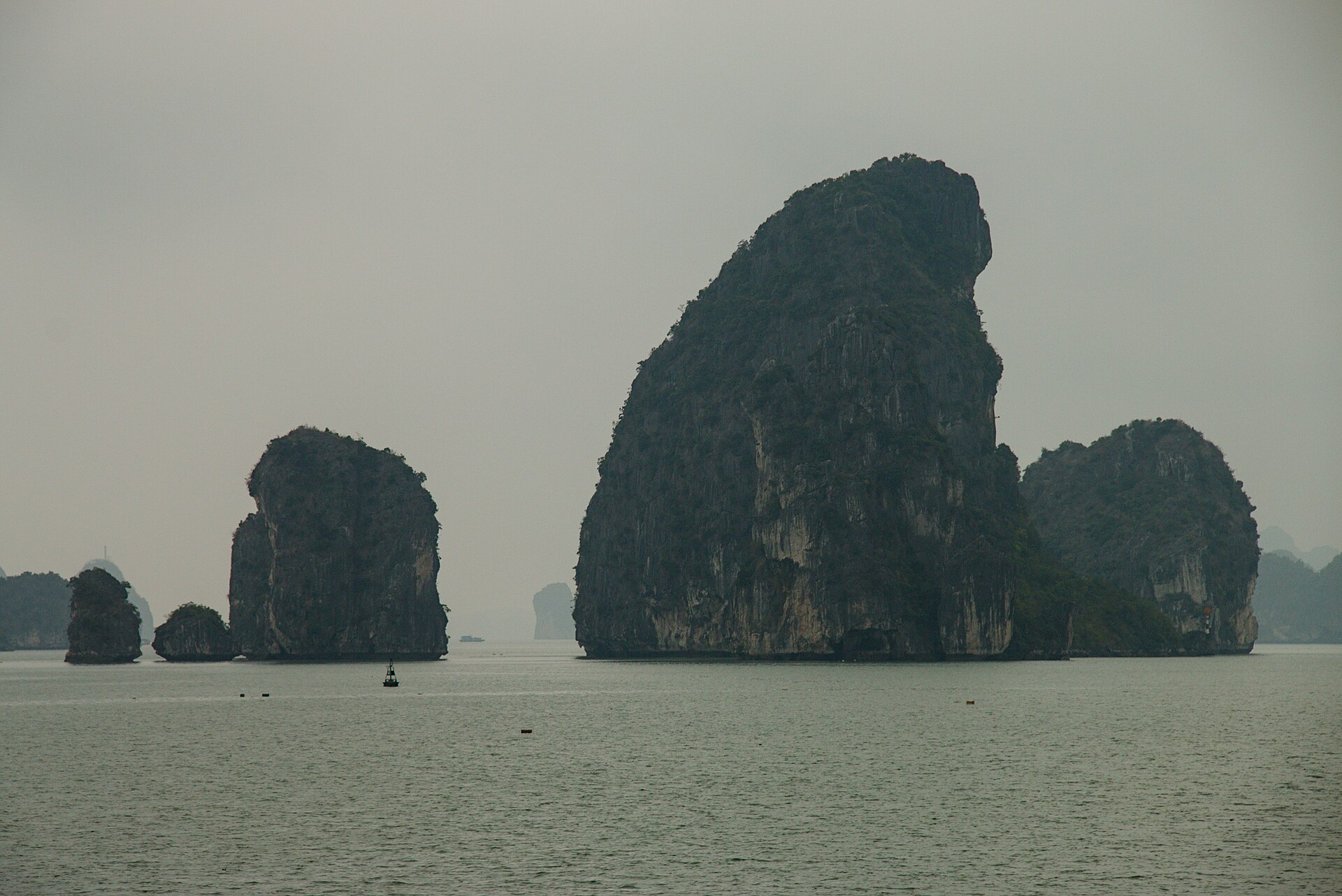
Geologically, Bai Tu Long is simply the north-eastern continuation of Ha Long Bay: the same limestone towers and domes, eroded by millions of years of rain and then flooded when sea levels rose. Tourism splits the coast into three bays because they’re sailed under different permits from different piers. Ha Long proper is the busy core, Lan Ha lies to the south off Cat Ba, and Bai Tu Long stretches away to the north-east.
The further out you go, the more the landscape changes. Close to Ha Long, Bai Tu Long looks like the postcard, with steep karst islands rising sheer from calm water. Further east, larger, inhabited islands take over: Quan Lan, Ngoc Vung, Cong Dong and Cong Tay, with villages, sandy beaches and roads. A national park protects several of the outer islands and the waters around them.
The name comes from the same legend as Ha Long’s. In the version guides tell on board, a mother dragon descended to defend the coast at Ha Long (“descending dragon”), and her children came down to join her at Bai Tu Long, which is usually translated as the place where the young dragons bowed to their mother. It’s a better story than the geology, and it explains why the two names belong together.
Why It Stays Quiet
Mostly because of licences. Quang Ninh province, which governs both Ha Long and Bai Tu Long, confines Ha Long’s tourist boats to a small number of routes past the famous caves and islets. When the province published its plan to modernise the fleet in late 2024, Ha Long Bay alone had 508 tourist boats. Far fewer operators hold permits for Bai Tu Long, and its sights aren’t famous enough to draw day-trippers from Hanoi in large numbers.
That’s the honest caveat, too. The same provincial plan set out to add around 100 tourist boats in Bai Tu Long, so it won’t stay this quiet forever. For now, how quiet a trip feels depends on your itinerary and sailing date.
What You’ll See and Do
Bai Tu Long itineraries vary more than Ha Long’s, but most draw on the same handful of places.
Vung Vieng floating village
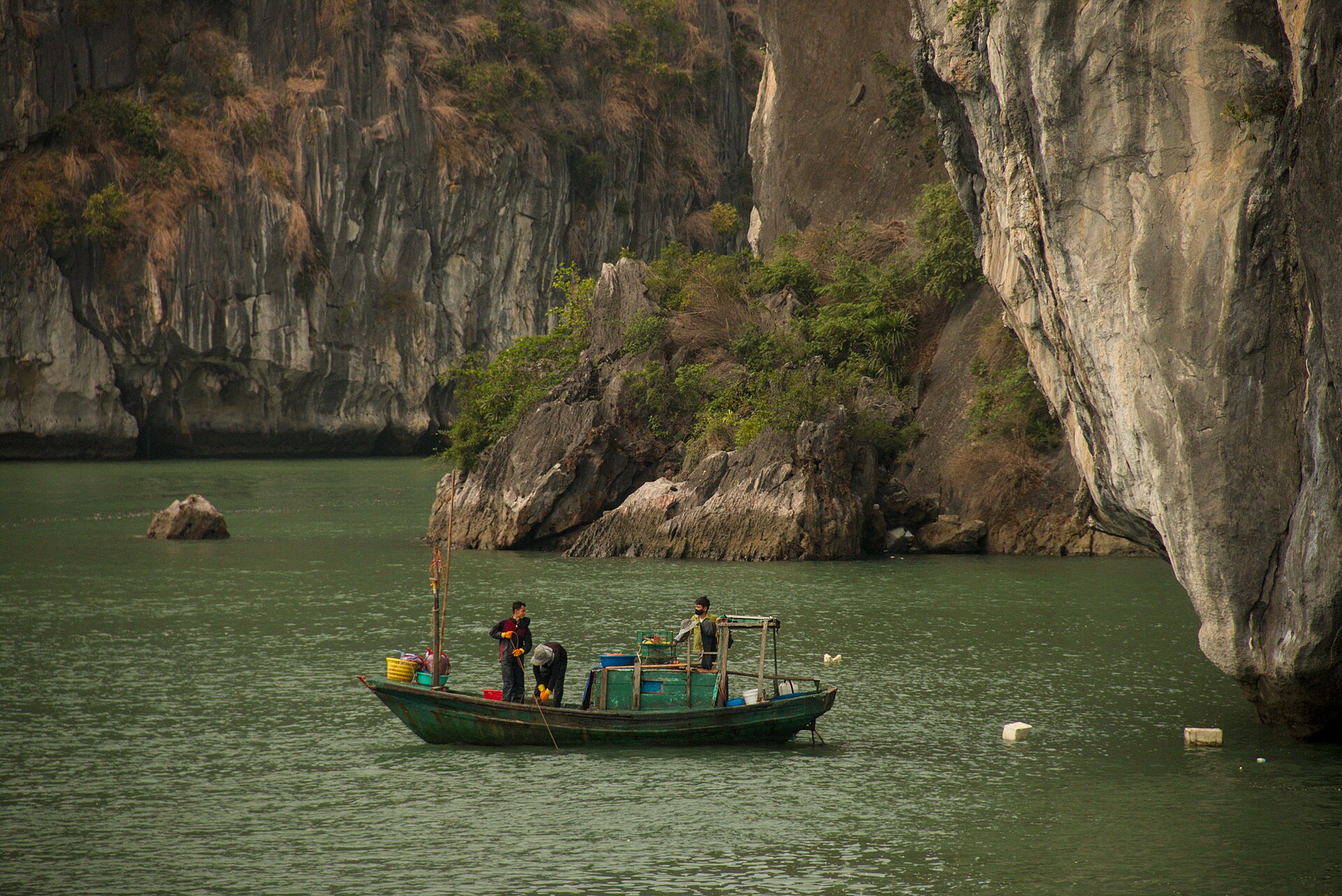
Vung Vieng is on itineraries such as Dragon Legend’s two-day cruise and Bhaya Legend’s day cruise. For generations, fishing families here have lived in wooden houses on floating pontoons, farming fish and shellfish in cages beneath them. Many of the bay’s floating communities have been moved ashore over the past decade, but some families still live and work on the water at Vung Vieng. The visit is a slow tour in a bamboo rowing boat, usually rowed by someone from the village, past the houses, the fish cages and the school. It’s worth doing, as long as you go as a guest rather than a spectator. Keep your voice down, and ask before photographing anyone up close.
Cong Dam
Cong Dam is another floating fishing area, often used for kayaking and swimming, with clear water and limestone walls on every side. Check whether your itinerary includes it.
Thien Canh Son Cave
On Hon Co island in the Cong Do area, Thien Canh Son is the main cave stop on Bai Tu Long itineraries. It has three chambers of stalactites and stalagmites that guides turn into flowers, animals and figures from the legend. It’s smaller than Ha Long’s Sung Sot, but you’re far more likely to have it to yourself. Expect steps up to the entrance, and wear shoes with grip.
Tra Gioi beach and the Cong Do area
Tra Gioi is a secluded stretch of sand with calm water, used on longer itineraries for swimming and sometimes a beach barbecue. The surrounding Cong Do area has more karst islands, small beaches and coves, and it’s where many boats anchor for the night.
The scenery itself
It sounds obvious, but the main thing Bai Tu Long offers is time among the islands without other boats in the frame. Sunset from the deck, the dawn before breakfast and a kayak along a cliff in silence are what people remember. Ha Long offers all three as well, but here you won’t be sharing them.
Bai Tu Long, Ha Long or Lan Ha?
| Ha Long Bay | Lan Ha Bay | Bai Tu Long Bay | |
|---|---|---|---|
| Famous caves | Sung Sot, Thien Cung, Dau Go | Mostly sea caves by kayak | Thien Canh Son |
| Floating villages | Cua Van, now part museum | Cai Beo | Vung Vieng and Cong Dam |
| Swimming | Ti Top only | The best, often off the boat | Good, with little company |
| Day cruises | Many | From Cat Ba, around US$25 | A few |
| Best for | First-timers wanting the big caves | Kayakers and swimmers | Quiet, and second visits |
Put simply, choose Bai Tu Long for peace and scenery, Lan Ha for kayaking and beaches, and Ha Long for the famous caves. Bai Tu Long and Lan Ha are both better than Ha Long at the one thing most people come for, which is being out among the islands without a crowd. Our Lan Ha Bay vs Ha Long Bay comparison covers the other half of the decision in detail.

Cruises: Day, One Night or Two
Day cruises
A few operators run Bai Tu Long day cruises of six to eight hours, but they’re the exception. With the drive from Hanoi, a day trip means a very long day for a short time on the water, and you miss the evening and dawn, which are the whole point of coming somewhere this quiet. If you only have a day, a Ha Long day cruise or a Lan Ha day boat from Cat Ba is simpler.
Two days, one night
One night is enough to feel the difference. A typical trip boards around midday, visits Vung Vieng or Cong Dam by rowing boat in the afternoon, kayaks or swims, anchors somewhere quiet for sunset, and visits Thien Canh Son Cave the next morning before brunch and the return to port. Our hour-by-hour guide to a 2 day, 1 night cruise shows how the timings usually run; Bai Tu Long follows the same shape with different stops.
Three days, two nights
A second night lets the boat go further east, to Tra Gioi, the Cong Do coves and the outer islands, with a longer kayak and a proper beach afternoon. If the bay is the highlight of your trip and you like quiet, this is the best-value way to spend it. As on any two-night cruise, ask whether you stay on the same boat throughout.
What it costs
Bai Tu Long boats are mostly mid-range to premium. Operators quote overnight trips from about US$110 per person per night, sharing a cabin, and it’s rare to find the rock-bottom budget boats you see in Ha Long. That’s no bad thing, since the cheapest boats are rarely the bargain they look. Transfers from Hanoi, meals on board and the main activities are usually included; drinks and tips are extra. Our guide to choosing the best Ha Long Bay cruise explains how to compare boats and what each tier buys.
Getting There
Cruises board at the port named in your booking; Dragon Legend’s two-day cruise, for example, leaves from Ha Long International Port. The drive from central Hanoi is about 2.5 hours on the expressway. Some packages include a shuttle from the Old Quarter (Dragon Legend’s picks up at 08:20–08:45), while others, such as Bhaya’s day cruises, don’t include transfers. If you’re arranging your own transport, our guide to getting from Hanoi to Ha Long Bay covers buses and private cars. Check the exact pier with your operator, because it varies.
Beyond the Cruise: Quan Lan and the Outer Islands
Bai Tu Long has something the other two bays don’t: large, inhabited islands you can stay on. The best known is Quan Lan, reached by boat from Van Don island; ask the operator which terminal the boat leaves from and how long the crossing takes. Fares are modest, but schedules change with the season, so check the current timetable before you travel. Quan Lan has fishing villages, quiet roads that are good for cycling, and Minh Chau, a long, pale beach that’s among the best in the north.
It’s a different kind of trip from a cruise: slower, more about beaches and village life than karst scenery, and more popular with Vietnamese holidaymakers than foreign visitors. Getting there from Hanoi takes the best part of half a day by road and speedboat. Van Don International Airport is an option if you’re flying in from elsewhere in Vietnam, but check which routes are operating before you plan around it. For most first-time visitors, a cruise is the better use of limited time. For a return visit, or a few days of island quiet at the end of a long trip, Quan Lan is worth considering.
Who Should Choose Bai Tu Long, and Who Shouldn’t
- Choose it if crowds would spoil the trip for you, if you’ve seen Ha Long before, if you’re a photographer who wants empty water at dawn, or if you want a slower, more personal cruise.
- Choose it if you’re curious about the people who live on the bay. Vung Vieng is a more lived-in village visit than Ha Long’s Cua Van.
- Skip it if Sung Sot Cave and the Ti Top viewpoint are high on your list. They’re in Ha Long proper, and Bai Tu Long itineraries rarely include them.
- Skip it if swimming off the boat and long kayaks are your priority and you’d rather have more choice of beaches. Lan Ha does that better.
- Skip it if you’re on a strict backpacker budget. The cheapest overnight boats are in Ha Long, and the cheapest good day on the water is a Lan Ha day boat from Cat Ba.
For anyone who doesn’t fall clearly into one camp, here’s our verdict. If you’re torn between a Ha Long cruise and a Bai Tu Long cruise at the same price, take Bai Tu Long. You’ll trade the famous caves for quiet, and quiet is the better trade.
When to Go
Bai Tu Long shares Ha Long’s weather. March to May is the most settled period on the water, October and November bring clearer skies as the storms fade, and December to February are cool, often misty and atmospheric, but not for swimming. From roughly June to October, and above all in August and September, tropical storms can halt sailings for days. The authorities take suspensions seriously, so book with an operator whose weather policy you’ve read, and keep a spare day in your plans in late summer. For the rest of your trip, our Hanoi weather by month guide covers the city.
Practical Tips
- Check where the boat actually sails. Some itineraries put “Bai Tu Long” in the title but spend much of the trip in Ha Long waters. Ask where the boat anchors overnight and which stops are included.
- Bring your passport. Overnight boats register every guest with the authorities.
- Carry cash in dong for drinks, tips and anything you buy in the villages.
- Be a good guest at Vung Vieng. People live here. Don’t wander onto house platforms, and ask before taking close-up photos.
- Pack for the deck. A warm layer from November to March, swimwear from May to October, and shoes with grip for cave steps.
Bai Tu Long Bay FAQ
Is Bai Tu Long Bay worth visiting?
Yes, especially if you care more about the scenery than the famous caves. It’s the same karst landscape as Ha Long with a fraction of the boats, and an overnight cruise here still feels like having the islands to yourself.
Is Bai Tu Long Bay better than Ha Long Bay?
For peace and scenery, usually yes. For the big-name sights, no: Sung Sot Cave and Ti Top Island are in Ha Long proper. If you’ve been to Ha Long before, or hate crowds, Bai Tu Long is the better choice.
How do you get to Bai Tu Long Bay from Hanoi?
Many cruise packages include a shuttle from the Old Quarter, though not all do. The drive to the port is about 2.5 hours by expressway, and the departure port depends on the operator. Confirm the pier with your operator.
Can you visit Bai Tu Long Bay on a day trip?
A few operators run six-to-eight-hour day cruises, but with the drive from Hanoi it makes a very long day. An overnight trip is far better value for the time.
Can you swim in Bai Tu Long Bay?
Yes, from roughly May to October, at quiet beaches such as Tra Gioi and in coves where the crew allows it. Swim only where the crew says it’s safe, and never during a storm warning.
What is Vung Vieng fishing village?
A floating fishing community in Bai Tu Long where some families still live in wooden houses on pontoons and farm fish in cages beneath them. Cruises visit by bamboo rowing boat, usually rowed by a villager.
How many nights do I need?
One night is enough to see the difference from Ha Long. Two nights let the boat reach the outer coves and beaches, and give you a longer kayak.
Planning the Rest of Your Ha Long Trip
If you’re still weighing up the three bays, our Lan Ha vs Ha Long comparison covers the southern option. Once you’ve chosen, our guide to choosing a cruise and the 2 day, 1 night itinerary cover the boat and the timings.
For a month-by-month breakdown of storm risk, mist, swimming and crowds across all three bays, see our guide to the best time to visit Ha Long Bay.
Related Hanoi Guides
- Ha Long Bay: The Complete Visitor Guide
- Lan Ha Bay vs Ha Long Bay
- Best Ha Long Bay Cruises: How to Choose
- Ha Long Bay 2 Days, 1 Night, Hour by Hour
- How to Get from Hanoi to Ha Long Bay
- Hanoi Photography Itinerary
- Day Trips from Hanoi
Photo Credits
Featured image, the karst islands of Bai Tu Long Bay: Bai Tu Long Bay – Quang Ninh – Vietnam (35892945123) by AnhTuan Le, Public domain, via Wikimedia Commons.
Misty islands in Bai Tu Long: Bái Tử Long Bay – 01 by Benjamin Smith, CC BY-SA 4.0, via Wikimedia Commons.
Fishermen below the cliffs: Bái Tử Long Bay – 02 by Benjamin Smith, CC BY-SA 4.0, via Wikimedia Commons.
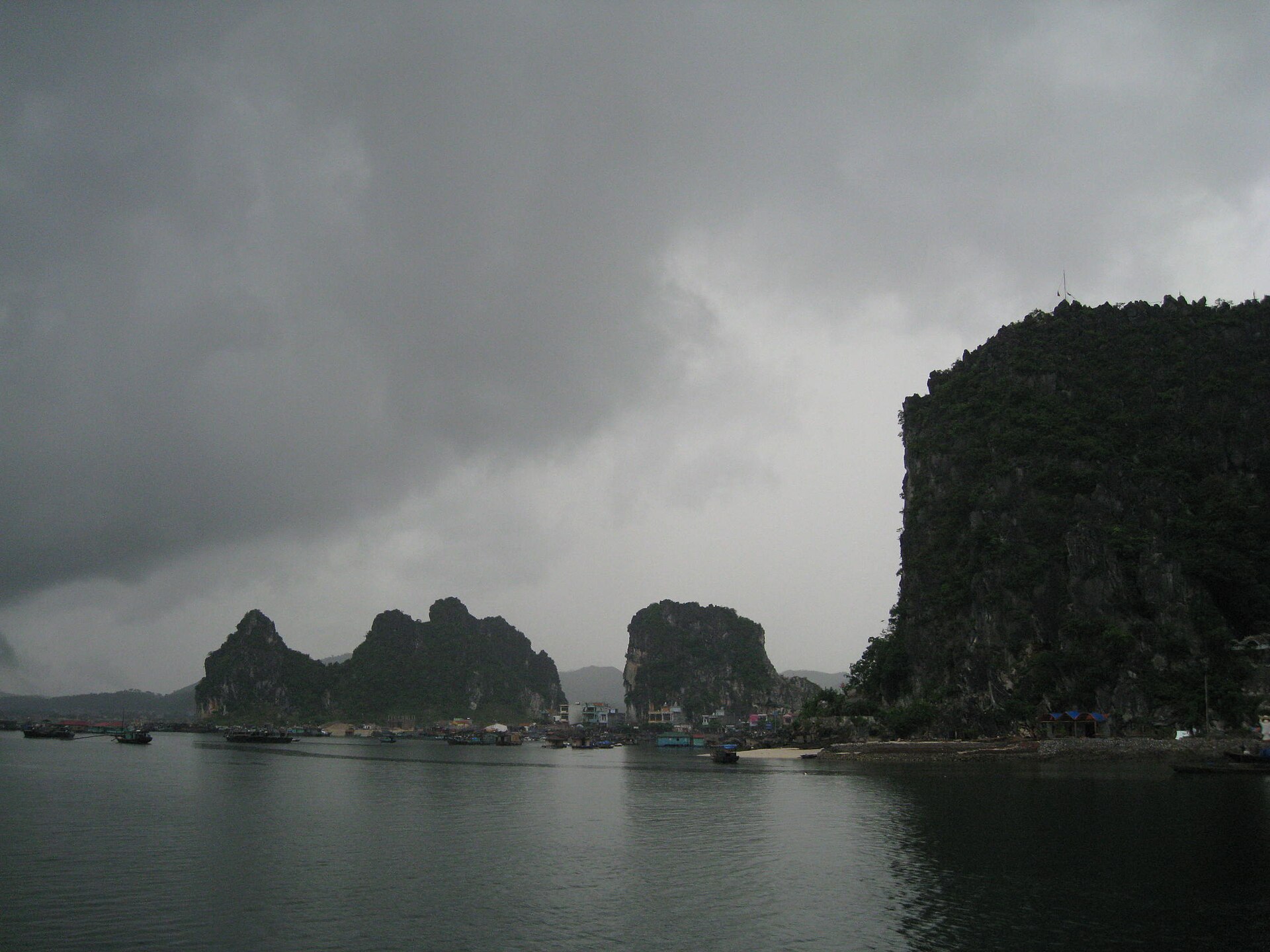
A fishing settlement under storm clouds: Bái Tử Long by Viethavvh at Vietnamese Wikipedia, CC BY-SA 3.0, via Wikimedia Commons.
Floating houses at Cua Van: Cua Van Floating Village by David Stanley, CC BY 4.0, via Wikimedia Commons.