
Hanoi Old Quarter architecture is a unique blend of two traditions — Vietnamese tube houses 1,000 years old, and French colonial elegance from the 19th-20th centuries. The result is one of Asia’s most distinctive urban architectural fabrics: ultra-narrow tube houses with European decorative elements, restored colonial mansions on tree-lined boulevards, and 11th-century temples tucked into alleys. This complete guide to Old Quarter architecture Hanoi for 2026 covers the major styles, must-see buildings, and architectural walking tour.
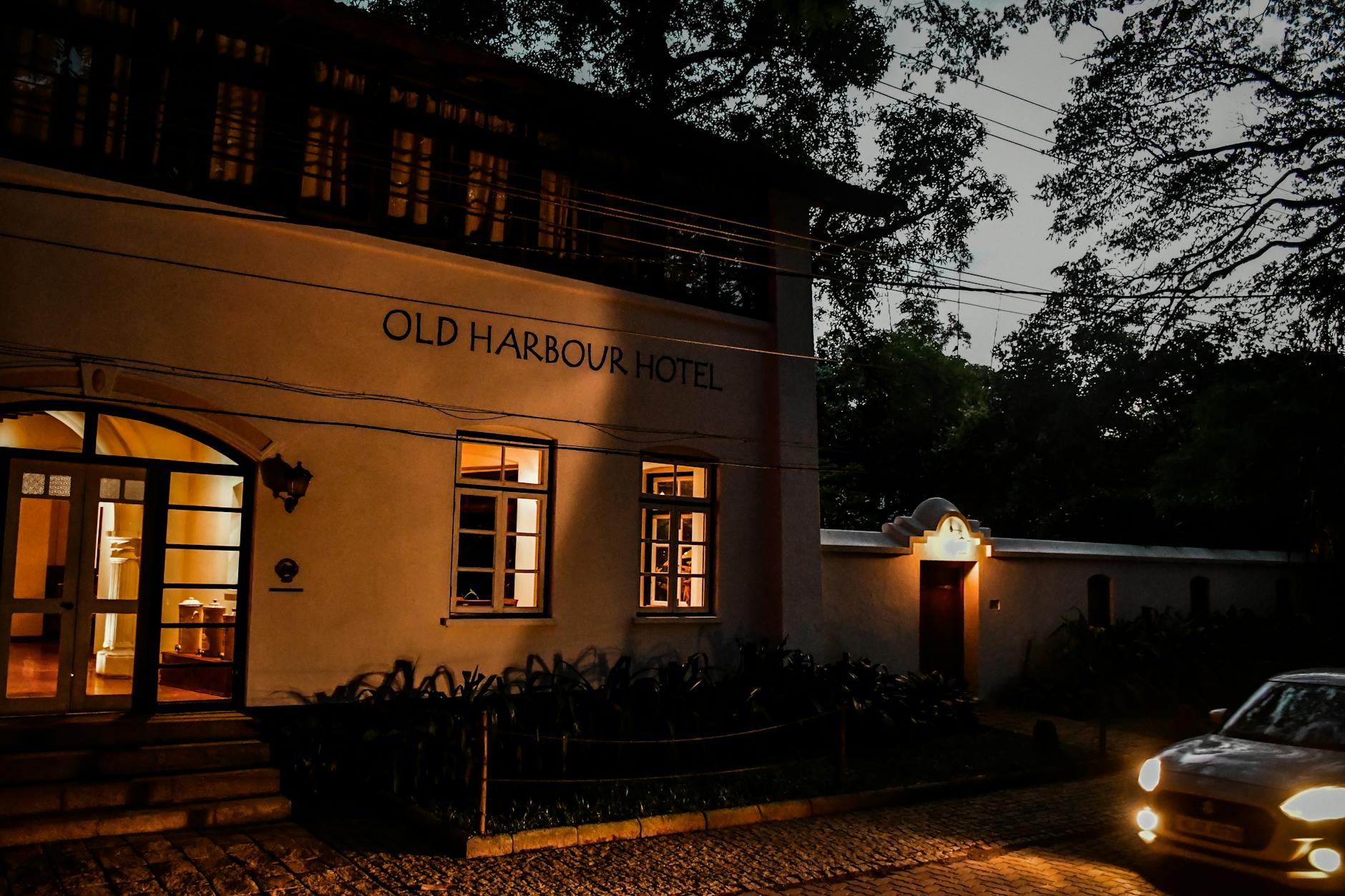
The Three Architectural Styles of the Old Quarter
1. Vietnamese Tube Houses (Nha Ong)
The defining architectural form of the Old Quarter. Narrow buildings 2-3 meters wide that extend 50-60 meters deep. Born of medieval taxation based on street frontage. Sequential rooms arranged front-to-back with interior courtyards providing light and ventilation.
2. French Colonial Heritage (1880-1954)
Built during French rule. Beaux-Arts mansions with high ceilings, wrought iron balconies, French shutters, and decorative moldings. Found primarily in the French Quarter just south of Old Quarter, with isolated examples scattered through the Old Quarter.
3. Hybrid French-Vietnamese
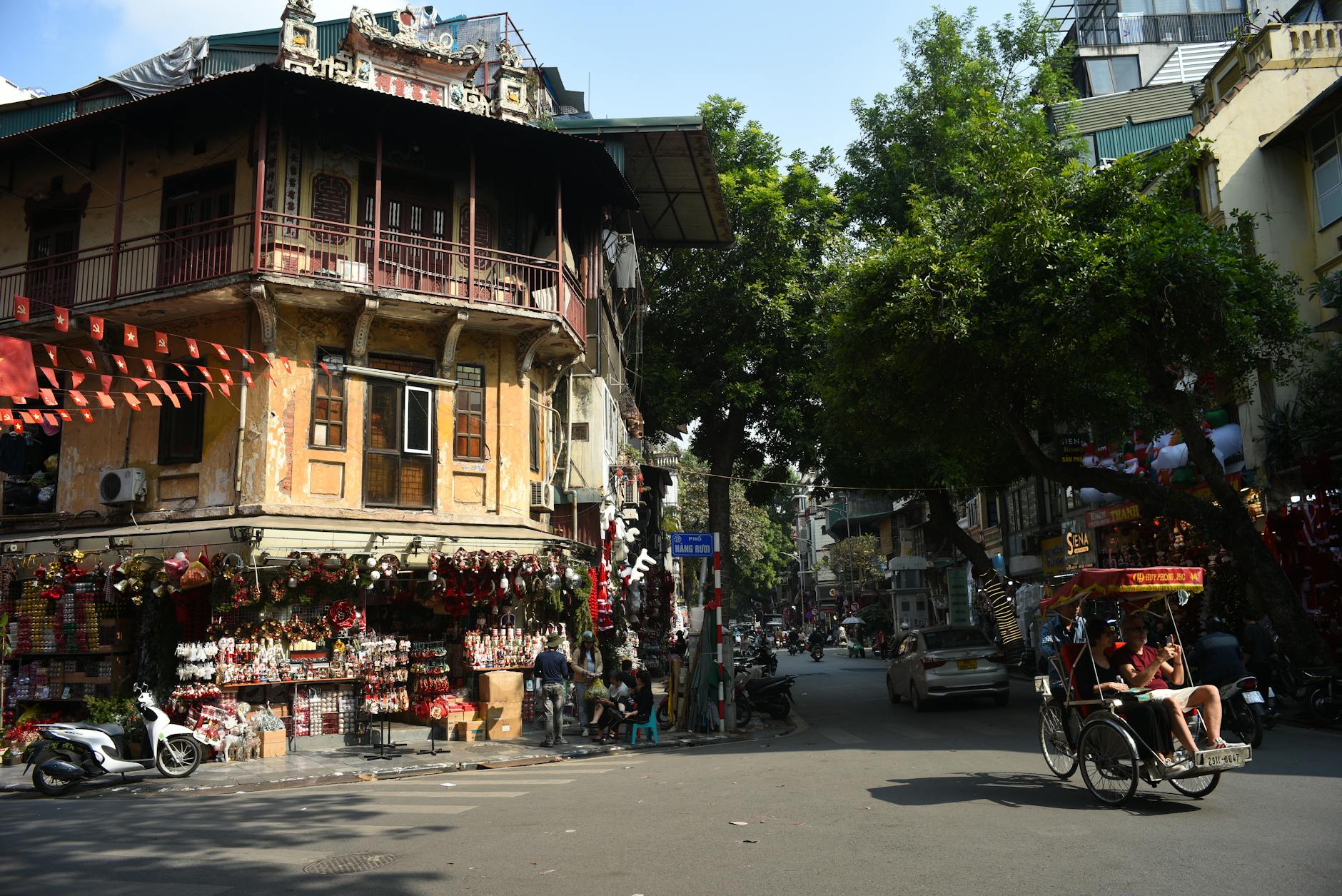
The unique fusion that defines the Old Quarter. Vietnamese tube houses with French decorative elements — balconies, shutters, ornate facades on traditional structures.
Must-See Old Quarter Architectural Highlights
1. Ma May Heritage House (87 Ma May)
Restored 19th-century traditional Hanoian tube house. The best preserved example of classic Old Quarter architecture. Three sequential rooms with internal courtyards. Entry 10,000 VND.
2. Bach Ma Temple (76 Hang Buom)
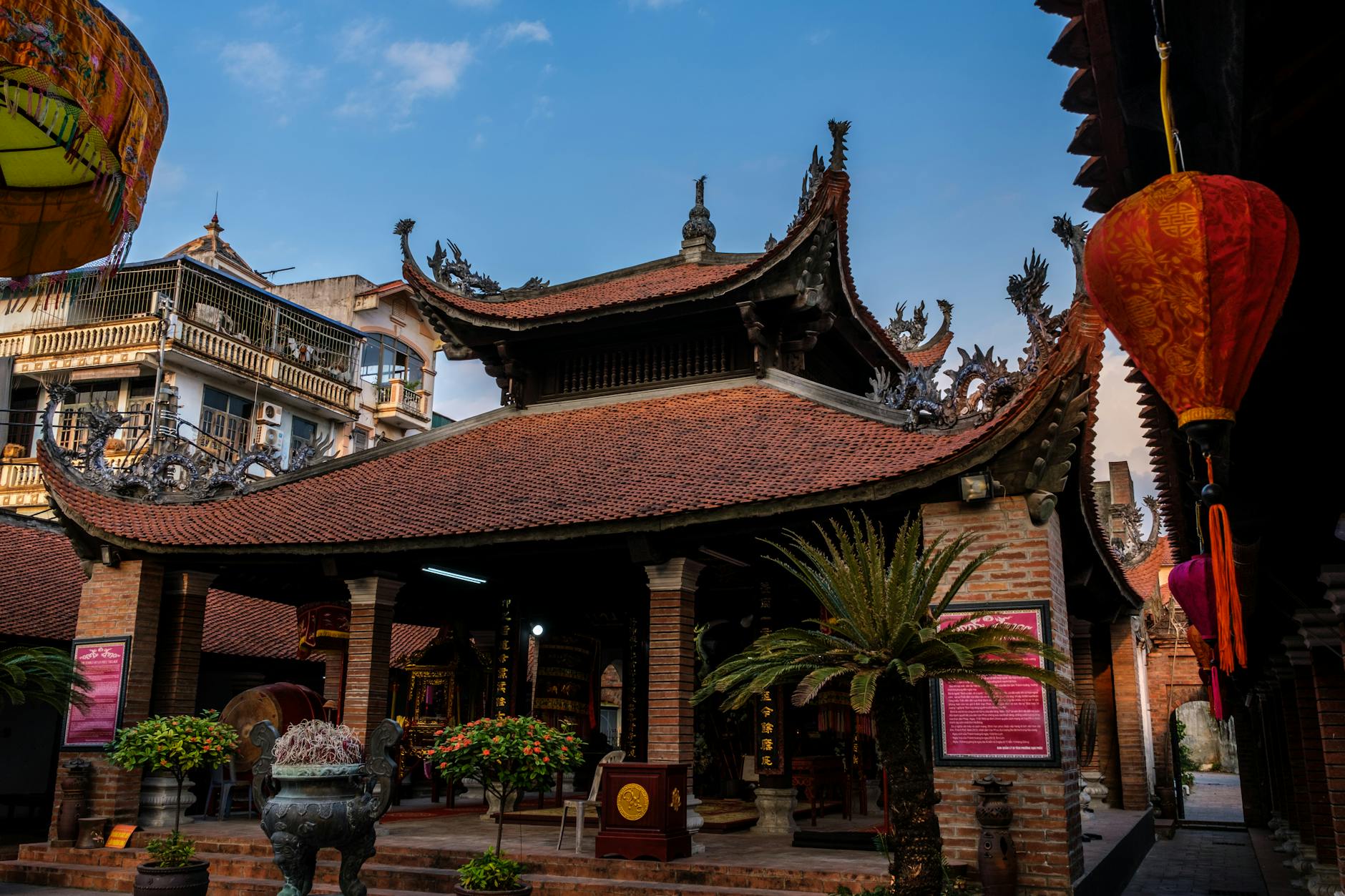
11th-century traditional Vietnamese temple architecture. Free entry.
3. St. Joseph’s Cathedral
1886 neo-Gothic French colonial cathedral. Resembles a smaller Notre-Dame. Free exterior viewing.
4. Sofitel Legend Metropole Hanoi
1901 colonial luxury hotel. The crown jewel of French heritage architecture in Hanoi.
5. Hanoi Opera House
1911 Beaux-Arts theatre. Adjacent to Old Quarter in the French Quarter.
6. State Bank of Vietnam Building
1929 French colonial bank building.
7. Government Guest House
Restored colonial mansion on Le Thach Street.
8. Old Quarter Tube Houses on Hang Bac, Hang Gai, Hang Bong
Many original tube houses still stand and operate as shops or family homes.
9. Cau Dong Temple (Hang Duong)
12th-century temple tucked off Sugar Street.
10. Phung Hung Mural Street
17 modern murals on the railway arches depicting Hanoi architectural and cultural heritage.
Architectural Walking Tour (2 hours)
Stop 1: Hoan Kiem Lake (10 min)
Begin at the lake’s northeast corner. Photograph Turtle Tower (19th century).
Stop 2: Ma May Heritage House (87 Ma May, 30 min)
Restored 19th-century tube house. The architectural reference point for the entire neighborhood.
Stop 3: Hang Bac Tube Houses (15 min)
Walk along Silver Street looking up at the narrow facades.
Stop 4: Bach Ma Temple (76 Hang Buom, 15 min)
11th-century temple architecture.
Stop 5: Hang Gai Tube Houses with French Touches (15 min)
Some of the best hybrid French-Vietnamese facades in the city.
Stop 6: St. Joseph’s Cathedral (15 min)
1886 neo-Gothic French heritage. Free exterior viewing.
Stop 7: French Quarter Border — Sofitel Metropole & Opera House (30 min)
Walk south to view the most prestigious French colonial buildings.
Stop 8: Return to Hoan Kiem Lake
What Makes Tube Houses Unique
Origin
Born of feudal taxation. Property tax was levied based on street-frontage width, so houses extended back rather than spread sideways.
Structure
- Front shop or entry hall.
- First interior courtyard for light and ventilation.
- Family living quarters.
- Second interior courtyard.
- Kitchen and back rooms.
- Back service area.
Modern Adaptations
Most original tube houses have been converted to multi-floor structures (3-5 stories), losing some of the traditional courtyard character. The Ma May Heritage House preserves the original layout.
French Colonial Architecture Features
- High ceilings (3-4 meters).
- Wrought iron balconies.
- French shutters (persiennes).
- Decorative moldings and cornices.
- Tall narrow windows.
- Tile roofs.
- Yellow stucco facades (the iconic French Quarter color).
- Inner courtyards.
Hybrid French-Vietnamese Features
- Tube house structure with French facade decorations.
- Vietnamese roof shapes with French shutters.
- Traditional altar rooms with European furniture.
- Modern shop fronts with traditional upper floors.
Best Architecture Photo Spots
- Ma May Heritage House interior courtyards.
- Hang Gai facade rooflines.
- St. Joseph’s Cathedral exterior.
- Sofitel Legend Metropole entrance.
- Hanoi Opera House facade.
- Phung Hung Mural Street.
- French Quarter colonial mansions on Hai Ba Trung.
Architecture Tour Options
- Free university student walking tours from Hoan Kiem Lake (9:00 AM, 2:00 PM).
- French Quarter Architecture Walk via Discover Asia Tours.
- Heritage Architecture Tour via Inspitrip.
- Photography-focused architecture tour with local photographer.
Old Quarter Architecture FAQs
What is a tube house?
Narrow Vietnamese house 2-3 m wide and 30-60 m deep, with sequential rooms and interior courtyards. Born of feudal taxation based on street frontage.
How old are the oldest tube houses?
Most date from 18th-19th centuries. The Old Quarter neighborhood layout dates to the 13th century.
Can I tour a tube house?
Yes — Ma May Heritage House (87 Ma May) is the best preserved example open to visitors.
Is the French Quarter part of Old Quarter?
No — the French Quarter is south of Hoan Kiem Lake, technically separate. Walking distance to Old Quarter.
Where are the best French colonial buildings?
Sofitel Legend Metropole, Hanoi Opera House, State Bank Building, and St. Joseph’s Cathedral.
Are Old Quarter buildings being demolished?
Some are. Heritage preservation efforts have intensified, but commercial pressures threaten older tube houses.
Can I photograph people’s homes?
Photograph facades freely. Ask permission before entering or photographing private interiors.
How do I learn more about Hanoi architecture?
Visit Vietnam National Museum of Fine Arts, the Hanoi Museum (inverted pyramid), and join an architecture-focused walking tour.
Discover the Old Quarter’s Living Architectural Heritage
The Old Quarter’s architecture tells Hanoi’s 1,000-year story in built form. With this guide you have the styles, top buildings, and a 2-hour walking route. Pair this guide with our Old Quarter pillar guide, our cultural experiences guide, and our French Quarter hotels guide.