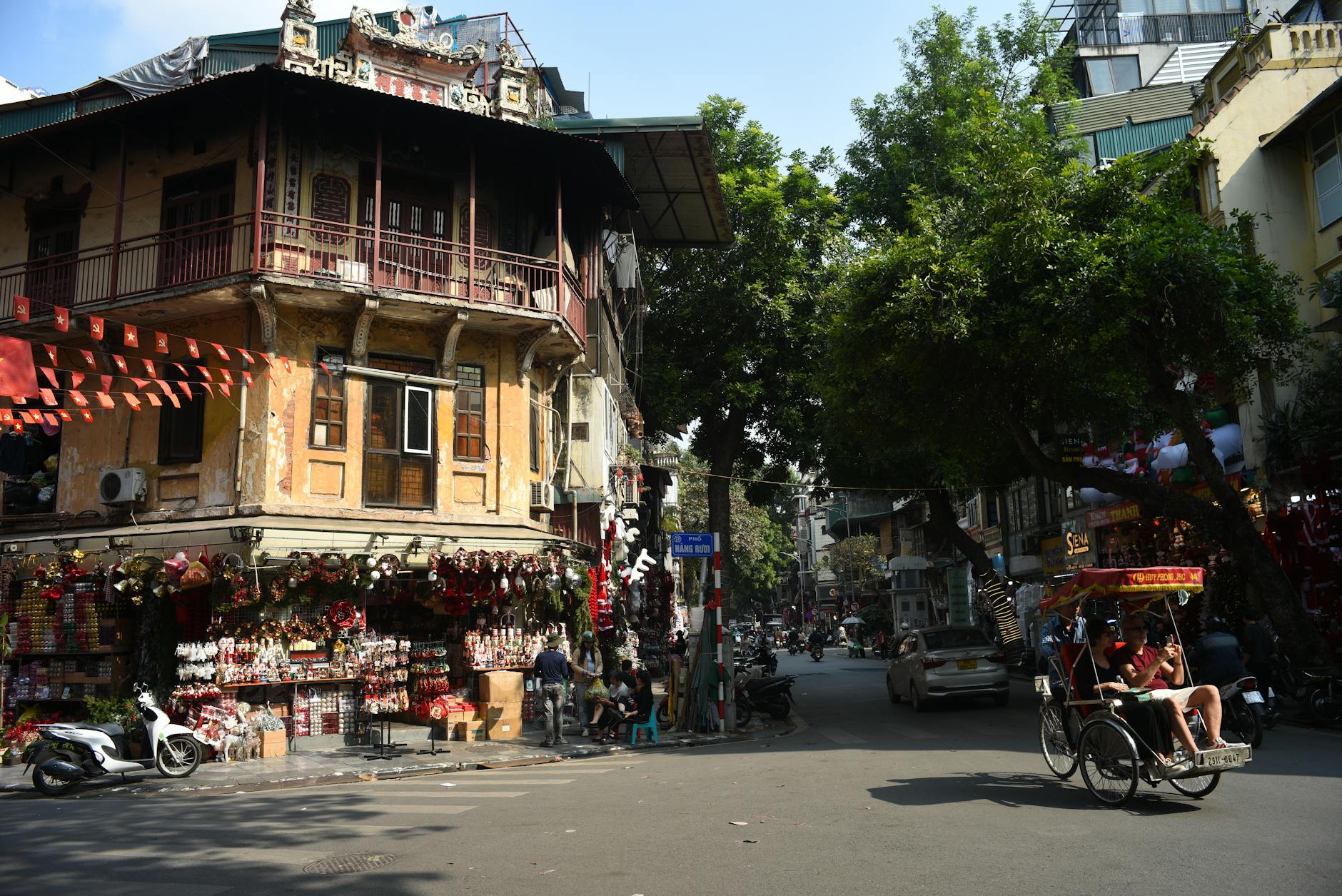
The famous “36 Streets” of Hanoi’s Old Quarter is the city’s living history. Each street historically housed a single guild — silk on Hang Gai, silver on Hang Bac, paper offerings on Hang Ma, fans on Hang Quat. Today the names survive even as the trades have evolved. This complete 36 Streets of Hanoi guide for 2026 covers the 1,000-year history, complete street-by-street meanings, what each street offers today, and a self-guided walking route through the most atmospheric guild streets.
The History of the 36 Streets
The story begins in the 11th century when King Ly Thai To moved Vietnam’s capital to Thang Long (now Hanoi). Artisans and merchants from surrounding villages flocked to the area, settling in dense neighborhoods organized by trade. Each guild built its own communal hall (dinh) and patron-saint temple. Streets formed naturally where craftspeople clustered. Over time, street names took the format “Hang [product]” — literally “Goods of [X].” The number 36 likely refers to the original 36 guild wards rather than 36 specific streets, but the romanticized number stuck.
Why “36”?
Historical records vary. Some sources claim 36 specific guild wards. Others point to 36 distinct trades that organized the medieval Old Quarter. Modern Old Quarter actually contains around 50+ streets, many sharing the “Hang” prefix. The number 36 endures as a symbol of the Old Quarter’s organized craft heritage.
Complete List of Hanoi’s 36 Hang Streets

Most Famous Surviving Trades
- Hang Bac — Silver Street. 13th-century jewelry trading hub. Master silversmiths still operate here.
- Hang Bo — Bamboo Basket Street. Now stationery and bamboo crafts.
- Hang Bong — Cotton Street. Now mixed retail.
- Hang Buom — Buoy/Sail Street. Now dried goods and tea.
- Hang Ca — Fish Street.
- Hang Cot — Bamboo Mat Street.
- Hang Dao — Pink Silk Street. Originally famous for pink silk; today modern boutiques.
- Hang Dau — Bean Street.
- Hang Dieu — Cushion Street.
- Hang Dong — Bronze Street. Bronze religious objects.
- Hang Dong Cao — Higher Bronze Street.
- Hang Duong — Sugar Street.
- Hang Gai — Silk/Hemp Street. Silk shops and silk paintings.
- Hang Ga — Chicken Street.
- Hang Hanh — Onion Street. Late-night snail crawl street.
- Hang Hom — Box Street.
- Hang Khoai — Sweet Potato Street.
- Hang Luoc — Comb Street.
- Hang Ma — Paper Offerings Street. Photogenic during festivals.
- Hang Mam — Fish Sauce Street. Now mixed retail.
- Hang Manh — Bamboo Slat Street.
- Hang Muoi — Salt Street.
- Hang Ngang — Yarn Street. Now textile shops.
- Hang Non — Conical Hat Street.
- Hang Phen — Alum Street.
- Hang Quat — Fan Street. Wooden fans and religious goods.
- Hang Than — Charcoal Street. Now mixed.
- Hang Thiec — Tin Street. Tin and metal crafts.
- Hang Thung — Barrel Street. Made wooden barrels for fish sauce and water storage.
- Hang Tre — Bamboo Street.
- Hang Trong — Drum Street. Drum-making for traditional music.
- Hang Vai — Cloth Street.
Top 10 Streets to Visit Today
1. Hang Ma (Paper Offerings)
The most photogenic street, especially during Mid-Autumn Festival when paper lanterns hang from every shop. Year-round paper goods, joss money, and traditional offerings.
2. Hang Gai (Silk)
Premium silk shops, lacquer paintings, traditional textiles. Ho Chi Minh Mausoleum Souvenir Shop is here. Walk the entire 600-meter street browsing.
3. Hang Bac (Silver)
Watch master silversmiths at work in family-run shops. Bargain politely for jewelry purchases.
4. Hang Quat (Fans)
Religious goods, traditional fans, and altar items. Atmospheric and unchanged for generations.
5. Hang Hanh (Onion/Late Night)
By day, mixed retail. By night (9 PM-1 AM), the city’s most famous snail crawl street.
6. Hang Buom (Buoy)
Tea shops, dried fruits, candies. The original Hanoi sweets street.
7. Hang Bo (Bamboo Basket)
Stationery, paper goods, school supplies. Functional shopping street.
8. Hang Tre (Bamboo)
Original bamboo crafts. Now mostly hardware and crafts shops.
9. Hang Khoai (Sweet Potato)
Local food and produce. Real-life shopping district for Old Quarter residents.
10. Hang Ngang (Yarn)
Modern textile and clothing shops in restored heritage buildings.
What These Streets Look Like Today

Some streets still preserve their original trade. Hang Gai still sells silk. Hang Bac still sells silver. Hang Ma still sells paper offerings. Hang Quat still sells fans and religious goods. Hang Tre and Hang Manh still feature bamboo. Most other streets have evolved — Hang Dao now has modern boutiques alongside traditional shops; Hang Buom has tea shops and tourist cafés; Hang Bong has mixed retail.
Surviving traditional features include:
- Narrow tube-house architecture (3-4 m wide, 30-60 m deep).
- Original guild communal halls (dinh) tucked into alleys.
- Patron-saint temples on each street.
- Family businesses passed down through generations.
- Traditional craftsmanship still practiced in workshops.
Self-Guided 36 Streets Walking Route (2 hours)
Stop 1: Hang Dao (10 min)
Start at Hang Dao Street’s south end (Hoan Kiem Lake corner). Walk north past silk and modern fashion shops.
Stop 2: Hang Ngang (10 min)
Continue onto Hang Ngang. Note the textile shops in restored colonial buildings.
Stop 3: Hang Duong (5 min)
Sugar Street. Look for traditional Vietnamese sweets shops.
Stop 4: Bach Ma Temple (15 min)
9th-century temple at 76 Hang Buom. Free entry. Atmospheric.
Stop 5: Hang Buom (10 min)
Tea, dried fruits, traditional sweets.
Stop 6: Hang Ma (15 min)
Paper offerings, lanterns, joss money. Most photogenic in festival season.
Stop 7: Dong Xuan Market (30 min)
Hanoi’s biggest covered market. Three floors of fabric, dried goods, food.
Stop 8: Hang Khoai (10 min)
Local produce and shopping street.
Stop 9: Hang Bac (15 min)
Watch silversmiths at work. Premium jewelry shops.
Stop 10: Hang Gai (15 min)
Silk shops, lacquer paintings. Buy a souvenir to take home.
Stop 11: Return to Hoan Kiem Lake
Why Each Street Got Its Name
Hang Dao (Pink Silk Street)
The name refers to pink flowers that fell during Lunar New Year, the popular dye color for silks made on this street.
Hang Quat (Fan Street)
Named for handheld fans, popular before electricity and air conditioning.
Hang Thung (Barrel Street)
Wooden barrels for storing water and fish sauce were made here for Hanoi households.
Hang Ma (Paper Offerings Street)
Joss paper, paper money, and ceremonial offerings burned at temples and family altars.
Hang Bac (Silver Street)
The 13th-century silver-trading and jewelry-crafting district. Many shops still family-owned for centuries.
Best Time to Visit the 36 Streets
Early Morning (6:00-9:00 AM)
- Vendors setting up.
- Cool temperatures.
- Authentic local life.
Late Afternoon (4:00-7:00 PM)
- Cooler than midday.
- Pre-evening crowds.
Festival Periods
- Tet (Lunar New Year): Late Jan-mid Feb. Hang Ma transforms with red and gold offerings.
- Mid-Autumn Festival: September. Hang Ma is lantern paradise.
- Lunar 1st and 15th: Daily life intensifies as families prepare temple offerings.
Practical Tips
- Wear sturdy walking shoes — uneven sidewalks.
- Bargain politely at street vendors and craft shops.
- Photography welcome but ask before photographing people.
- Respectful dress at temples and shrines.
- Carry small notes for cafés and traditional shops.
- Avoid weekends midday for crowds.
- Friday-Sunday evenings are walking-street pedestrian-only.
36 Streets FAQs
Are there really 36 streets?
The Old Quarter has 50+ streets. The number 36 refers to the historical guild wards, not specific street count.
Which is the most famous street?
Hang Ma for photogenic appeal; Hang Gai for shopping; Hang Bac for craftsmanship.
Can I still buy traditional crafts here?
Yes — silk on Hang Gai, silver on Hang Bac, paper goods on Hang Ma, fans on Hang Quat.
How long does the 36 streets walking tour take?
2 hours minimum. 3-4 hours with shopping and café stops.
Are the streets safe?
Yes — among Hanoi’s safest tourist zones.
What about pickpockets?
Stay aware in dense markets. Carry valuables in front pockets or crossbody bags.
Are guided tours available?
Yes — free university student-led tours depart Hoan Kiem Lake at 9:00 AM and 2:00 PM.
Walk the Living History of Hanoi
The 36 Streets are Hanoi’s 1,000-year-old soul. With this guide you have the complete street meanings, top 10 visits, and a 2-hour walking route. Pair this guide with our Old Quarter pillar guide, our Old Quarter walking tour, and our cultural experiences guide.