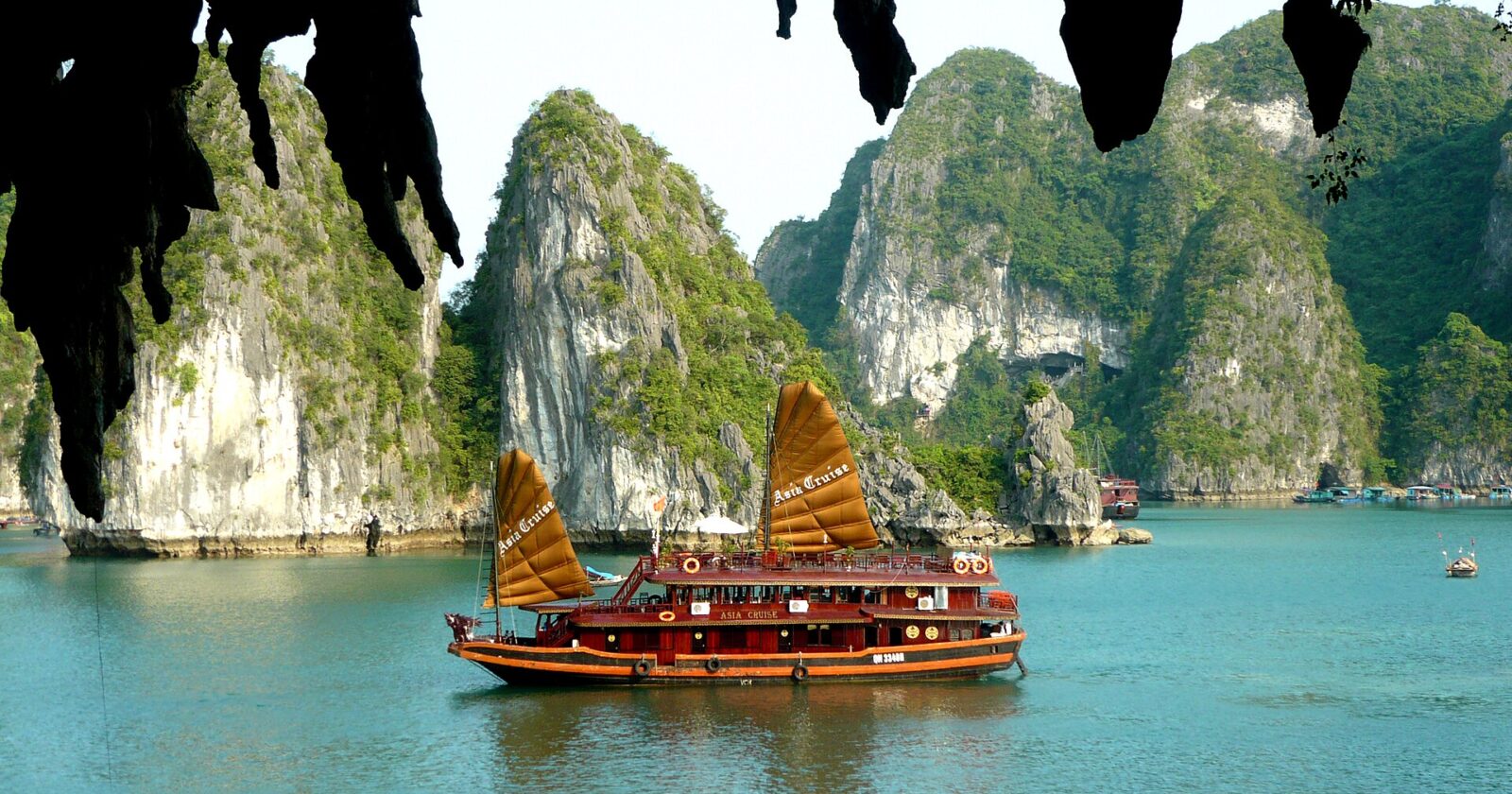
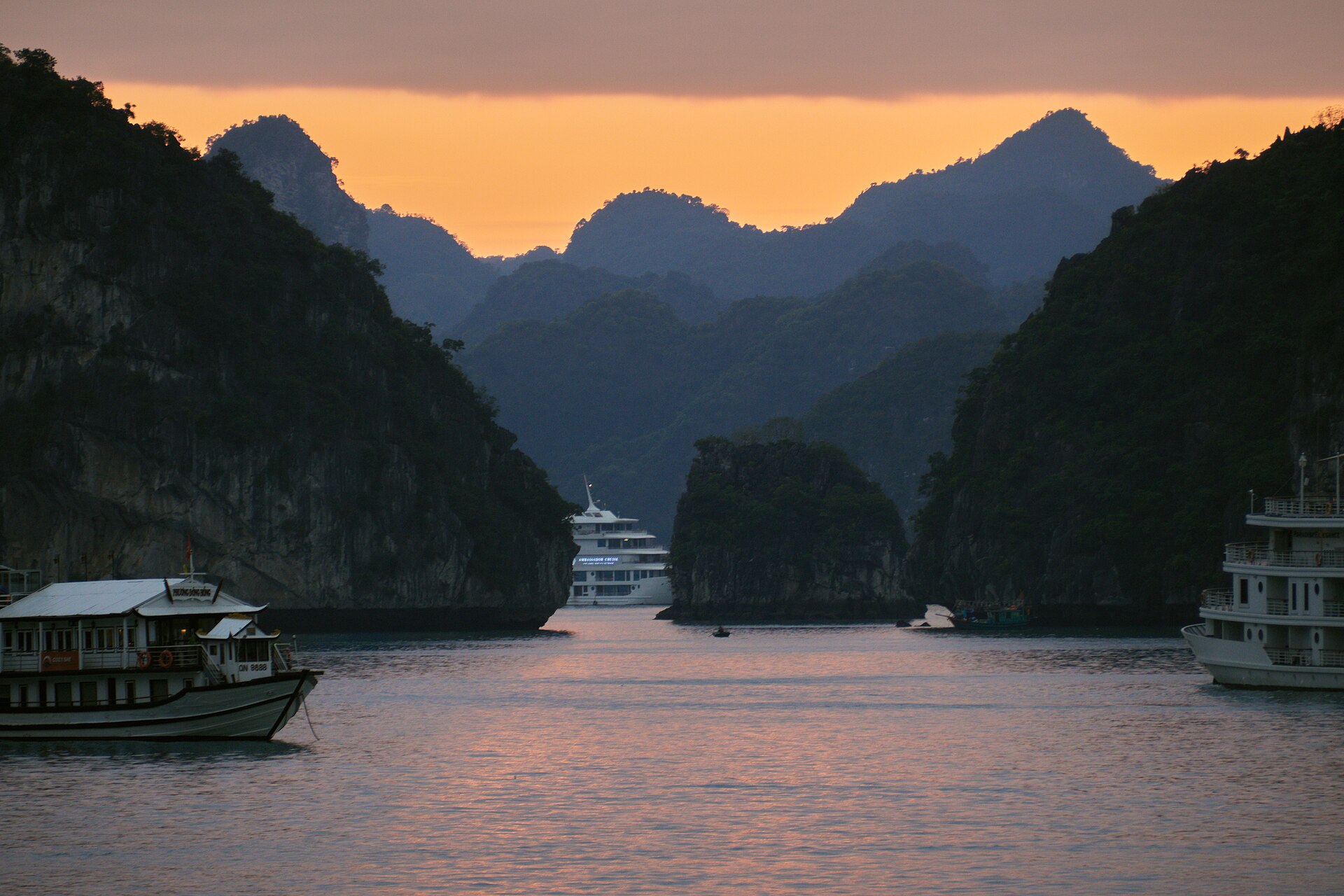
Around half past five on most evenings, the overnight boats in Ha Long and Lan Ha drop anchor in the same few sheltered coves. From any top deck you can usually pick out, a few hundred metres apart, a tired budget boat with peeling varnish and a new white ship with hot tubs on the bow, both facing the same limestone as the light goes. One was sold for under US$100 a head, the other for four or five times that. Choosing the best Ha Long Bay cruise comes down to understanding what that gap buys and what it doesn’t. The view is shared and the routes are fixed by the province. What the extra money changes is the boat, the timings and how many people you share them with.
So this isn’t a ranked list. It’s the method we’d use to shortlist a boat in an evening: which bay and route to settle first, how long to stay, what each price tier really buys, the details that separate a good boat from a tired one, the red flags, and the questions to send an operator before you pay. Prices were checked in September 2026 and are per person sharing a cabin unless we say otherwise. Treat them as the right order of magnitude rather than a quote, because cruise rates move with the season, the day of the week and the dong. If you’re still deciding whether to go at all, start with our complete Ha Long Bay guide.
The Short Answer
If you only want the conclusion, here it is. The rest of the page explains how we got there.
| If you are… | Book this | Rough 2026 price |
|---|---|---|
| A first-timer with one night | A mid-range boat on a Lan Ha or Bai Tu Long itinerary, or Ha Long’s Route 2 if the big caves matter to you | US$120–200 for 2 days, 1 night |
| On a tight budget | A Lan Ha day boat from Cat Ba, or a budget overnight boat that already includes kayaks and the transfer | About US$25 by day; US$65–120 overnight |
| A couple marking an occasion | Two nights on a premium boat rather than one night on a luxury one | US$350–500 for 3 days, 2 nights |
| A family with young children | A mid-range or premium boat with family or connecting cabins, on a route with a swimming stop | US$120–350 per adult; children usually discounted |
| Travelling solo | A smaller boat with a modest single supplement, ideally outside peak season | The cabin price plus 30–70% |
| Short on time | One of the newer premium day ships rather than the cheapest day boat | US$90–150 |
| Tempted by luxury for one night | Put the difference towards a second night instead | US$350–600 for 2D1N, the tier that pays back least |
Why There’s No Top 10 Here
Search for the best cruise and you’ll get dozens of confident rankings. Read five of them side by side and a pattern shows. The same brands sit near the top, in a different order each time, with a “book now” button next to every entry. Most are written by agencies that earn a commission on every boat they list, and a few by companies that own several of the boats they rank. That doesn’t make every recommendation wrong. It does mean the order tells you more about the writer’s margins than about your night on the water.
There are practical reasons, too, why a ranked list ages badly here:
- Brands aren’t boats. One operator may run a new flagship and two older sister ships under the same name, at quite different standards. A glowing review of the brand tells you nothing about the vessel you’ve actually been booked on.
- Boats change. They get refitted, renamed, sold and moved between bays. A list written two years ago can include ships that now sail somewhere else under another name.
- The whole fleet is changing. Quang Ninh province, which licenses the boats in Ha Long and Bai Tu Long, plans to replace every wooden-hulled tourist boat with a steel one by 2030, and to fold smaller boats into fewer, larger ones. When the plan was announced in late 2024, Ha Long Bay alone had 508 tourist boats. Some of the boats on today’s lists will be rebuilt, merged or retired before the end of the decade.
- “Best” depends on who’s asking. The right boat for a honeymoon is the wrong boat for a family with a four-year-old, and neither suits a backpacker with US$80 to spend.
So instead of a list, here are five decisions in the order they matter. Get the first three right and almost any decent boat will give you a good night.
Decision 1: Pick the Bay Before the Boat
The cruise listing says “Ha Long Bay”, but the karst seascape runs along well over a hundred kilometres of coast, and the trade divides it into three bays with separate permits, piers and crowd levels. Which one your boat sails in shapes the trip more than anything on the cabin spec sheet.
- Ha Long Bay proper has the famous caves (Sung Sot, Thien Cung), the Ti Top viewpoint and by a distance the most boats. Most departures leave from Tuan Chau International Marina, with a few from other piers around Ha Long City.
- Lan Ha Bay, off Cat Ba island in Hai Phong province, has smaller, greener islands, dozens of small beaches, usually cleaner water and far fewer boats. For swimming and kayaking it’s the best of the three.
- Bai Tu Long Bay, running north-east from Ha Long towards Van Don, is the quietest: the same limestone, a working floating village at Vung Vieng, and only a handful of operators.
Our rule of thumb is that a mid-range boat in Lan Ha or Bai Tu Long beats a luxury ship stuck in the Ha Long traffic, unless walking through Sung Sot is the main reason you came. Read past the itinerary title, though. Some trips put two bays in the name, so check where the boat anchors for the night and where the kayaking happens. Our Ha Long Bay guide compares the three bays in more detail, and if Lan Ha on your own terms appeals, our page on getting from Hanoi to Cat Ba Island covers the ferries and buses.
Decision 2: Decide How Long to Stay
Length matters more than tier. A mid-range boat for one night will almost always give you a better trip than a luxury ship for a day.
A day cruise
A day trip from Hanoi means about five hours on the road and four or five on the water, in the middle of the day, when the light is flattest and every day boat is out. A standard day boat costs about US$40–60 (roughly 1–1.6 million VND). The newer premium day ships cost US$90–150: bigger and steadier, with more deck space, air-conditioned lounges and a much better lunch. If a day trip is all you can manage, the premium ship is the one to buy. On a twelve-hour day you’re paying for comfort, and you’ll feel it.
Two days, one night
This is the standard booking, and it works because of the hours a day trip can’t reach: late afternoon, sunset, and the first hour after dawn before the day boats come out from the marina. Most boats give you about 22 hours on board, of which you’ll sleep eight. It’s the right choice for most people, and the one the rest of this page assumes.
Three days, two nights
A second night lets the boat go further, gives you a proper half day of kayaking or a beach to yourselves, and slows everything down. It’s worth it if the bay is the highlight of your trip. There’s one catch to ask about directly. On some two-night itineraries the main boat goes back to harbour on day two to drop off and pick up one-night guests, and two-night guests spend that day on a smaller day boat. It’s not a scam, and the day can be a good one, but it isn’t what the photos suggest. Ask the operator, in writing: “Do I stay on the same boat for the whole trip?”
Decision 3: Read the Itinerary for Route and Timings
Boats here don’t sail wherever they like. Quang Ninh licenses a small set of numbered routes through Ha Long Bay, and every tourist boat has to follow one. That’s why so many itineraries look identical, and why the route tells you more than the brochure does.
- Route 1 is the cave-and-islet route: Thien Cung and Dau Go caves, the Fighting Cock and Incense Burner islets. There’s no swimming stop.
- Route 2 takes in Ti Top Island, Sung Sot Cave, Luon Cave (kayak or bamboo boat) and Soi Sim beach. It’s the only Ha Long route with swimming, and the busiest.
- Route 3 heads for the Cua Van fishing village cultural centre, Tien Ong Cave and the Ba Ham lakes. It’s quieter and more about the working bay than the postcard.
The route fee, 250,000 VND per person on Routes 1 and 2 and 200,000 VND on Route 3 (about US$8–10), is set by the province and almost always included in the ticket. So is the overnight fee, 550,000 VND on Route 2. Some agents still quote the old 290,000 VND rate, so don’t be surprised by either figure. Lan Ha and Bai Tu Long run on their own permits, which is part of why they feel quieter.
Then look at the clock. Two itineraries with the same stops can give you very different trips:
| Boat A | Boat B | |
|---|---|---|
| Boarding | 12:00, lunch as the boat leaves | 13:30, after a longer wait at the marina |
| Afternoon | Cave, then 45 minutes of kayaking | Cave with the 14:00 crowd, then 30 minutes on a bamboo boat |
| Next morning | Tai chi at 06:15, a short paddle, brunch | Breakfast at 07:00, one cave visit |
| Disembark | 11:00 | 09:30 |
| Time on board | About 23 hours | About 20 hours |
Boat B isn’t dishonest. It just gives you three fewer hours, and they’re mostly the good ones: the unhurried early afternoon and the quiet morning. When two boats cost about the same, the one with the longer day usually wins. Look, too, at when the cave visit happens. The early-morning slot is far more pleasant than 14:00, when every boat on the route arrives at once.
Decision 4: Choose a Tier, and Know Where It Stops Paying Back
These are the tiers you’ll find, per person sharing a twin or double cabin, with their approximate dong equivalents.
| Tier | 2 days, 1 night | 3 days, 2 nights | What the money buys |
|---|---|---|---|
| Budget | US$65–120 (1.7–3.1 million VND) | – | Older boats, small cabins, coach transfers, kayaks often charged extra |
| Mid-range | US$120–200 (3.1–5.2 million VND) | US$200–300 | Newer boats, decent cabins with windows, kayaks and fees included, limousine vans |
| Premium | US$200–350 (5.2–9.1 million VND) | US$350–500 | Balcony cabins, better food, smaller groups, often quieter routes |
| Luxury | US$350–600 (9.1–15.6 million VND) | US$500–800 | Suites, fine dining, very attentive service |
| Ultra-luxury | US$600–900+ | – | A handful of ships with very few suites |
The interesting part is what changes at each step up.
Budget to mid-range is the biggest jump in quality for the smallest outlay, and it’s where most people should end up. You move onto a newer boat with a better-kept cabin, a quieter generator, kayaks that are already paid for and a transfer in a nine-seat van rather than a coach. Once a budget boat’s extras are added (US$10–15 for the kayak, US$8–12 each way for a shuttle if it isn’t included, a few drinks and a tip), the gap often shrinks to US$30–40, and those dollars buy a noticeably better night.
Mid-range to premium is worth it for two nights, for a special occasion, or if you’ll spend much of the trip in the cabin, perhaps with a baby napping or a book. You get a private balcony, better cooking, more space per guest on deck and, often, an itinerary that goes further from the busiest lanes.
Premium to luxury is the step that doesn’t pay back on a one-night trip. You get a bigger bathroom, a longer wine list, more staff per guest and a more polished dinner. But the bay, the route and your eight hours of sleep are exactly the same. If you have luxury money to spend, a second night on a premium boat buys far more of what you came for.
Ultra-luxury is a treat, not an upgrade in scenery. If you’re booking it, you already know that, and you’ll enjoy it.
For day cruises the logic runs the other way. The cheapest boats are fine, but the premium day ships, at around double the price, are the better buy, because comfort matters more over a twelve-hour day than over a night when you’re asleep for most of it.
Decision 5: Vet the Actual Boat
Once you have a bay, a length and a budget, you’ll probably be down to four or five boats that look much alike. These are the details that separate them.
Age and the last refit
The single most useful fact about any boat is when it was built or last properly refitted. Boats from the last five years tend to have better plumbing, quieter generators, cabins that don’t smell of damp and bathrooms that drain. Operators will usually tell you if you ask, and recent reviews often mention it. Be wary of listings that never give a year.
Hull and size
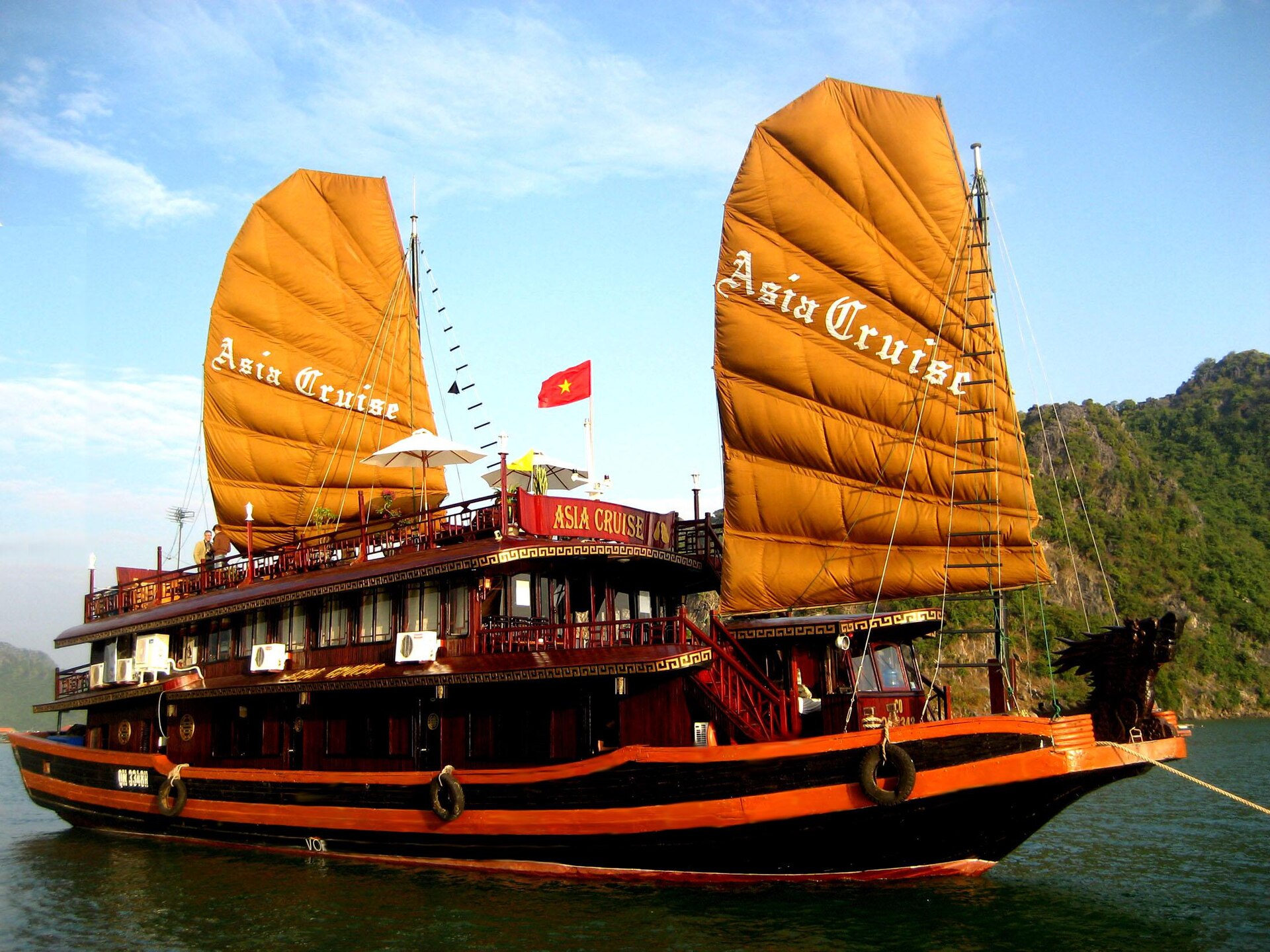
The classic junk look (dark wood, curved prow, ochre sails that are mostly for show) was once the whole fleet. Today the newer boats are built on steel hulls and the province is phasing wooden hulls out by 2030. An older wooden boat isn’t unsafe just for being wooden, as long as it’s licensed and maintained, but a newer steel ship is generally quieter, steadier and easier to keep dry.
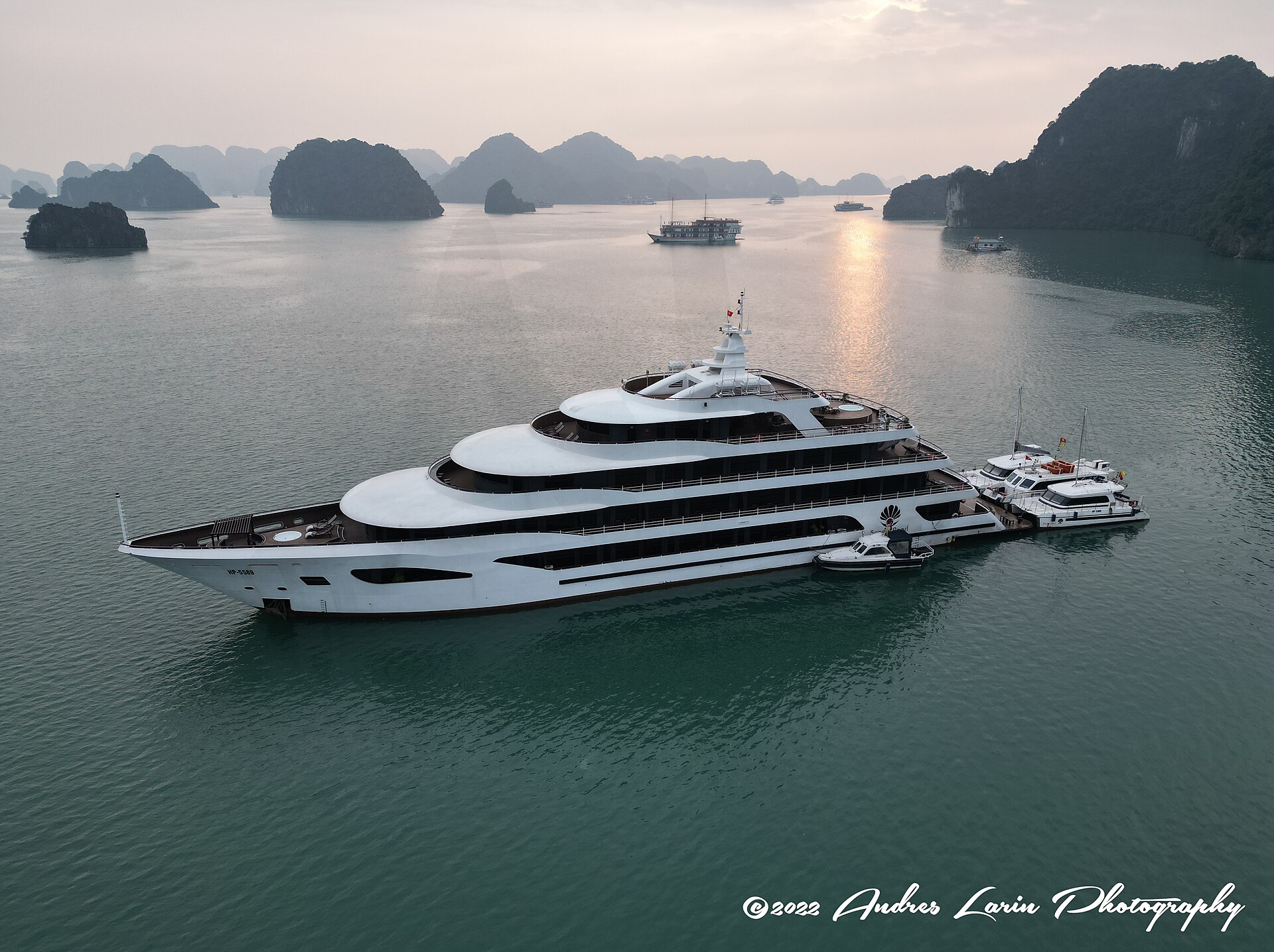
Size is a trade-off. A ship with 40 or more cabins is stable and well equipped but can feel like a ferry at mealtimes, and it needs several runs of the tender to get everyone into a cave. A boat with 10 to 20 cabins feels more like a small hotel. Under ten cabins, you’ll often get the best food and the most personal service, but fewer facilities and a smaller sun deck.
Which cabin, and where
Floor plans matter more than the photos. Cabins at the stern and on the lowest deck can sit close to the generator, which runs all night on many boats to power the air-conditioning. Cabins next to the bar or the dining room hear everything until the last guest goes to bed. When you book, ask for a cabin away from both. Balconies are a real pleasure from March to May and September to November, and much less useful from December to February, when it’s often cool, grey and misty. A good window and a comfortable sun deck do almost as much, for less.
Tenders, kayaks and queues
Most cave and beach stops mean climbing down into a tender, a small boat that ferries guests to the landing. On a big ship this can take three or four runs, and the last group waits. Ask how many kayaks the boat carries and how long the kayaking session lasts: 45 minutes on the water is good, 20 minutes after a queue is not. Lan Ha boats generally give you more and better paddling.
What’s included
Mid-range boats and above generally include all meals on board (lunch, dinner and a brunch or breakfast), the route and overnight fees, kayaks or a bamboo boat, drinking water, tea and coffee, and the “cooking class”. Drinks almost never are. Check the transfer: a nine-seat limousine van from your Old Quarter hotel is far more comfortable than a big coach doing a slow round of hotel pick-ups, and it’s the first thing cheap packages cut. Our guide to getting from Hanoi to Ha Long Bay compares the vehicles.
Food
Most boats serve a set menu of several courses, heavy on seafood, with a buffet at breakfast or brunch. On better boats the cooking is genuinely good. On budget boats it’s plentiful and forgettable. Vegetarian and vegan menus are routine from mid-range upwards if you ask when you book, and seafood allergies are well understood. Don’t rely on arranging it at the table.
Reviews that name the vessel
Read reviews from the last twelve months that name the specific boat, not the company. Skip the five-star raves and read the three-star ones, where people say what actually went wrong: noise, damp, rushed timings, food, crowding at the cave. One grumble about the weather means nothing. The same complaint about the generator in four reviews tells you what your night will sound like.
The Kinds of Boat You’ll Be Choosing Between
Listings use a dozen words for boats. In practice there are five types.
| Type | What it’s like | Best for | Watch out for |
|---|---|---|---|
| Classic junk | Wooden decks and sails, 6–20 cabins, often older | Atmosphere, photos, smaller groups | Age, damp, generator noise |
| Large modern ship | Steel, several decks, 30–50+ cabins, balconies, spa | Comfort, stability, families who want space | Crowded tenders and mealtimes |
| Boutique boat | A few cabins, high staff-to-guest ratio, good food | Couples, quiet travellers | Fewer facilities, higher price per cabin |
| Private charter | The whole boat, 1–5 cabins, your own itinerary within the route rules | Families and groups of friends | Priced per boat, so poor value for two |
| Day ship | Big, modern, lunch buffet, no cabins or just day rooms | Day trips in comfort | Large numbers on board |
A private charter becomes surprisingly good value once there are six or more of you. Split between three couples or a multi-generation family, a whole small boat can cost little more per head than three cabins on a premium ship, and you set the pace. For two people it rarely makes sense.
Matching the Boat to the Traveller
Couples and honeymooners
This is where the balcony earns its keep, in spring and autumn at least. Premium boats with fewer than 25 cabins are the sweet spot, and two nights is better than one. Tell the operator it’s an occasion when you book. Many boats will decorate the cabin or bring out a cake if they know in advance, so ask what’s included. Our Hanoi honeymoon itinerary shows how to build the cruise into a longer trip.
Families with children
Look for family cabins or interconnecting rooms, a route with a proper swimming stop (Route 2 in Ha Long, or almost anywhere in Lan Ha), and a boat big enough that small children can move around without annoying anyone. Ask for children’s life jackets in the right sizes. Cave staircases and tenders need a hand, and Ti Top’s steps are a real climb for small legs. Child pricing varies widely, so compare it before you compare cabins. Our family itinerary for Hanoi shows how to pace the days around a cruise night.
Solo travellers
Single supplements run from about 30% to 70% of the cabin price. Ask for it in writing, because it varies a lot from boat to boat. Some boats cut or waive it in low season, so it pays to ask before you settle on a date. Social boats with a sun-deck bar suit solo travellers better than hushed luxury ships. See our solo travel guide to Hanoi for the rest of the trip.
Older travellers and anyone with limited mobility
The real obstacles aren’t on the boat. They’re the tender transfers, the cave staircases and the pier at low tide. Larger modern ships usually have wider stairs and, on a few, a lift. Ask about the number of steps at each stop and choose an itinerary with a bamboo-boat option at Luon instead of kayaking. Our guide to Hanoi for senior travellers has more on pacing.
Kayakers, swimmers and the active
Go to Lan Ha. The boats anchor near beaches and lagoons, the kayaking sessions are longer, and you’ll often swim straight off the boat. Two nights there is about as active as a cruise gets.
Photographers
You need an overnight trip, full stop. The good light runs from dawn to about 07:30 and through the hour before sunset, and a day boat gets neither. Choose a boat that anchors away from the main marina lanes and has an upper deck open early. Our Hanoi photography itinerary covers the city side.
Red Flags When Comparing Boats
- No boat name, or no build year. If the seller can’t tell you which vessel you’ll sleep on, you don’t know what you’re buying.
- A price well below the rest of its tier. Usually it’s an older boat, a coach transfer, extras charged on board, or a shortened itinerary.
- Photos that are all renders or all sunsets. Ask for real photos of the cabin category you’re booking, including the bathroom.
- Late boarding and early disembarkation. Anything that boards after 13:00 and lands before 10:00 is quietly cutting the best hours.
- “Upgrade on arrival” talk. Some agents sell a cheap cabin and then pressure you to pay more at the pier.
- No clear weather policy. Storms cancel sailings every summer. A good operator tells you what happens before you pay.
- A shopfront deal in the Old Quarter that looks too good. The classic switch is a different, older boat on the day. Our guide to common Hanoi scams explains how it works.
Questions to Send Before You Pay
A good operator will answer all of these in one email. A vague reply is an answer in itself.
- What is the name of the boat I’ll be on, and when was it built or last refitted?
- Which bay and route does it sail, and where does it anchor overnight?
- What time do we board and disembark, and when is the cave visit?
- Is kayaking included, how long is the session, and is there a bamboo-boat alternative?
- What vehicle is the transfer, where does it pick up, and is the return included?
- How many cabins does the boat have, and roughly how many guests are booked on my date?
- Can I have a cabin away from the generator and the bar?
- What happens if the authorities cancel sailings: a new date, a refund, or both?
- What are the drink prices, and can I bring my own wine for a corkage fee?
- What’s the child policy and the single supplement, and is there a card surcharge?
Where to Book: Direct, Online or in the Old Quarter
The operator’s own website gives you the clearest line of responsibility. If something goes wrong, you’re talking to the people who run the boat. Prices are often the same as the big booking sites, and sometimes better with a direct-booking offer. You’ll usually pay a deposit, with the balance due a few weeks before sailing.
International booking platforms are convenient and have reviews in one place, but check which boat and cabin you’re actually getting, and whether the platform or the operator handles weather cancellations. Read the small print on refunds.
Old Quarter travel agents and hotel desks can be fine, particularly for day trips and last-minute budget cruises, and your hotel will stand behind a booking made at its desk. The risk is with anonymous shopfronts selling heavily discounted “luxury” cruises. Pay a deposit rather than the full amount, get the boat’s name in writing, and photograph the voucher.
Whichever you use, book two to three weeks ahead for weekends, national holidays and the best months (March to May and October to November). Midweek in quieter months, you can often book a day or two out. Bring your passport: overnight boats register every guest with the authorities, just as hotels do.
Safety: What Actually Matters
On 19 July 2025 the Wonder Sea (Vinh Xanh 58), a 24-metre day-tour boat, capsized in a sudden and violent thunderstorm about three kilometres from Dau Go Cave. Thirty-nine of the 49 people on board died. The boat was licensed, had passed its safety inspection that January and was carrying fewer passengers than it was permitted. That’s the uncomfortable lesson, and it isn’t really about choosing a better boat. On Ha Long Bay the serious risk is summer weather, not tired varnish.
What that means in practice:
- Don’t fight a cancellation. When the authorities suspend sailings for a storm, accept it and rebook. The operators who reschedule without argument are the ones to book with in the first place.
- Take the briefing seriously. Know where the life jackets are in your cabin and on deck, and make sure children have ones that fit.
- Be flexible from June to October. Build a spare day into your plans, especially in August and September.
- Get insurance that covers missed connections and extra hotel nights, which the operator won’t. Our travel insurance guide explains what to look for.
Our Verdict
The best value on the water is a mid-range boat, built or refitted in the last five years, with fewer than 25 cabins, on a Lan Ha or Bai Tu Long itinerary, for one night, or two if the bay is the highlight of your trip. That combination costs roughly US$150–230 per person all in, once you’ve added a couple of drinks and a tip, and it gets you the evening and the dawn, with room on deck to enjoy them.
The two things we’d steer most people away from are the cheapest boats, which cost more than they look once the extras arrive, and luxury on a one-night trip, which buys a nicer bathroom and the same bay. Everything between those two is a matter of taste. Once you’ve chosen, our Hanoi and Ha Long Bay itinerary shows how to fit the cruise around your days in the city.
Best Ha Long Bay Cruise FAQ
What is the best Ha Long Bay cruise?
There isn’t one, whatever the rankings say. For most people the best choice is a recent mid-range boat with 10–25 cabins, on a quieter Lan Ha or Bai Tu Long itinerary, for one or two nights. If the famous caves matter most, pick a boat on Ha Long’s Route 2 with an early cave slot.
Is a luxury Ha Long Bay cruise worth it?
For two nights or a genuine occasion, it can be. For one night, usually not. Luxury boats sail the same routes and anchor in the same coves as premium ones, so most of the extra money goes on the cabin and the service rather than the experience of the bay.
Are budget cruises safe?
Licensed budget boats are inspected like any other. The difference is comfort: older cabins, noisier generators and more extras to pay for. Book through a reputable agent, confirm the boat’s name, and follow the crew and the authorities on weather. The serious risk in the bay is summer storms, and that affects every tier.
How far in advance should I book?
Two to three weeks ahead for weekends, public holidays and the peak months of March to May and October to November. The best small boats sell out first. Midweek in quieter months, a day or two ahead is usually fine.
Is it cheaper to book a cruise once I’m in Hanoi?
Sometimes, for budget boats and day trips, especially midweek. For mid-range and premium boats the price is usually similar, and you risk your first choice being full. Whatever you book locally, get the boat’s name in writing.
Is a big ship or a small boat better?
Big ships are steadier and have more facilities; small boats are quieter, more personal and quicker at getting everyone ashore. For couples and anyone who dislikes crowds, 10–20 cabins is the sweet spot. Families who want space often prefer the larger ships.
Can I choose my cabin?
You choose the category when you book, and most operators will note a request for a particular deck or position. Ask for a cabin away from the generator and the bar, and don’t pay extra for a balcony in December to February unless you really want it.
Do cruises sail in the rain?
Yes. Light rain and mist don’t stop boats, and the bay can look magnificent in them. Sailings are cancelled only when the authorities issue a storm warning, most often between June and October.
Planning the Rest of Your Ha Long Trip
This page is about choosing the boat. For the bigger picture, including the three bays side by side, the caves worth knowing by name, the storm months and what everything costs once you’re on board, start with our complete Ha Long Bay guide.
If you’ve settled on the standard one-night trip, our Ha Long Bay 2 day, 1 night itinerary walks through it hour by hour, from the marina at midday to leaving your cabin at nine the next morning, so you can check any boat’s timings against it.
Still weighing a day cruise against a night on board? Our day trip vs overnight comparison works out the cost per hour on the water for each, and shows when the day trip genuinely makes sense.
Related Hanoi Guides
- Ha Long Bay: The Complete Visitor Guide – the three bays, the caves and when to go
- How to Get from Hanoi to Ha Long Bay – shuttles, buses and private cars
- Hanoi to Cat Ba Island – the gateway to Lan Ha Bay
- Hanoi and Ha Long Bay Itinerary
- Hanoi Honeymoon Itinerary
- Hanoi Family Itinerary
- Common Scams in Hanoi
- Hanoi on a Budget
- Day Trips from Hanoi
Photo Credits
Featured image, a junk seen from a cave mouth in Ha Long Bay: Halong bay Vietnam by Arianos, Public domain, via Wikimedia Commons.
A traditional-style junk under sail: Asia cruise in Halong bay Vietnam by Arianos, Public domain, via Wikimedia Commons.
A modern cruise ship with its tenders: Cruise Ship-Halong Bay Vietnam-Andres Larin by Saaremees, CC BY-SA 4.0, via Wikimedia Commons.
Overnight boats at anchor at dusk: Ha Long Bay – Halong1407 by lumoplank, CC0, via Wikimedia Commons.
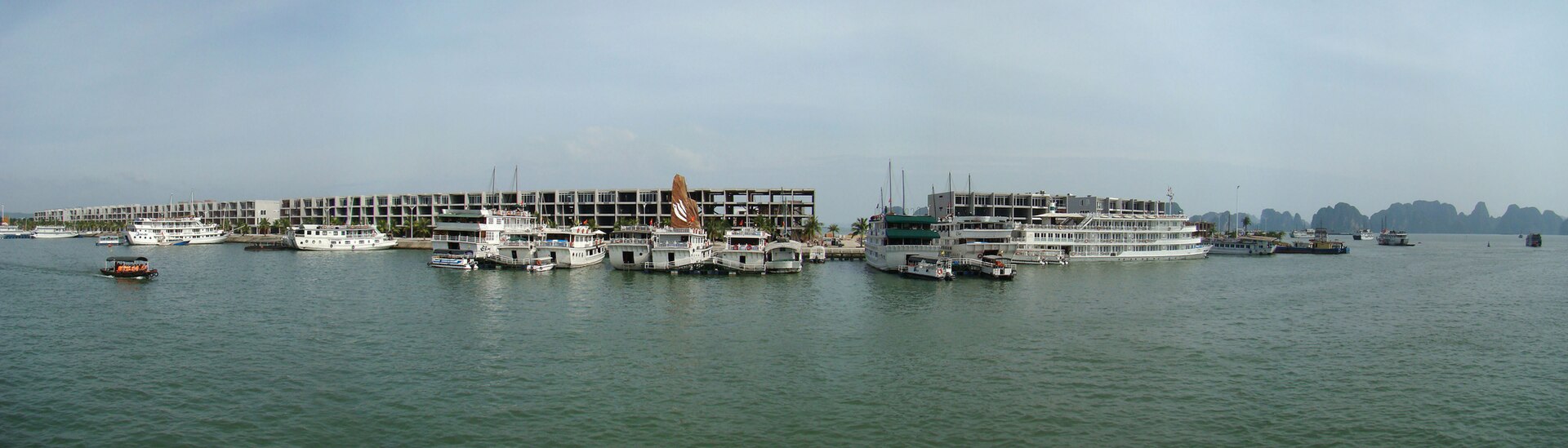
Cruise boats moored at the harbour: HalongHarbour tango7174 by Tango7174, CC BY-SA 4.0, via Wikimedia Commons.