
Hanoi’s public bus system runs more than 150 routes and is the cheapest way to get around the city: rides on subsidised buses within Ring Road 1 are free from 1 July 2026 to 30 June 2027, and elsewhere the fare depends on the route. Adventurous tourists who learn the system save serious money compared to Grab or taxis. This complete Hanoi bus system guide for 2026 covers all useful tourist routes, how to use Google Maps for bus directions, and tips for navigating without speaking Vietnamese.
About Hanoi Public Buses
Hanoi’s public bus system is operated by Transerco and several smaller operators. The network runs about 155 routes. Hours and frequency vary by route: most run from about 5:00 AM until somewhere between 9:00 PM and 10:30 PM, with a bus every 5-20 minutes, so check the times for the route you need.
Bus Fares
- Standard bus fare: free on subsidised routes within Ring Road 1 from 1 July 2026 to 30 June 2027; outside it, the fare depends on the length of the route.
- Longer routes: 10,000 VND for 15 to under 25 km, 12,000 VND for 25 to under 30 km, 15,000 VND for 30 to under 40 km, and 20,000 VND for 40 km or more.
- Tourist Bus 86: 50,000 VND (premium route to airport).
- Monthly card: 280,000 VND ($11.20) for unlimited travel on all routes, or 140,000 VND ($5.60) for a single route; concession cards cost less.
- Day pass: Not officially available.
How to Use Hanoi Buses
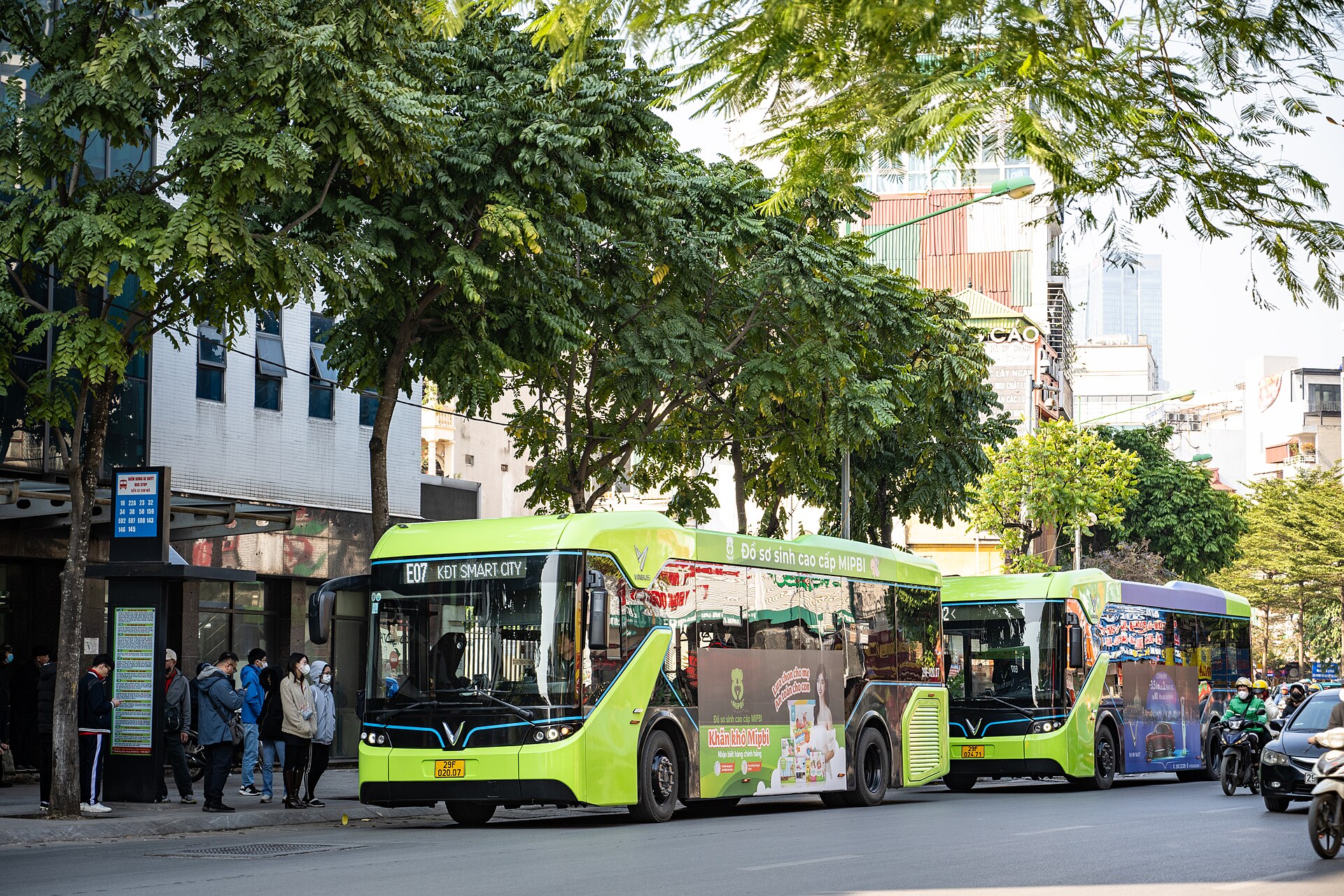
- Plan route via Google Maps: Best tool for tourist bus routing.
- Find the bus stop: Look for signs with route numbers.
- Flag down the bus when you see it approaching (wave hand).
- Board through the front door (or back during peak times).
- Pay the conductor if your trip leaves Ring Road 1 — rides inside it are free until 30 June 2027, and beyond it the fare depends on your route.
- Watch your stop — drivers don’t announce in English.
- Press the button or ring the bell when your stop approaches.
- Exit through the rear door.
Most Useful Tourist Bus Routes
Bus 86 (Tourist Express to Airport)
- Route: Noi Bai Airport ↔ Hanoi Railway Station.
- Fare: 50,000 VND ($2).
- Frequency: About every 45 min; first and last departures in each direction are on the operator’s timetable.
- Time: About 60 min, longer in heavy traffic.
- City stops: Hanoi Railway Station, 59 Ly Thuong Kiet, the Hanoi Post Office on Dinh Tien Hoang, 23 Hang Tre in the Old Quarter and the Long Bien interchange.
- Best for: Airport transfers on a budget.
Bus 17 (Local Airport)
- Route: Long Bien (Old Quarter area) ↔ Noi Bai Airport.
- Fare: A few thousand dong; check the fare on board.
- Time: Depends on traffic and on how long you wait at the stop.
- Best for: Cheapest airport option.
Bus 09
- Fare: Free for rides within Ring Road 1 until 30 June 2027; beyond it, ask for the fare on board.
- Time: Look up the current route and journey time on the Timbus app or timbus.vn, Transerco’s route finder.
- Best for: Old Quarter to West Lake.
Bus 34
- Best for: Catching long-distance buses to Sapa, Mai Chau, Halong Bay.
Bus 32 (Giap Bat to Nhon)
- Route: Giap Bat Bus Station ↔ Kim Ma ↔ Cau Giay ↔ Nhon.
- Best for: Getting to Giap Bat Bus Station from Kim Ma or Cau Giay.
Bus 02
- Best for: Old Quarter ↔ business districts.
Bus 23
- Best for: Local sightseeing within Old Quarter and surrounding districts.
Buses to Long-Distance Stations
- My Dinh Bus Station: Bus 34, 22 from Old Quarter.
- Giap Bat Bus Station (south): Bus 32, from Kim Ma and Cau Giay.
- Yen Nghia Bus Station (west): Bus 21, 27.
- Gia Lam Bus Station (north-east): find the current routes in Timbus.
Tourist Hop-On Hop-Off Bus
For sightseeing convenience, the Hanoi City Tour double-decker bus is a popular alternative.
- Cost: 450,000 VND ($18) for 24 hours.
- Stops: 13 major attractions including Old Quarter, Temple of Literature, Ho Chi Minh Mausoleum.
- Frequency: Anh Viet’s Hanoi City Hop On–Hop Off buses pass each stop every 30 min, with the last departure at 5:30 PM; the operator’s schedule gives the first bus and the midday break.
- Audio guide: Available in 8 languages.
Using Google Maps for Bus Routes
- Open Google Maps and enter destination.
- Tap the bus/transit icon.
- Google shows step-by-step bus directions with route numbers, walking distances, and travel times.
- Bus times update with real-time info (often).
- Save key trips offline for backup.
Bus Apps
- Tim Buyt — Vietnamese app with real-time bus tracking.
- BusMap — another popular bus app for Vietnam.
- Google Maps — most reliable for tourists.
Bus Tips for Tourists
- Carry small notes for fares on routes that leave Ring Road 1.
- Watch your bag — pickpockets occasionally work crowded buses.
- Allow extra time for traffic, especially during rush hour.
- Take a screenshot of your destination address in Vietnamese to show conductors.
- Don’t stand near the door — drivers brake hard.
- Avoid late-night buses if alone — quieter and longer waits.
- Bus stops are usually unmarked — look for groups of people standing on the curb.
What to Avoid
- Don’t use buses if you’re in a hurry — traffic delays common.
- Don’t use buses for the airport return if your flight is early/late — bus 86 leaves Hanoi Railway Station for the last time at 20:40.
- Don’t expect English signage at most bus stops.
- Don’t rely on bus to be on time during rush hour.
Hanoi Bus System FAQs
How much is a Hanoi bus ride?
Free within Ring Road 1 on subsidised buses from 1 July 2026 to 30 June 2027; further out, the fare depends on how long the route is. Tourist bus 86 is 50,000 VND.
Are buses air-conditioned?
It depends on the bus, so check when you board.
Do drivers speak English?
Mostly no. Use Google Maps or have your destination written in Vietnamese.
Are buses safe?
Yes, but watch for pickpockets on crowded routes.
How do I know when to get off?
Use Google Maps live tracking. Watch buildings/landmarks. Press button when stop approaches.
Are there bus passes?
Monthly cards for residents but no tourist day passes. Outside Ring Road 1 each ride is paid separately.
Are buses faster than Grab?
Slower — expect the trip to take longer than in a Grab. But much cheaper.
Can I take buses for day trips?
Yes — long-distance buses from My Dinh and Giap Bat stations to Sapa, Halong Bay, etc.
Plan Your Hanoi Bus Journey
The Hanoi bus system is the budget traveler’s secret. With this guide you have routes, fares, and tips. For full transport context, see our complete Hanoi transportation guide, airport transfer guide, and Grab guide.
Photo Credits
VinBus vehicles at Bến Xe Kim Mã: Bus at Bến Xe Kim Mã (20231223) (53488028532) by Takeshi Aida, CC BY-SA 2.0, via Wikimedia Commons.